
Spider Crane for Solar Panel Installation: Rooftop Lifting
Spider Crane for Solar Panel Installation: How Mini Crawler Cranes Solve Rooftop Lifting
Rooftop solar is booming, but lifting panels, racks, inverters, and mounting steel onto flat or sloped roofs is one of the most underestimated parts of the job. Mobile cranes often can't reach the roof without closing roads, and manual hoisting is slow and unsafe. That's why more EPC contractors are choosing a spider crane for solar panel installation. This guide explains where mini crawler cranes fit in a solar project and how to use them safely.
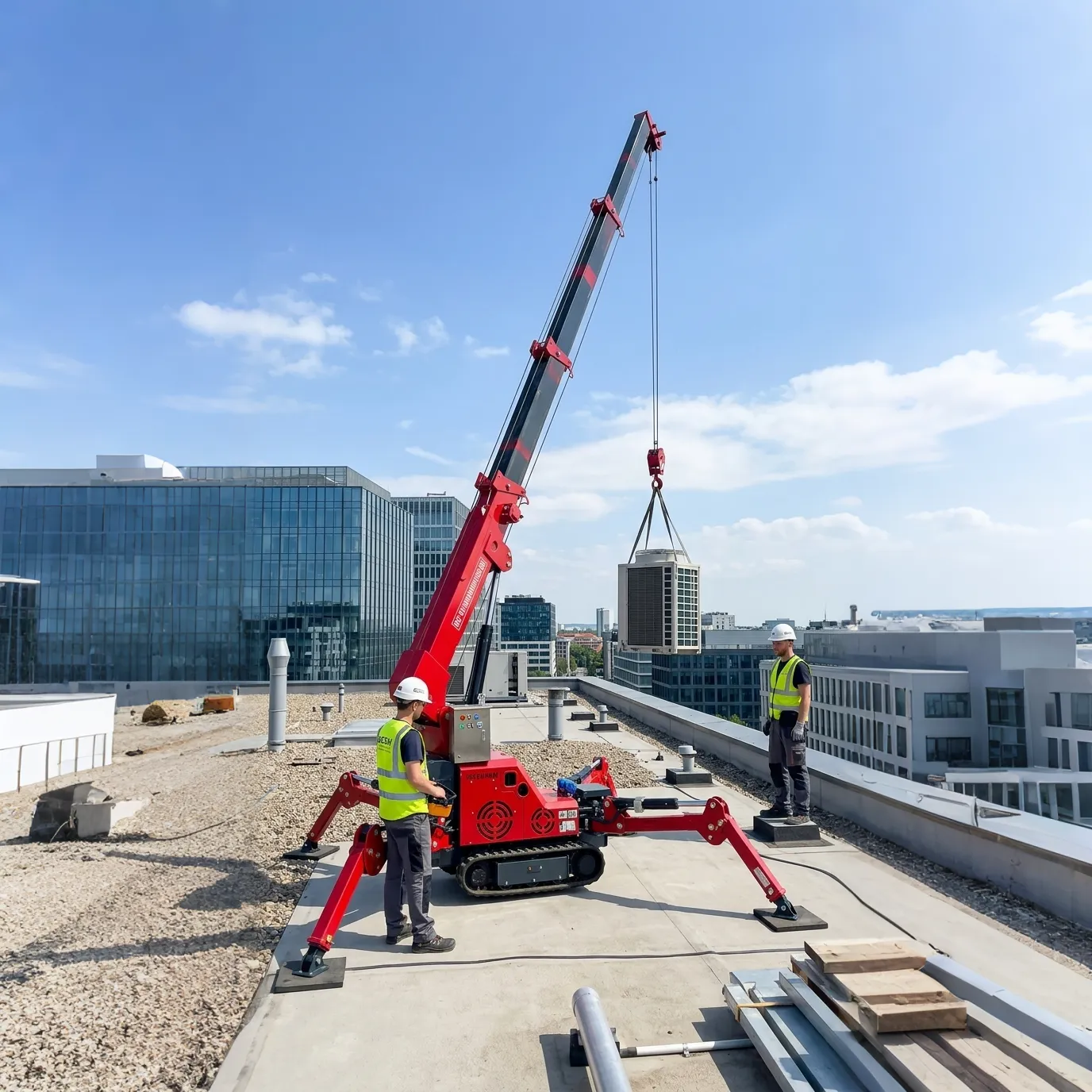
Why a Spider Crane Beats Other Methods on Rooftops
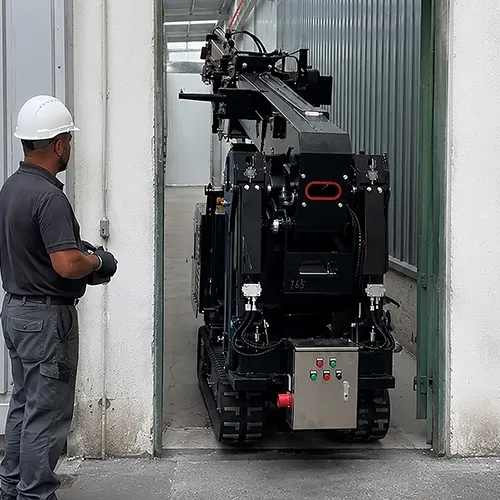
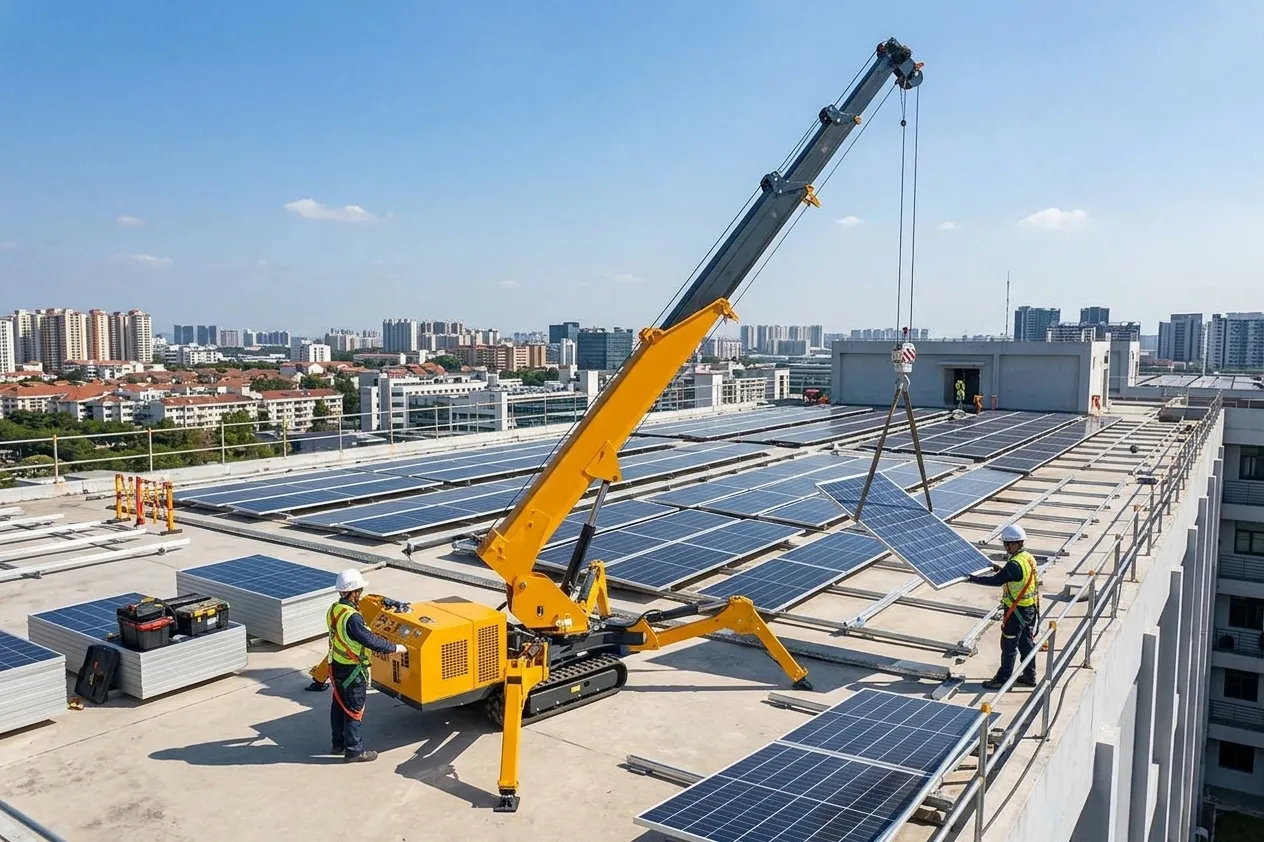
Access through narrow doors and stairwells: A 3-ton spider crane folds down to roughly 0.6–0.9 m wide, so it can enter via passenger elevators, double doors, or scaffolding gaps that a truck crane simply cannot.
Low ground pressure: Rubber tracks and four outriggers spread the load, letting the machine operate on rooftop decks, parking garages, and even indoor concrete slabs that a mobile crane could never drive over.
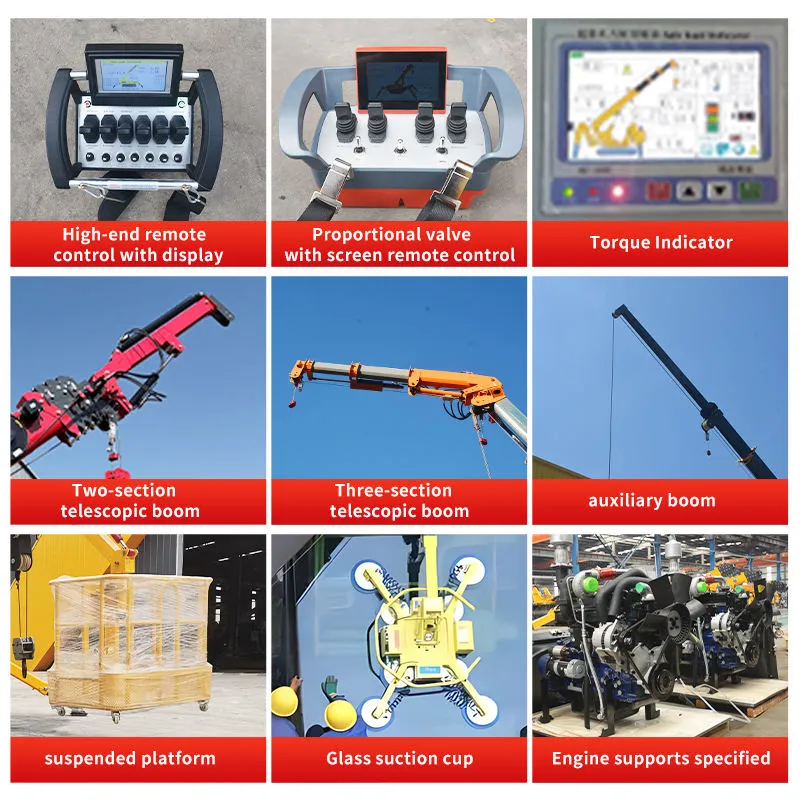
Precise placement: Slewing boom and optional glass/manipulator attachments let operators set panels and steel exactly where riggers need them—no swinging over occupied areas.
Compact footprint deployed: Outriggers fit inside a 4–6 m square, ideal between parapets, HVAC units, and roof penetrations.
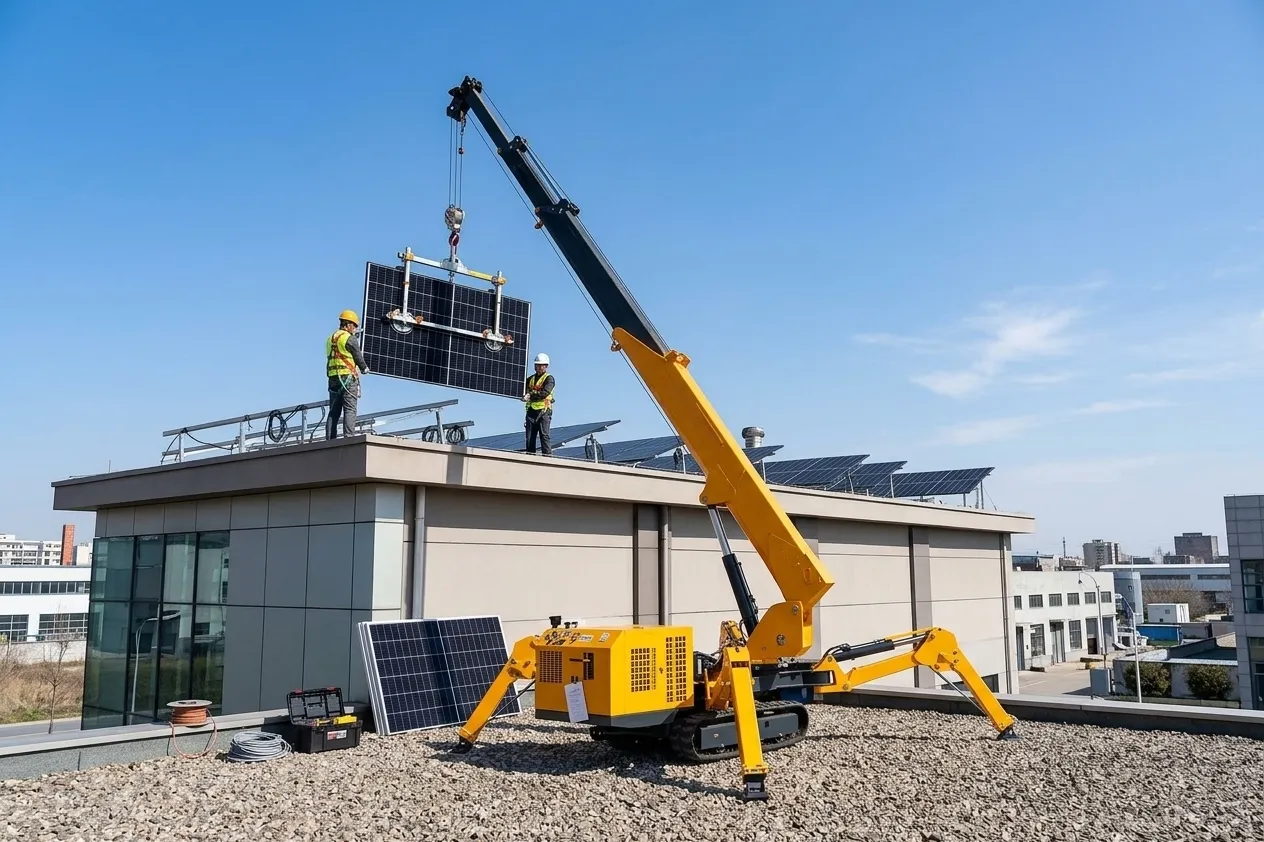
Typical Solar Tasks a Spider Crane Handles
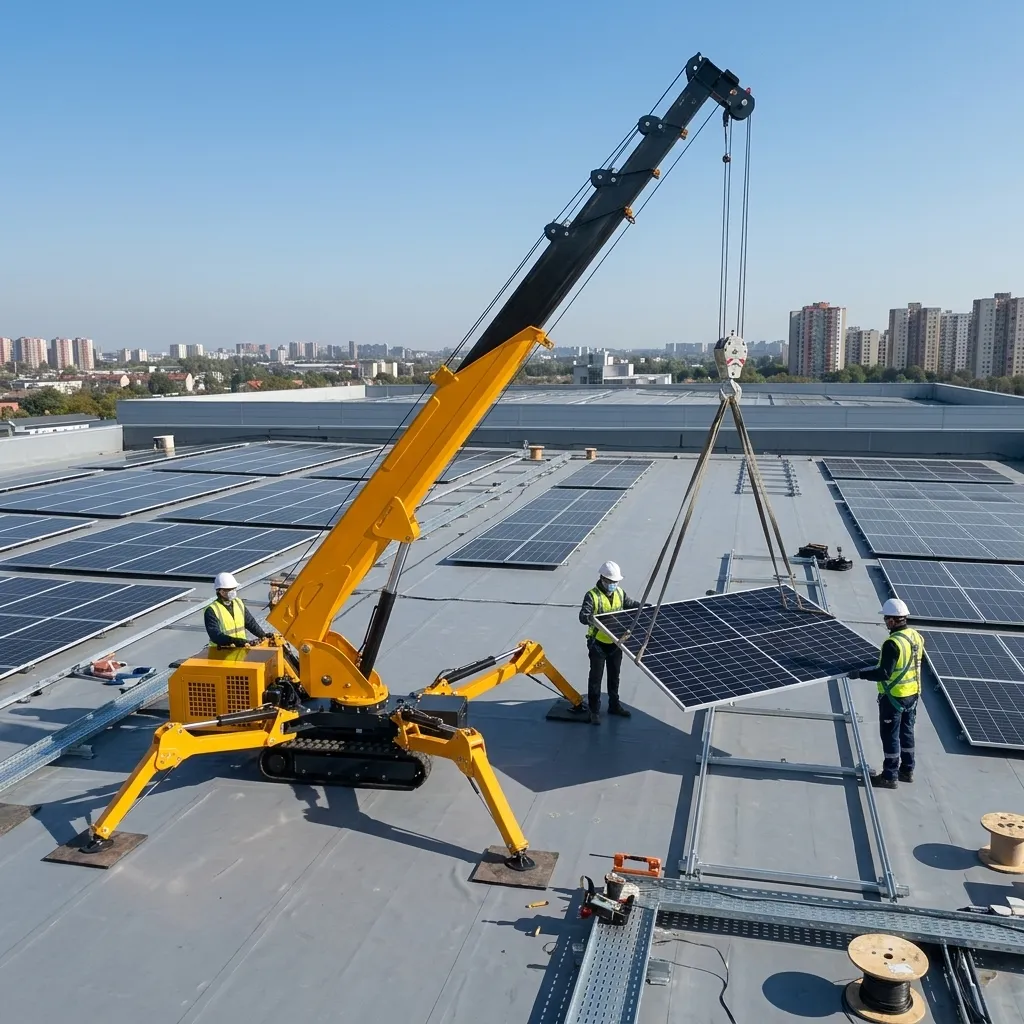
Lifting solar panels from ground or truck level up to the roof deck.
Hoisting mounting rails and ballast blocks across a commercial flat roof.
Positioning string inverters and combiner boxes near electrical rooms.
Moving steel I-beams or ballast trays on industrial and warehouse rooftops.
Lowering old equipment or damaged panels back to the ground during removal.
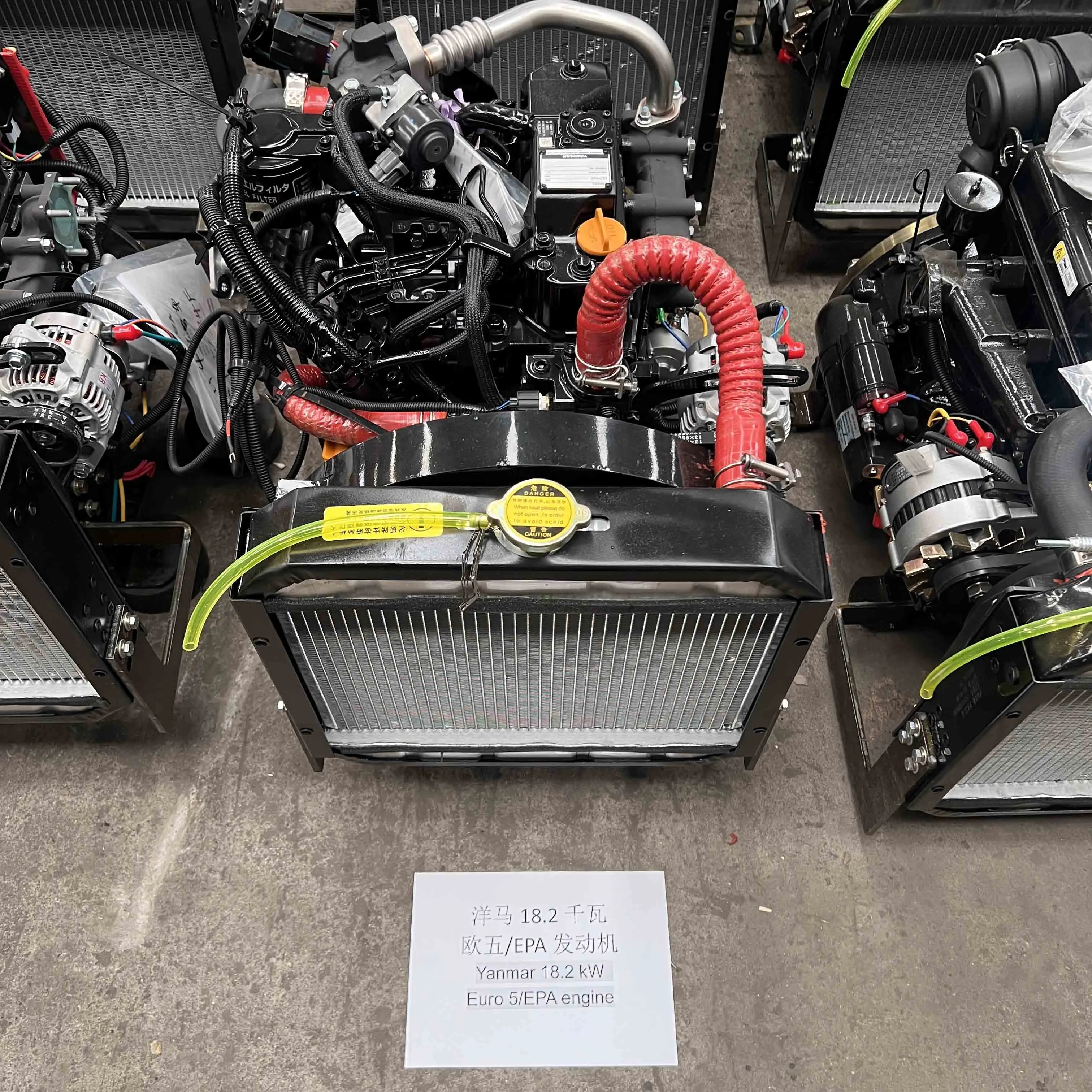
Best Power Type for Solar Roof Work
For rooftop solar, the choice between diesel and electric matters:
Electric battery spider crane is the top pick on commercial rooftops. Zero exhaust means safe operation near ventilation intakes, occupied buildings, and noise-sensitive areas.
Dual-power (diesel + electric) gives you electric mode on the roof and diesel mode when driving between sites—this is the most flexible setup for contractors working across multiple buildings.
Pure diesel units are still useful on open industrial yards and large ground-mount arrays where emissions are not a constraint.
Safety and Setup Tips
Confirm the roof load rating before lifting; distribute outrigger pads over steel beams or use load-spreading mats.
Check wind speed: most mini crawler cranes should stop lifting above 10–12 m/s.
Use a tag line on every load to keep panels from swinging against parapets or glass.
Communicate with riggers on the roof and ground via radio—never rely on hand signals alone over distance.
Keep the boom inside the building envelope when possible to avoid overloading edge conditions.
Which Size Spider Crane for Solar?
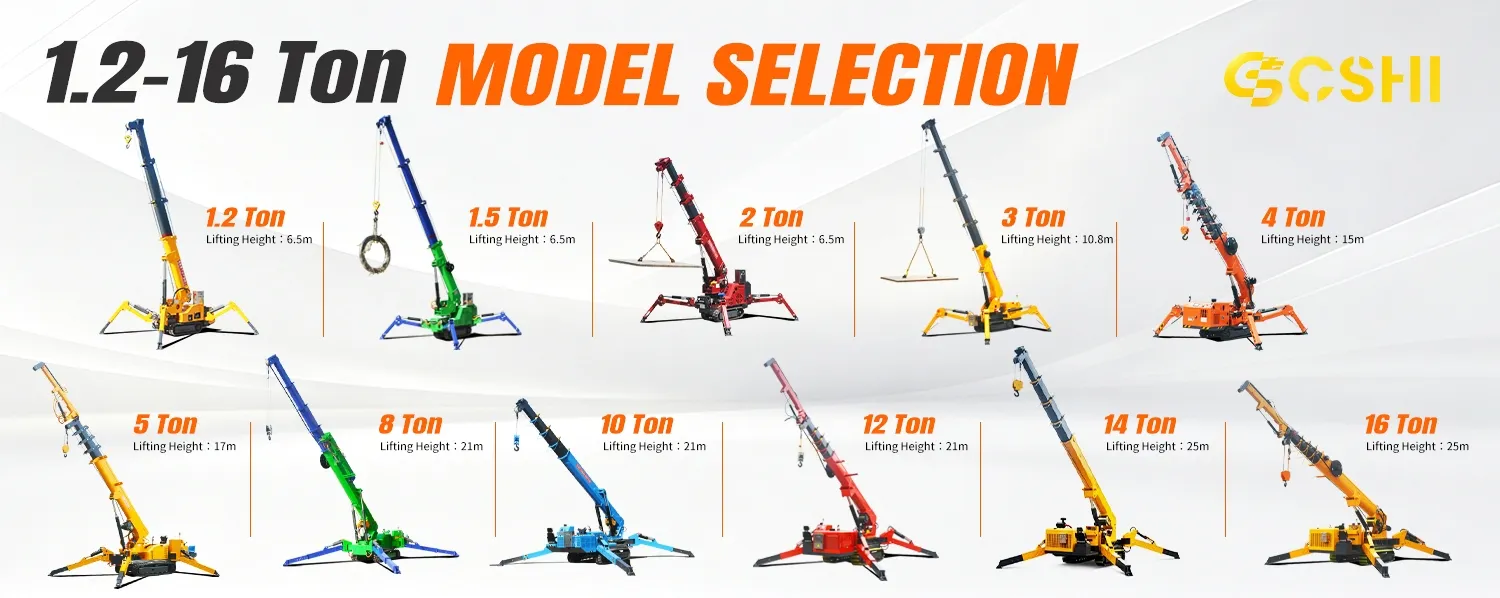
1–2 ton units: best for residential and small commercial rooftops, panel-only lifts.
3-ton units: the sweet spot for most commercial flat-roof jobs—panels + inverters + light steel.
5–8 ton units: for heavy ballast, steel structures, and ground-mount tracking systems.
Get the Right Machine for Your Solar Crew
Every rooftop is different: roof height, slab rating, panel weight, and site access all shape the choice. Jining Changsheng Machinery builds 1–16 ton mini spider cranes in electric, diesel, and dual-power configurations, with CE and EPA certification for export. Tell us your roof height and the heaviest single lift, and we'll recommend the right model and attachments.
 Spider Crane for Solar Panel Installation: Rooftop Lifting
Spider Crane Common Faults & Troubleshooting Guide for M
 How to Choose Spider Crane Optional Attachments (Full Guide)
How to Lift an HVAC Unit to a Roof with a Spider Crane