How to Select Spider Crane Optional Attachments: Match Accessories to Your Lifting Tasks
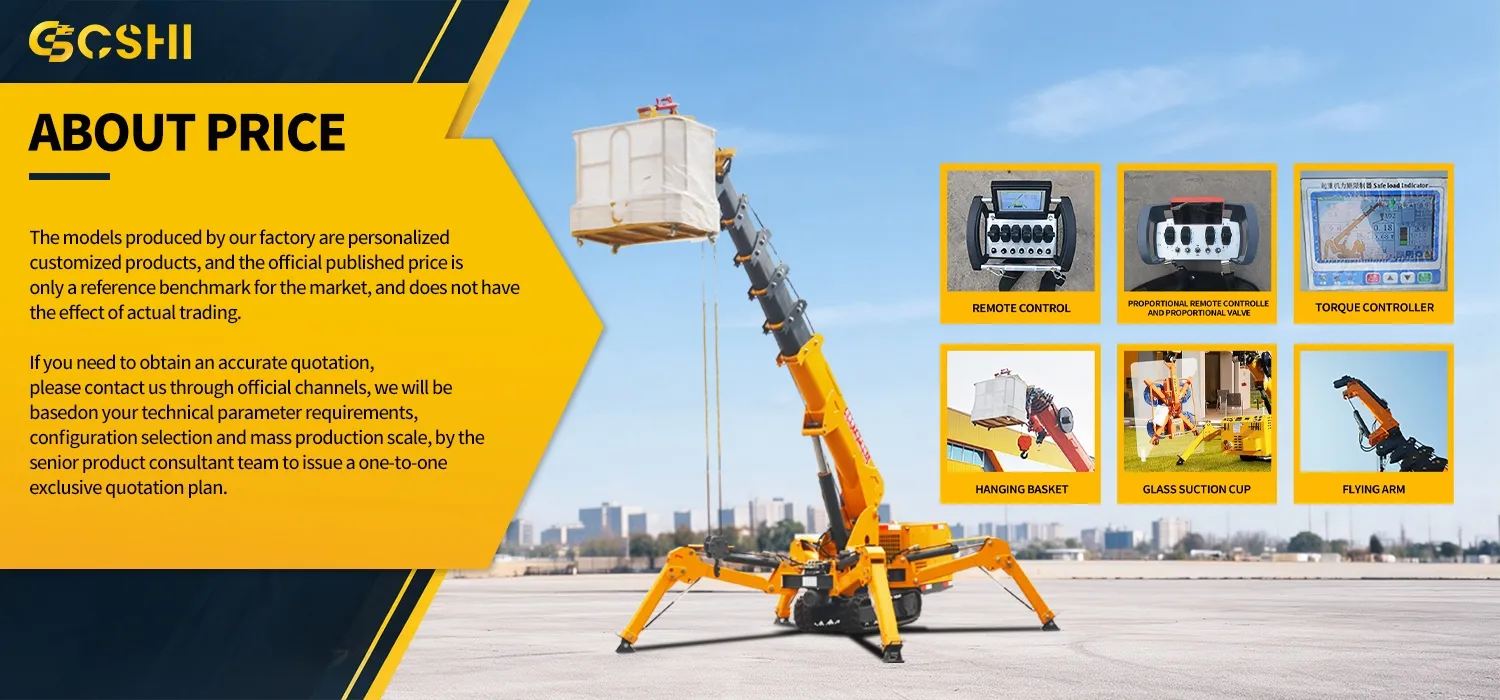
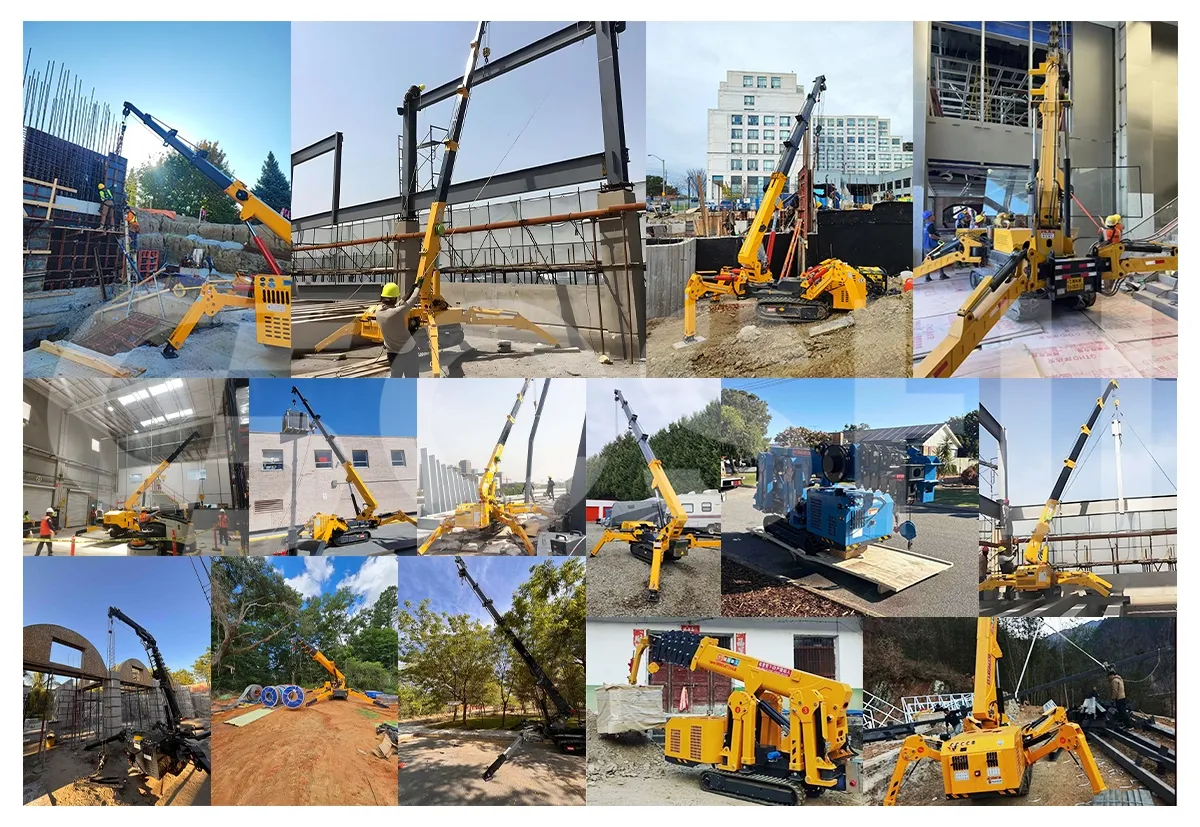
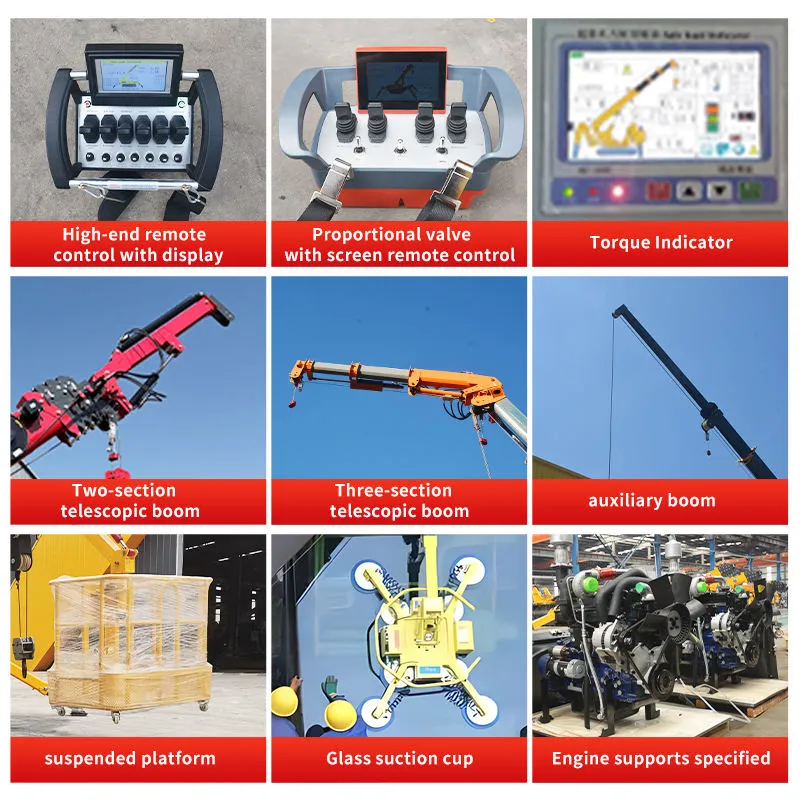
A spider crane is more than a small lifting machine. One of its biggest advantages is the modular design: on the same base machine, you can add a proportional remote control, a torque controller, a flying arm, a glass suction cup or a hanging basket. One mini crawler crane can then cover glass installation, rooftop work, high-level maintenance and many other jobs.
But many buyers spend a long time checking the base crane, and choose the spider crane optional attachments at the last minute. This is where problems begin. The control system is not precise enough for glass work, the flying arm capacity is overestimated, or the basket documents are missing when the machine reaches the site.
This guide explains how to select spider crane accessories step by step, according to your real lifting tasks.
Step 1: Define Your Lifting Task Before Choosing Any Attachment
Before you send an inquiry with a long option list, write down the job details first:
· What you lift: glass panels, AC units, steel parts, maintenance tools, or personnel
· Weight and size of each piece
· Required lifting height and working radius
· Obstacles on site: roof edge, parapet wall, columns, balconies, wall openings
· Indoor or outdoor work, floor condition and headroom
· How precise the movements must be (glass positioning needs much finer control than general lifting)
· How often you will use each option
Most attachment problems start at this step. Buyers add an option because it "looks useful", but their actual jobs do not need it. Or the opposite: the job clearly needs a flying arm, but only the basic hook is ordered.
A simple rule: choose the options for the most difficult job you have in the next 6 to 12 months, not for one special task that may never happen again.
Control System Options: Remote Control, Proportional Control and Torque Controller
Control options are often treated as small details, but they decide how safely and how precisely the crane works.
Standard Remote Control
The standard wireless remote control lets the operator walk to the position with the best view of the load, instead of staying at a fixed seat on the crane. This is very useful in narrow alleys, indoor sites and glass work, where the operator needs to see the panel and the installation point at the same time.
A standard remote control is usually a switch-type (on/off) system: each lever or button starts and stops a movement, with fixed speed steps. It is reliable, simple and enough for general lifting, but the start and stop of each movement can be sudden.
Proportional Remote Control and Proportional Valve
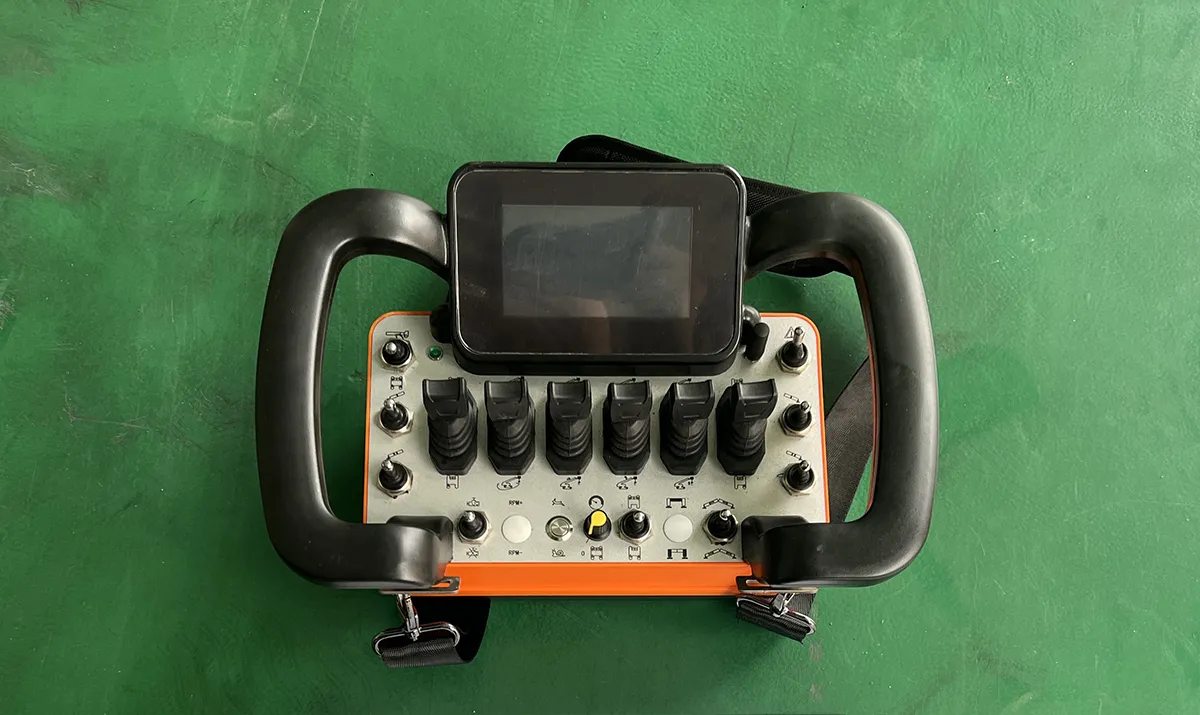
This option pairs a proportional remote control with a proportional hydraulic valve. The difference is easy to feel: the valve opens according to how far the lever is pushed. Push a little, the winch moves slowly; push further, it speeds up. Every movement — hoisting, slewing, boom luffing, telescoping — becomes stepless and smooth.
For glass curtain wall installation, this matters a lot. The panel must approach the frame slowly, turn slightly and stop exactly at the right position. With switch-type control, the operator keeps starting and stopping, and the panel swings. With proportional control, positioning is faster and far less stressful for the crew.
We suggest this option for glazing contractors, indoor precision work and any job where the load is fragile or the space is tight. For general steel and material lifting, the standard remote is usually enough.
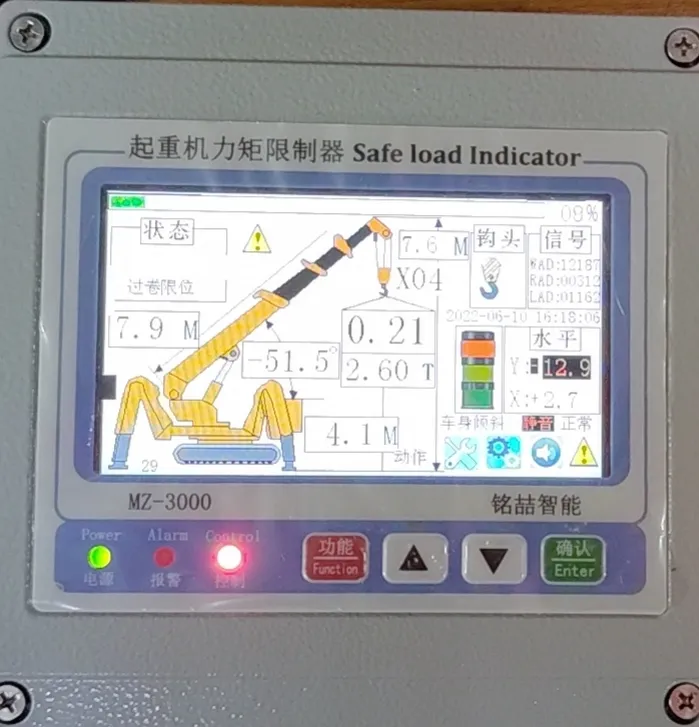
Torque Controller (Safe Load Indicator)
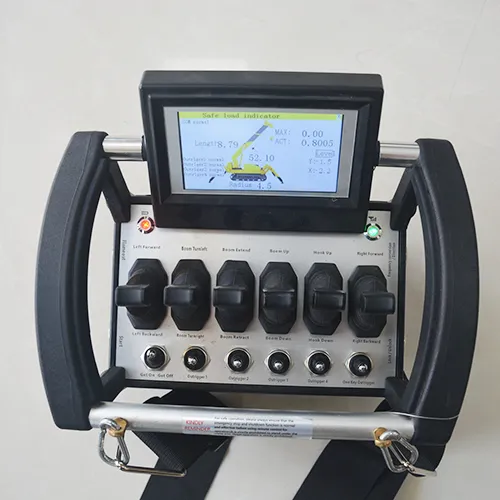
The torque controller — also called safe load indicator or load moment indicator (LMI) — is the display unit that shows the operator the real working condition of the crane: boom angle, working radius, actual load on the hook, rated capacity at that radius, and the load moment percentage.
When the crane approaches its limit, the system gives an alarm. At the overload point, it cuts off the dangerous movements (for example telescoping out or booming down) and only allows safe movements such as raising the boom or winching up.
On a spider crane, the rated capacity changes quickly with the radius, and the machine often works on rooftops or indoors where there is no space for mistakes. A torque controller turns the load chart into live information on a screen. In the EU and many other markets, this device is also part of the required safety equipment under the type approval rules, so confirm the market requirements when you order.
Glass Suction Cup (Vacuum Lifter)
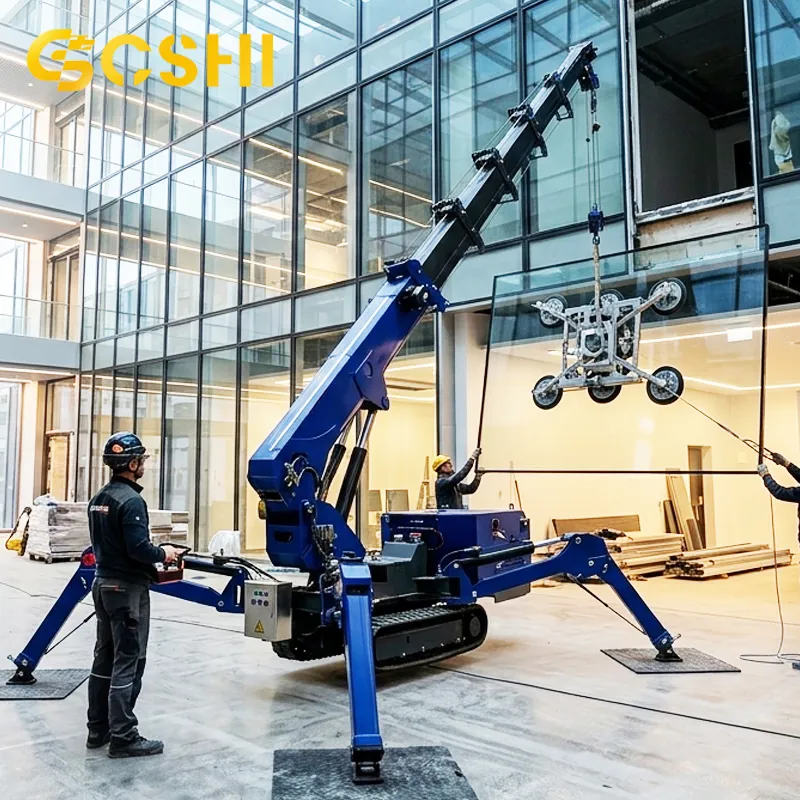
Best for: glass curtain walls, glass roofs, window panels, large mirrors, smooth flat stone or metal sheets.
This is one of the most popular spider crane accessories for glazing contractors. The suction pads hold the panel by vacuum, so no slings cross the glass surface, and the panel stays flat and easy to position.
Points to check before ordering:
· The number of pads and the frame size must match the panel weight and dimensions. Oversized glass needs a longer cross beam with more pads.
· The panel surface must be flat, clean and non-porous. Rough or profiled surfaces cannot be held safely by standard pads.
· Wind has a strong effect on large glass panels. Always follow the wind speed limit in the manual. Many site problems happen because crews keep lifting glass "just to finish this one panel".
· Some vacuum units take hydraulic power from the crane; others have a separate battery or engine pack. Confirm this early, because the crane needs a matching hydraulic interface.
· Ask about dual vacuum circuits and a vacuum reserve tank. If one circuit fails, the reserve gives the crew time to put the panel down safely.
A suction cup is strongly recommended if glass work is a main part of your business, and it works best together with the proportional remote control described above.
Flying Arm (Fly Jib)
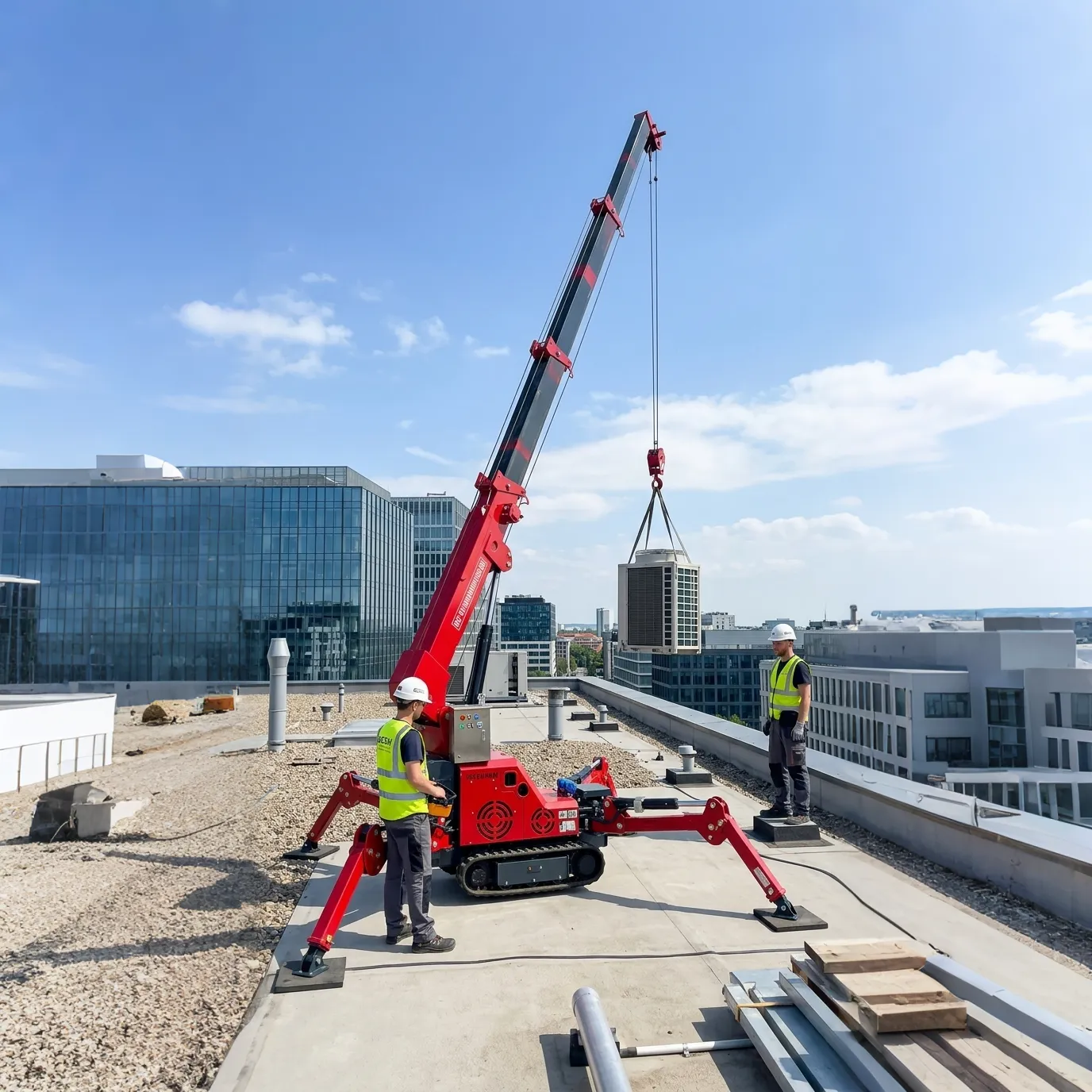
Best for: lifting over obstacles, reaching through wall openings, rooftop HVAC lifts where the crane must stand back from the roof edge.
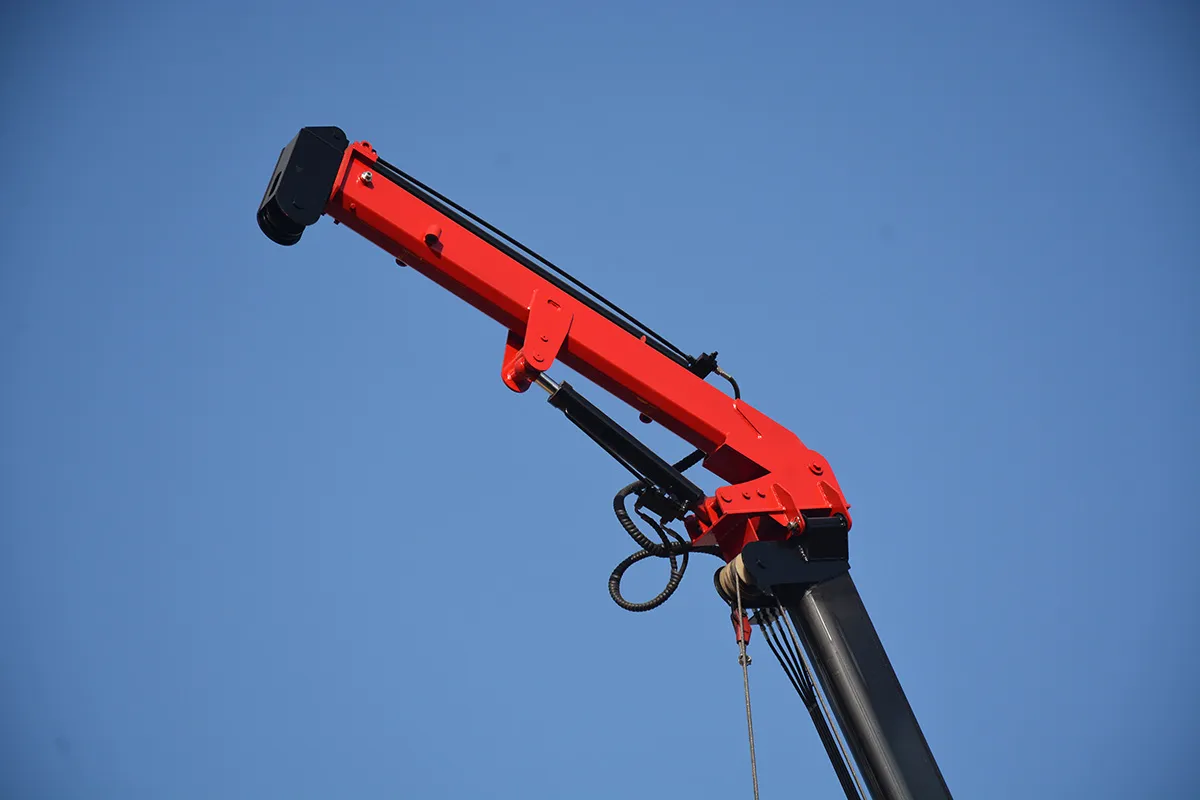
The flying arm — also called fly jib or searcher arm — is an extra arm mounted at the boom tip. It lets the hook reach around or over an obstacle, for example taking an AC unit over a roof parapet, or placing equipment behind a column.
There are fixed flying arms, hydraulic luffing arms (the angle is adjusted by a hydraulic cylinder) and telescopic arms. They differ in reach, capacity and price, so tell the supplier exactly how far and how high you need to reach.
The most important point is capacity. After a flying arm is installed, the rated capacity drops, and a separate jib load chart applies. Never read the main boom chart and assume the same number. Buyers who skip this easily overestimate the capacity by a large margin.
Hanging Basket (Personnel Work Basket)
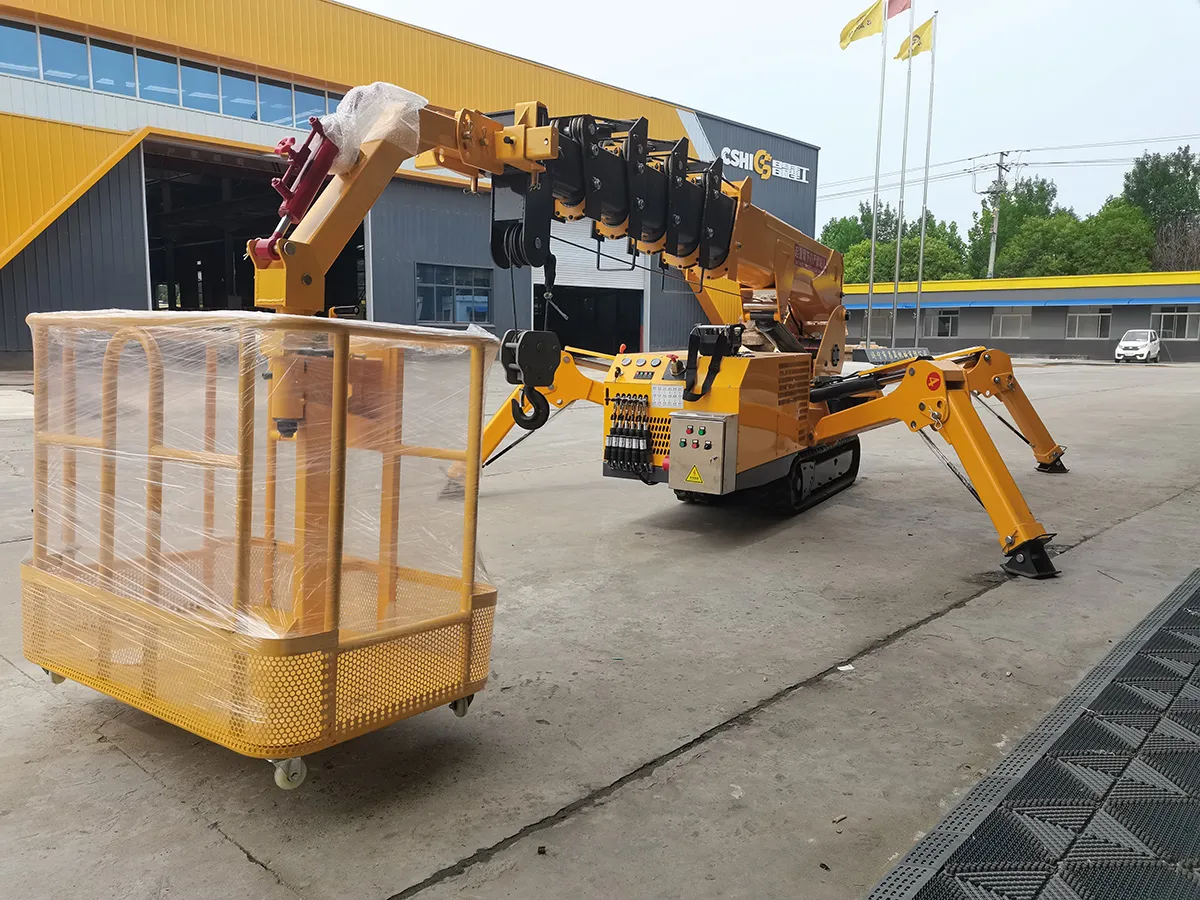
Best for: exterior wall repair, high-level maintenance, facade inspection and installation work where scaffolding is not possible.
The hanging basket is suspended at the boom tip and carries workers and tools to the working height. This is the option that needs the most care, because lifting people is completely different from lifting goods.
· The basket must be a certified personnel work basket supplied or approved by the crane manufacturer, with guard rails, toe boards, harness anchor points and a secure mounting — not a simple cage hung on the hook.
· The crane itself must support personnel lifting, with the required safety devices such as the torque controller and hydraulic holding valves.
· In the EU, UK and many other regions, personnel lifting is strictly regulated. A homemade welded basket, or a cheap uncertified basket from a local workshop, will be stopped by site safety officers, and the contractor carries the liability.
· Check the certification documents together with the machine documents, ideally before shipment. Do not wait until the basket arrives on site.
Safety and Certification Rules for Optional Attachments
No matter which spider crane accessories you choose, five rules always apply:
1.Match every option to the crane model and tonnage. An attachment built for a larger machine cannot run safely on a smaller crane, even if the pins seem to fit.
2.Confirm hydraulic interfaces early. Suction cups and hydraulic flying arms need spare valves, correct oil flow and proper pipelines. These are decided at the factory.
3.Use the correct load chart for each configuration. Main boom and flying arm have different capacity tables.
4.Keep certificates as one set. Check the machine CE documents together with the documents for the basket and other options, especially for personnel lifting.
5.Never modify attachments yourself. Welding a homemade basket onto the boom, or changing pin sizes without factory approval, moves all safety responsibility to the user.
Frequently Asked Questions
Can I add attachments to the spider crane after I receive the machine?
It depends on the attachment. A hanging basket or a mechanical flying arm can sometimes be added later if the crane is designed for it. But a suction cup or hydraulic flying arm needs hydraulic valves and pipelines that are installed at the factory, and a proportional control system needs the matching proportional valve. Adding these on site is often impossible or much more expensive. If you may need them later, order them together with the machine.
What is the difference between the standard remote control and the proportional remote control?
The standard remote is a switch-type system: the movement starts and stops at fixed speed steps. The proportional remote works with a proportional valve, so the speed follows the lever movement and every action is smooth and stepless. Glass installation and other precision work are much easier with proportional control.
Is the torque controller mandatory?
In many markets, the load moment indicator is part of the required safety equipment for this type of crane, and it is checked during type approval and site inspection. Even where it is not legally required, we still recommend it, because the rated capacity changes with every radius and the screen removes guesswork. Please confirm the exact requirement for your country before ordering.
Can the hanging basket lift workers?
Only when the basket is a certified personnel basket approved by the crane manufacturer, and the crane is equipped with the required safety devices. A cargo basket or a homemade basket must never be used to lift people.
Does the flying arm reduce lifting capacity?
Yes. The flying arm moves the load further from the boom tip and adds its own weight, so the rated capacity is lower than the main boom capacity. Always work from the separate flying arm load chart.
Does the glass suction cup need power from the crane?
Some models are driven by the crane's hydraulic system; others have their own battery or diesel pack. The hydraulic type is lighter on site but needs the right interface on the crane. Tell the supplier which type you prefer when you send the inquiry.
How can I confirm which options fit my jobs?
Send the manufacturer your lifting plan: load weight, panel or equipment dimensions, required height and radius, site photos and the certificates your site requires. The engineering side can then confirm the complete configuration instead of selling you a list of separate parts.

 Spider Crane for Solar Panel Installation: Rooftop Lifting
 Spider Crane Common Faults & Troubleshooting Guide for M
 How to Lift an HVAC Unit to a Roof with a Spider Crane