
How to Lift an HVAC Unit to a Roof with a Spider Crane
How to Lift an HVAC Unit to a Roof with a Spider Crane (Size & Weight Guide)
Lifting a rooftop HVAC unit is one of the most common jobs a mini spider crane is bought for — and one of the most misunderstood. Contractors regularly ask "can a spider crane lift an AC unit to the roof?" The answer is usually yes, but the real question is "which spider crane, at which radius, on which roof?" This guide walks through the numbers so you can plan the lift before you rent or buy.
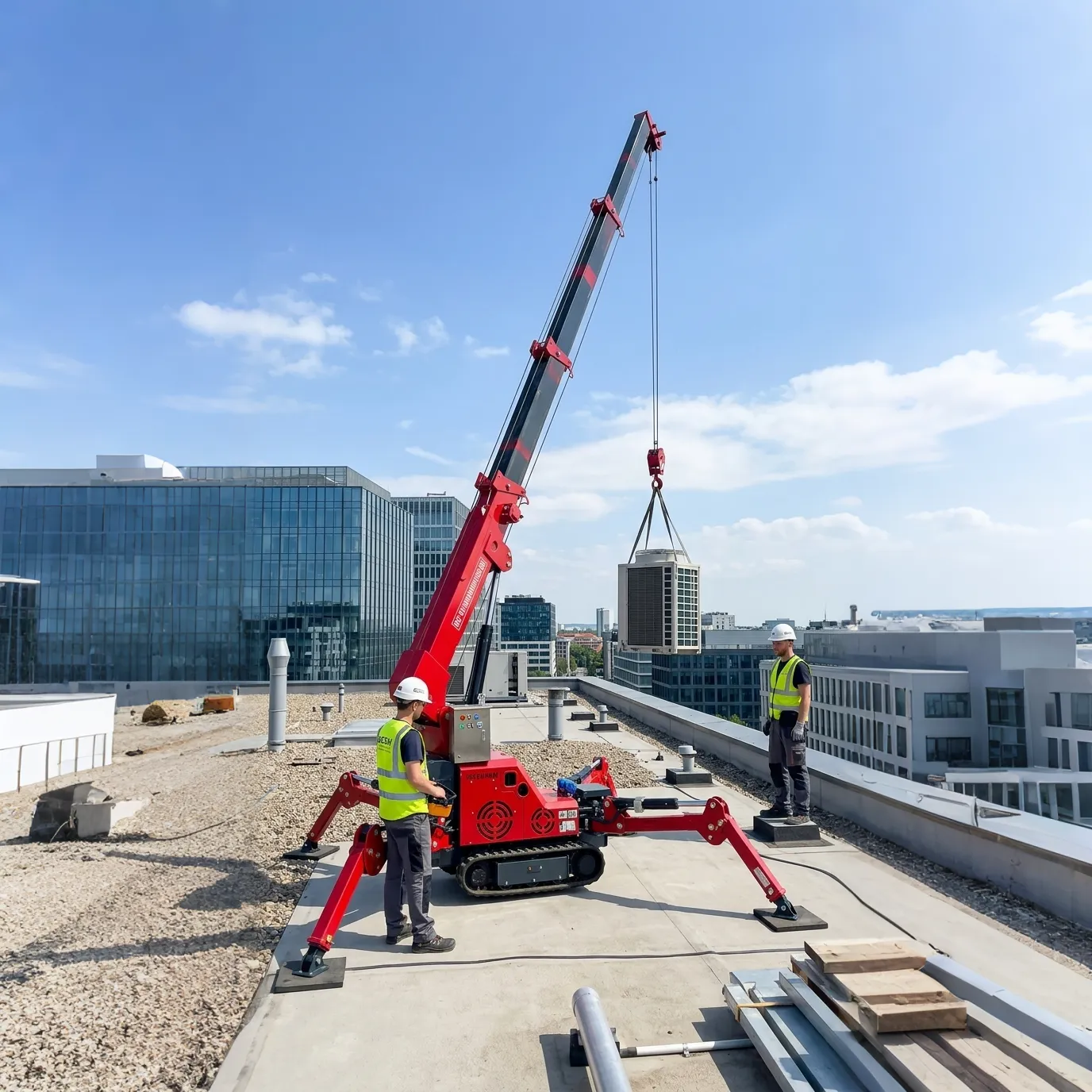
Why rooftop HVAC lifting is different from ground lifting
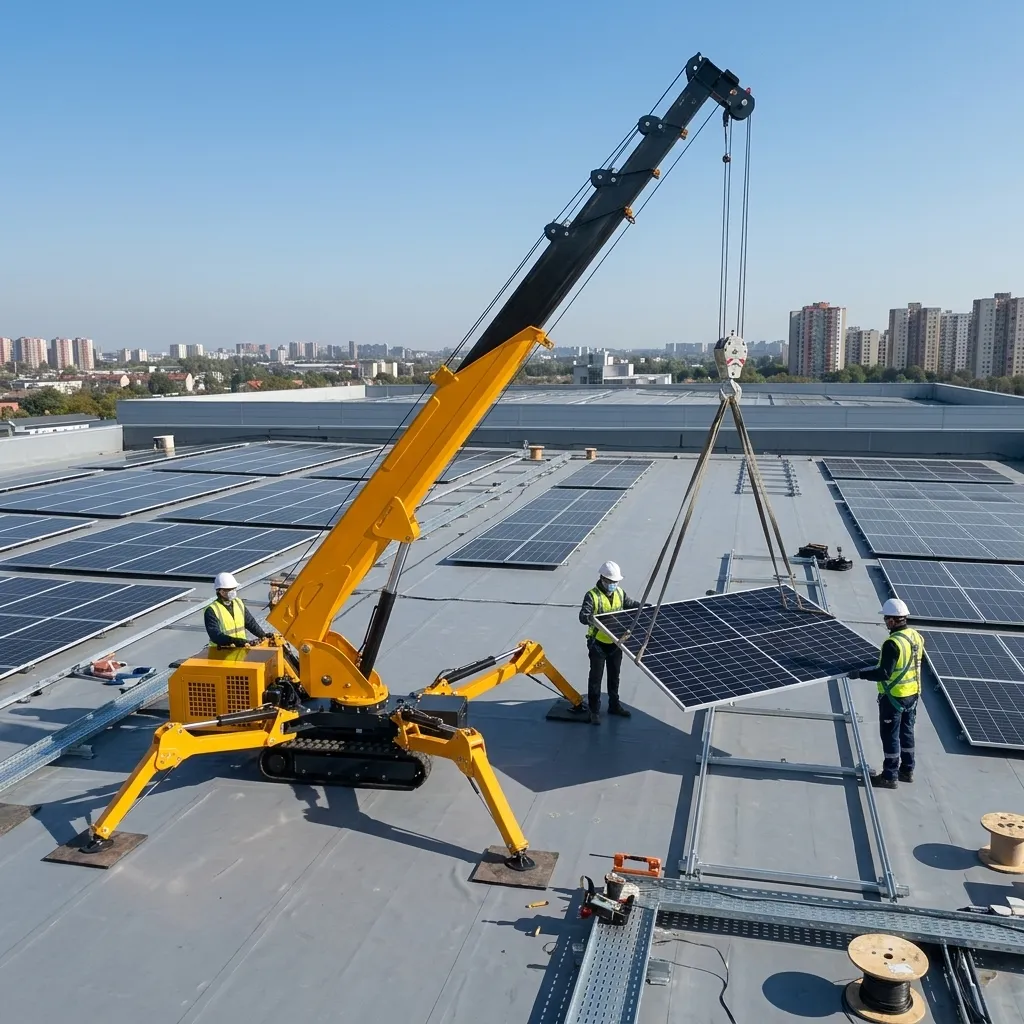
A rooftop lift combines three problems at once: the unit must go up several storeys, it must be placed over a parapet, and the roof underneath may not be designed for crane loads. Unlike a truck crane that works from the street, a spider crane can ride up in a freight elevator or be lifted to the roof itself — which is why it is the preferred tool when access is the real problem. But once it is on the roof, the load chart and the floor bearing capacity decide everything.
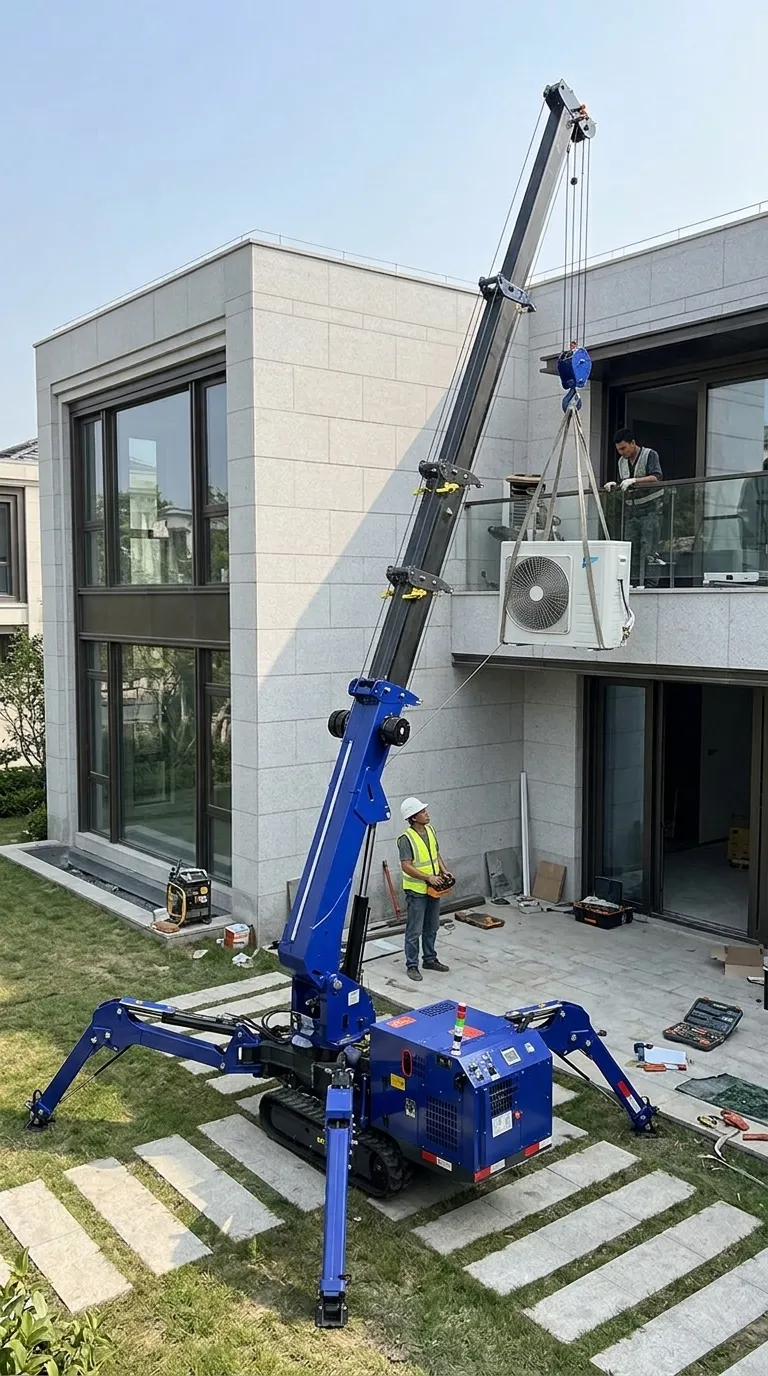
How much does an HVAC unit actually weigh?
The most common mistake is guessing the weight. Use the nameplate data, not the shipping weight. Typical rooftop units:
| Unit type | Typical weight | Example |
|---|---|---|
| Mini split / small package unit | 100–300 kg | Wall-mounted AC, 2–5 kW |
| Medium package unit | 400–900 kg | 10–25 kW rooftop units |
| Large package unit / AHU | 1,000–2,500 kg | 30–80 kW units, multi-zone AHUs |
| Chiller / heavy plant | 2,500–5,000 kg | Water-cooled chillers |
Add rigging: slings, spreader bar and any suction or lifting frame add 50–150 kg. Always plan with the total weight.
What size spider crane do you need?
Capacity depends on weight AND working radius. At the typical 4–6 m radius over a parapet:
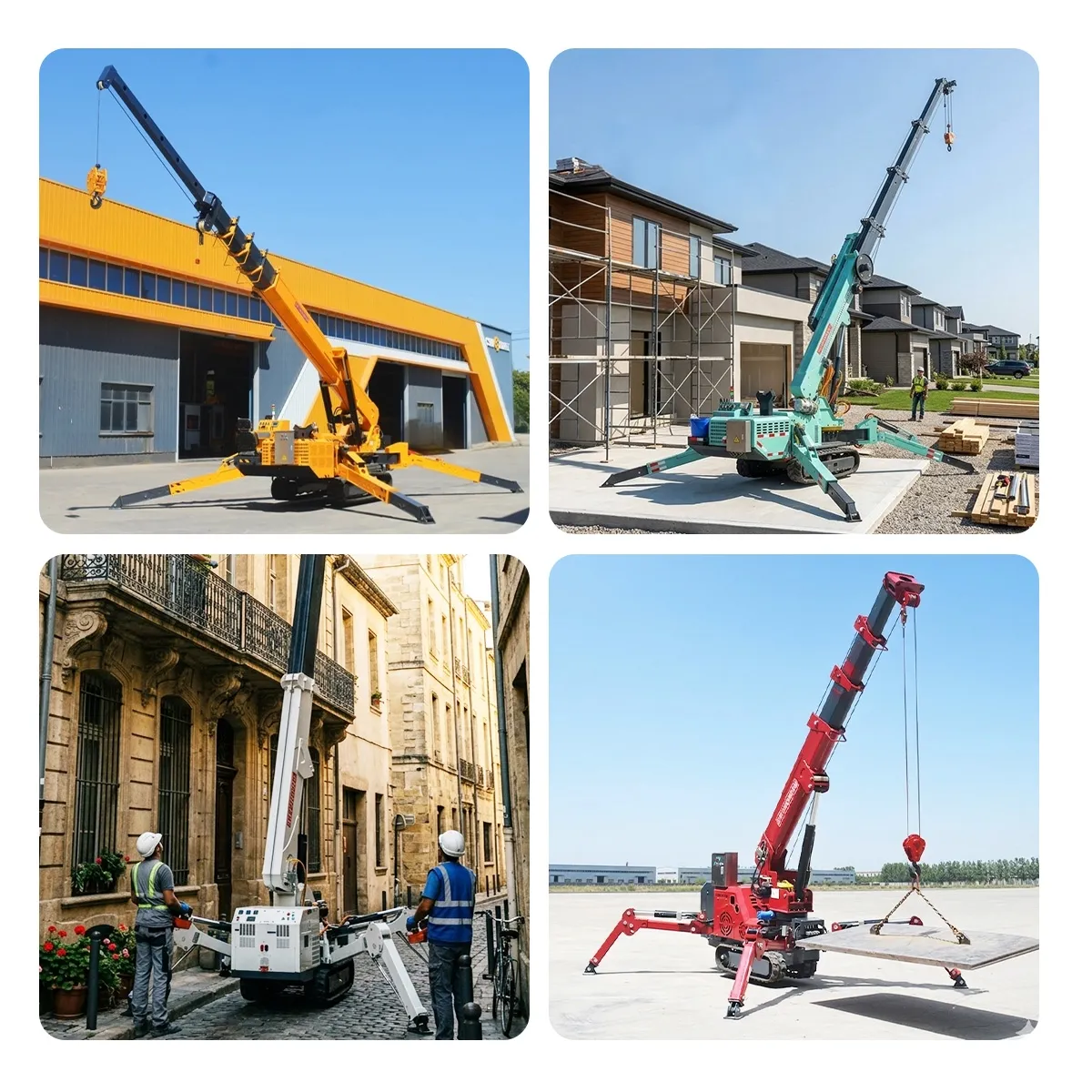
Mini split or small unit (up to 300 kg): a 1.2–3 ton spider crane is more than enough; 2 ton models are the popular choice for facade and small rooftop work — see the 3 ton spider crane.
Medium package units (400–900 kg): a 3–5 ton spider crane gives you comfortable margin at 5–6 m radius — see the 5 ton spider crane.
Large AHU or chiller (1,000–2,500 kg): go with a 5–8 ton spider crane and check the load chart at your exact radius — see the 8 ton spider crane.
Heavy plant above 2,500 kg: 8–16 ton models, and confirm the roof can actually take the crane plus the load.
Rule of thumb: keep the lift within 60–70% of the chart capacity so wind and dynamic loads never push you over.
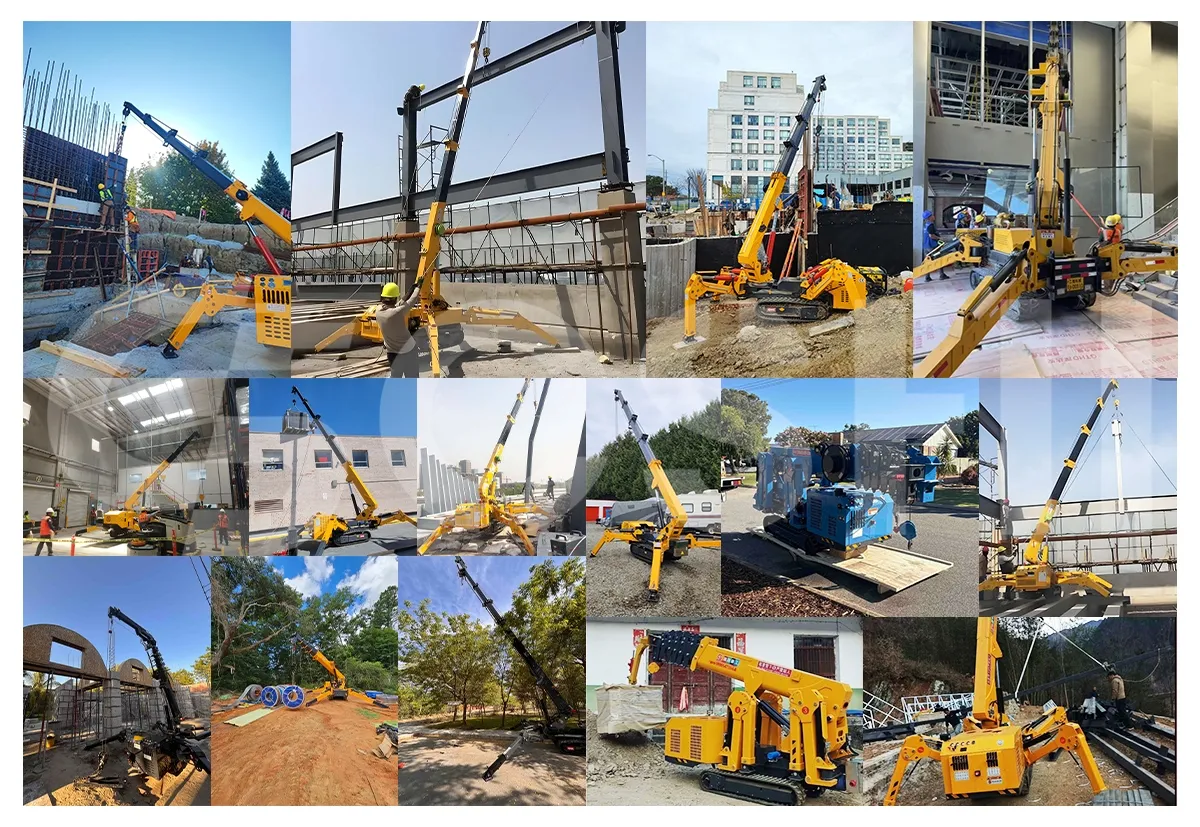
Plan the lift in six steps
Weigh the unit and add rigging.
Measure the working radius — from the machine's centre of rotation to the drop point over the parapet.
Choose the model from the load chart at that radius.
Position the crane on the roof; extend and pad the outriggers.
Check the roof's floor load capacity — read the floor load and outrigger guide before stepping on the slab.
Rig, lift slowly, and keep the swing zone clear.
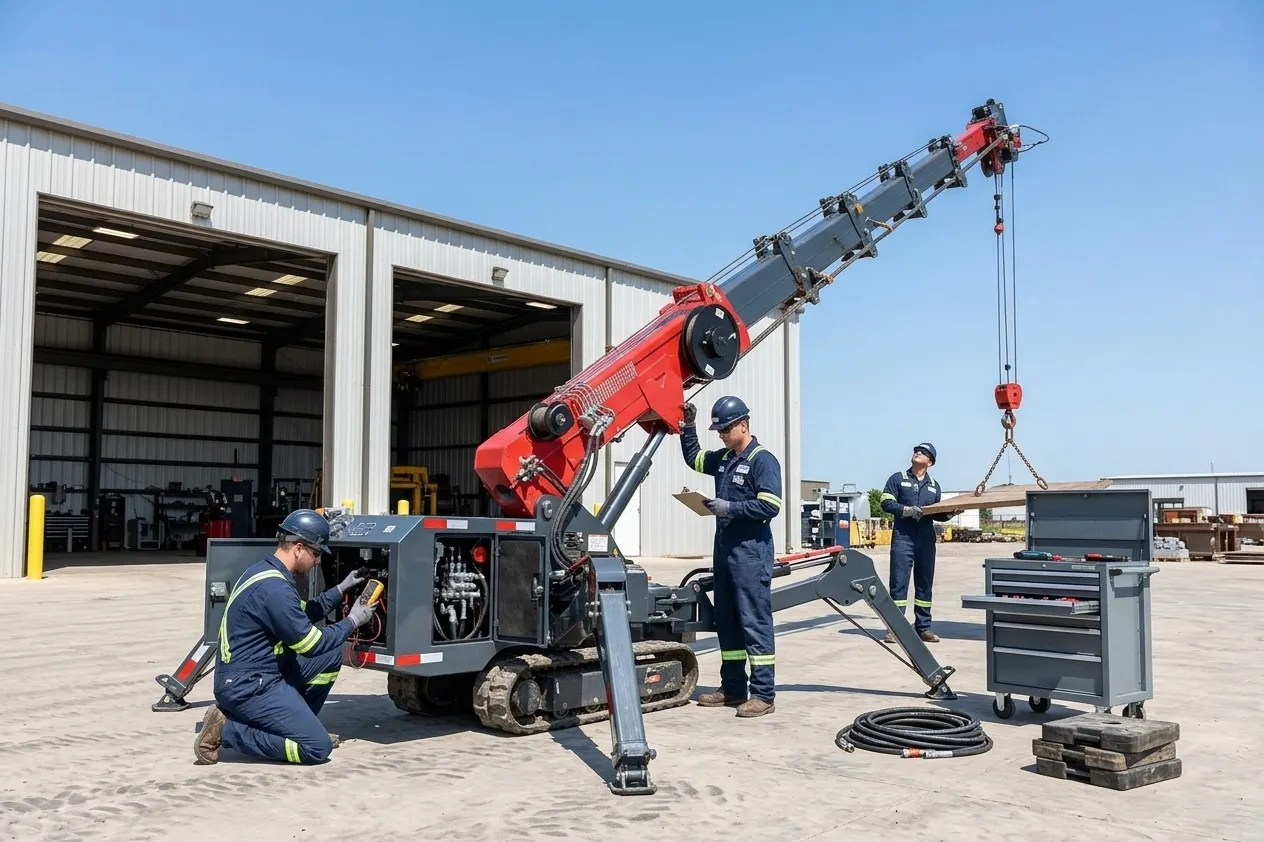
Safety checklist for rooftop work
Confirm the roof can support the crane's outrigger loads — usually the first question structural engineers ask.
Watch wind speed: rooftop wind is stronger than street level; most operators stop above 10–12 m/s.
Use spreader pads to keep ground pressure within the slab's allowance.
One operator with a wireless remote stays clear of the swing path.
Test the safe load indicator before every lift.
FAQ
Q: Can a small spider crane lift a 500 kg AC unit?A: Yes — a 3 ton spider crane typically handles 500 kg at a radius of 6–8 m, but always confirm on the load chart.
Q: How does the crane get onto the roof?A: Smaller models (up to 1.5–2 ton) fit through standard doors and freight elevators; larger units are often craned or ramped onto the roof.
Q: What radius do I need for a parapet lift?A: Measure from the machine centre to the unit position — usually 4–6 m, which is exactly the range where 3–5 ton models perform best.
Whether you are replacing a chiller on a plant deck or setting mini splits on a restaurant roof, the same rule applies: weight, radius, and roof capacity — in that order.
Ready to plan a lift? Ask for the load chart and rooftop lifting specs of the 3 ton, 5 ton or 8 ton spider crane, and we will help you confirm the model before you commit.
 Spider Crane for Solar Panel Installation: Rooftop Lifting
 Spider Crane Common Faults & Troubleshooting Guide for M
 How to Choose Spider Crane Optional Attachments (Full Guide)
How to Lift an HVAC Unit to a Roof with a Spider Crane