
Spider Crane for Historic Building Renovation: Heritage Lifting
Spider Crane for Historic Building Renovation: Lifting Heavy Loads Without Damaging Heritage Structures
Restoring a historic building means solving one constant puzzle: how to move heavy stone, steel, HVAC units, and replacement windows into a structure that was never designed for modern machinery. Truck cranes can't fit through narrow streets or courtyards, and their weight can crack old foundations and vaulted floors. That's why a spider crane for historic building renovation has become the go-to tool for conservation contractors across Europe and North America. Here's how these compact crawler cranes get the job done while keeping heritage fabric intact.
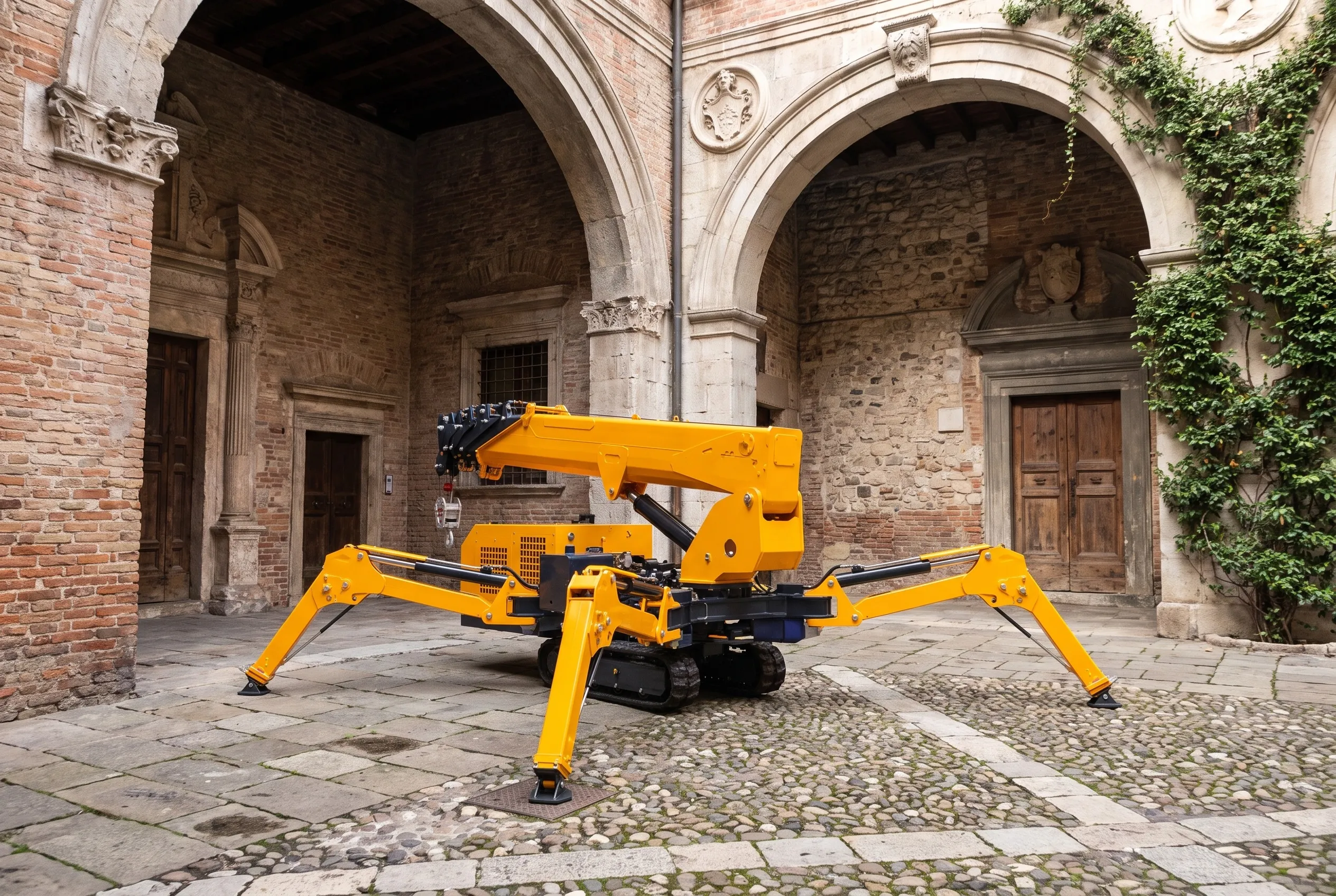
Why Spider Cranes Are Built for Heritage Sites
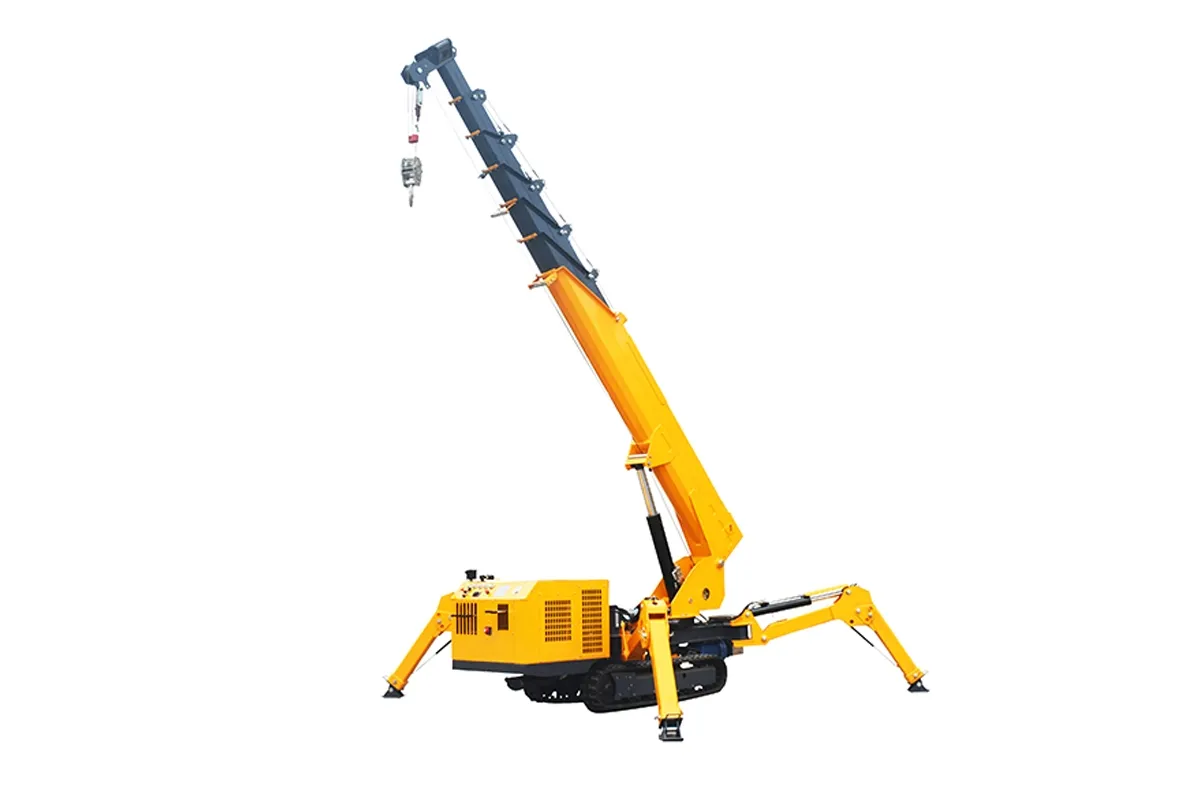
Tight access, no road closures: A 3-ton spider crane folds down to about 0.6–0.9 m wide, so it moves through narrow arched gateways, lift shafts, double doors, and pedestrian alleys where a mobile crane will never go.
Low ground bearing pressure: Rubber tracks and four outriggers distribute load so evenly that the machine can operate inside courtyards, over flagstones, and on timber or stone floors that would crush under a truck crane's wheels.
Minimal footprint once deployed: Outriggers span just a few meters, letting you lift beside decorative facades, parapets, and columns without scaffolding removal.
Quiet, emission-free options: Battery-electric models run inside buildings and near libraries, museums, and occupied heritage structures with almost no noise or exhaust.
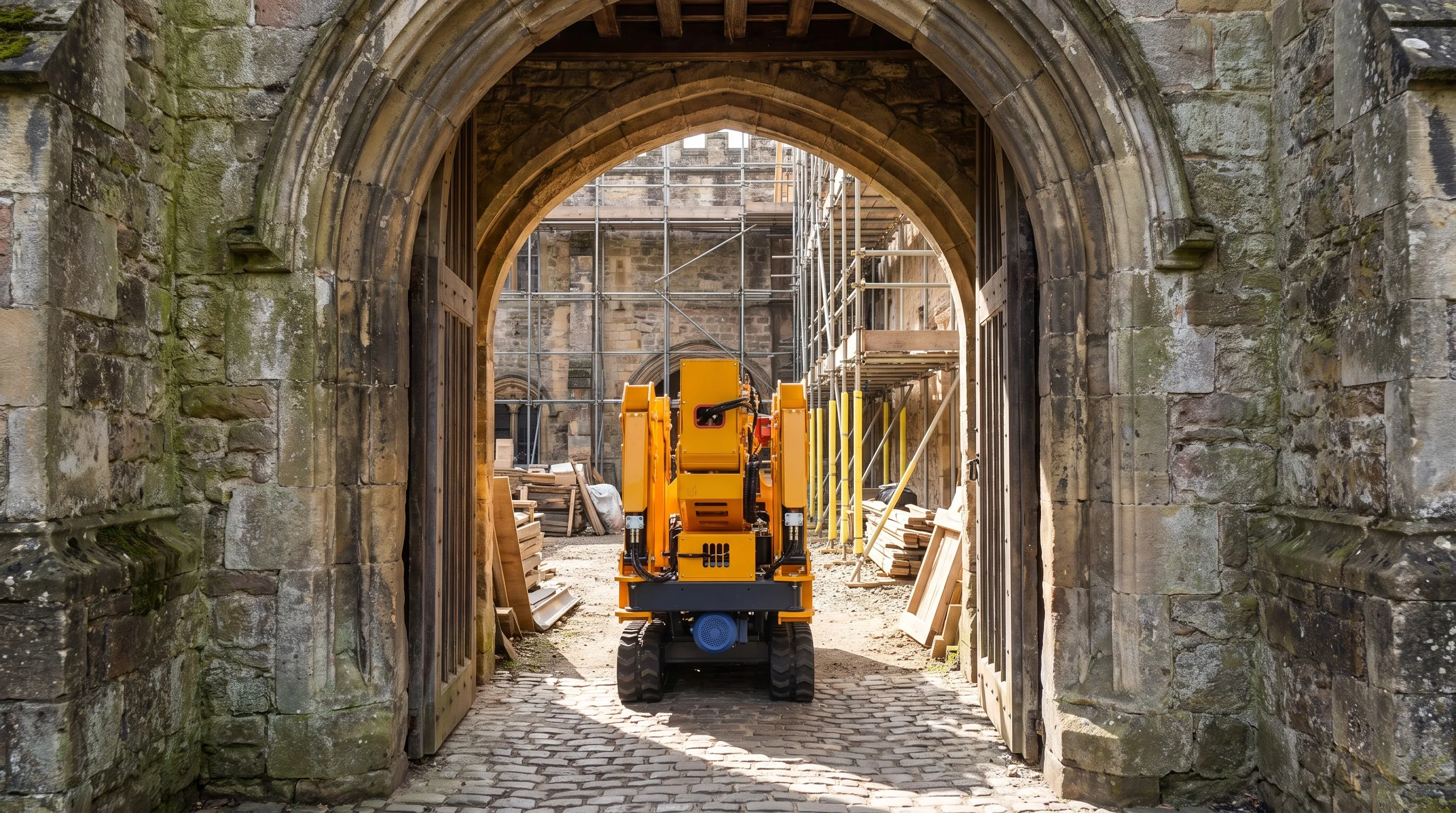
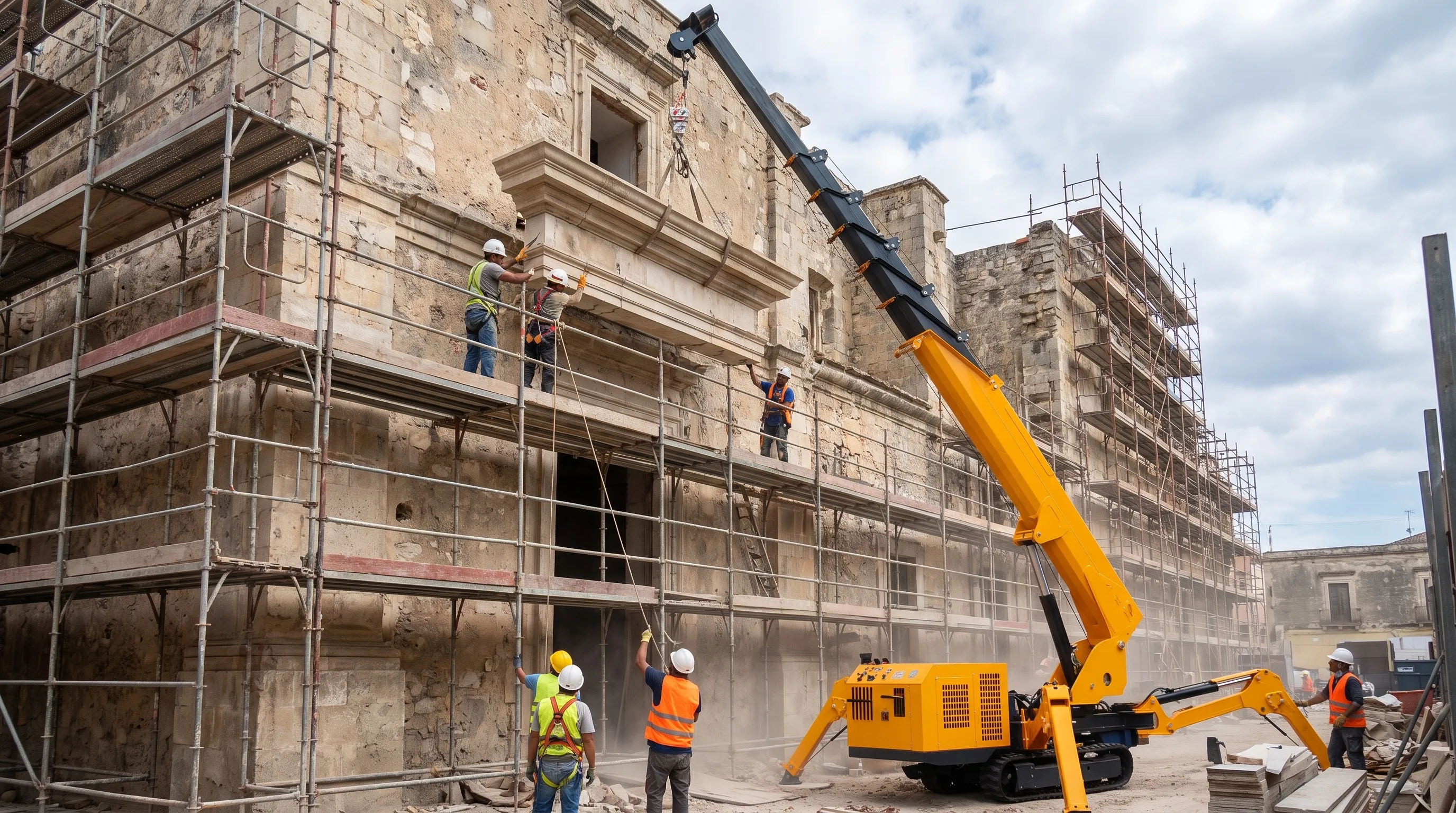
Typical Heritage Renovation Tasks
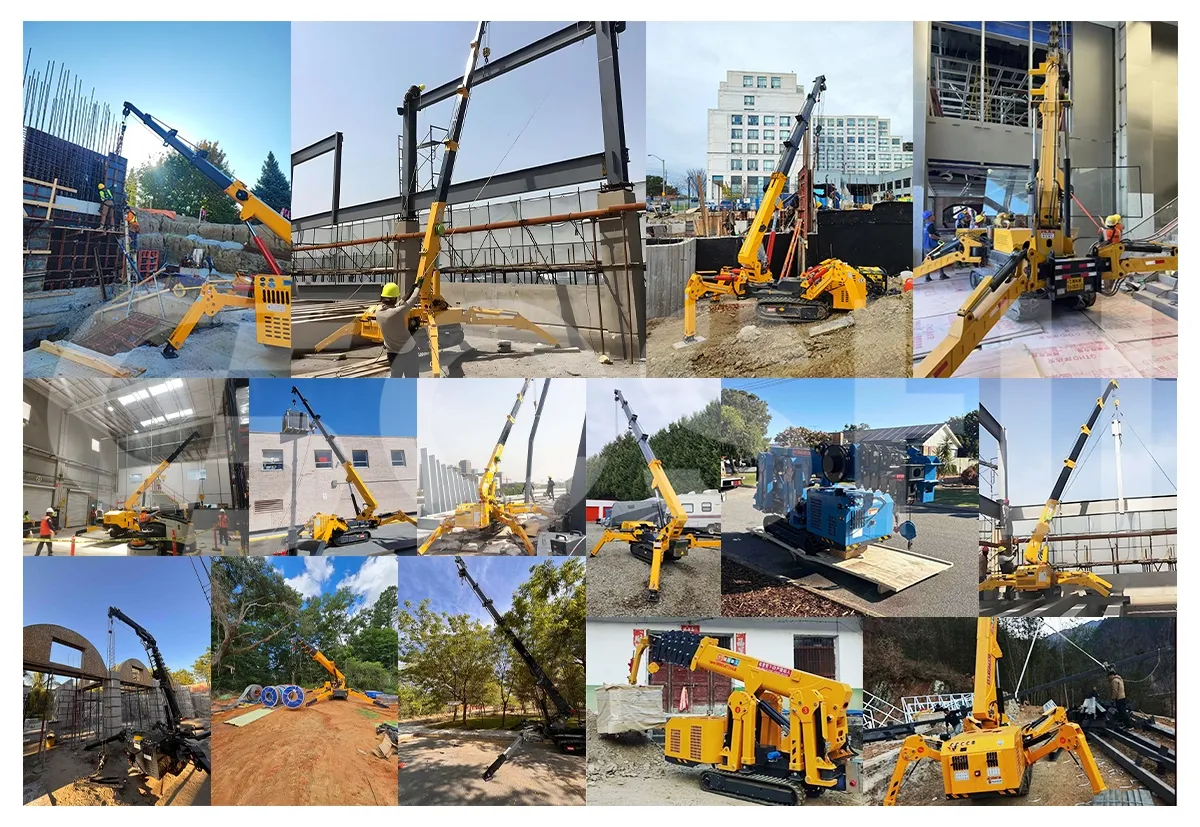
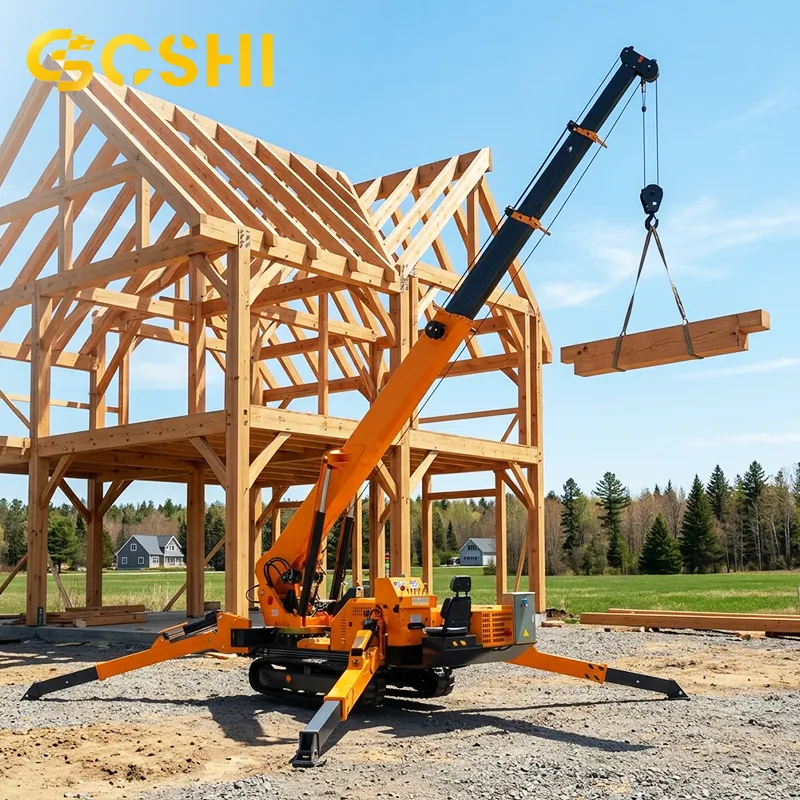
Hoisting replacement roof timbers and trusses onto historic roofs without scaffolding across the facade.
Positioning stone cladding, cornices, and ornamental elements for facade restoration.
Lifting new HVAC, boilers, and rooftop plant into buildings where crane access is impossible.
Moving heavy glazing and period-correct windows up to upper floors.
Removing old equipment and debris safely back to ground level during strip-out.
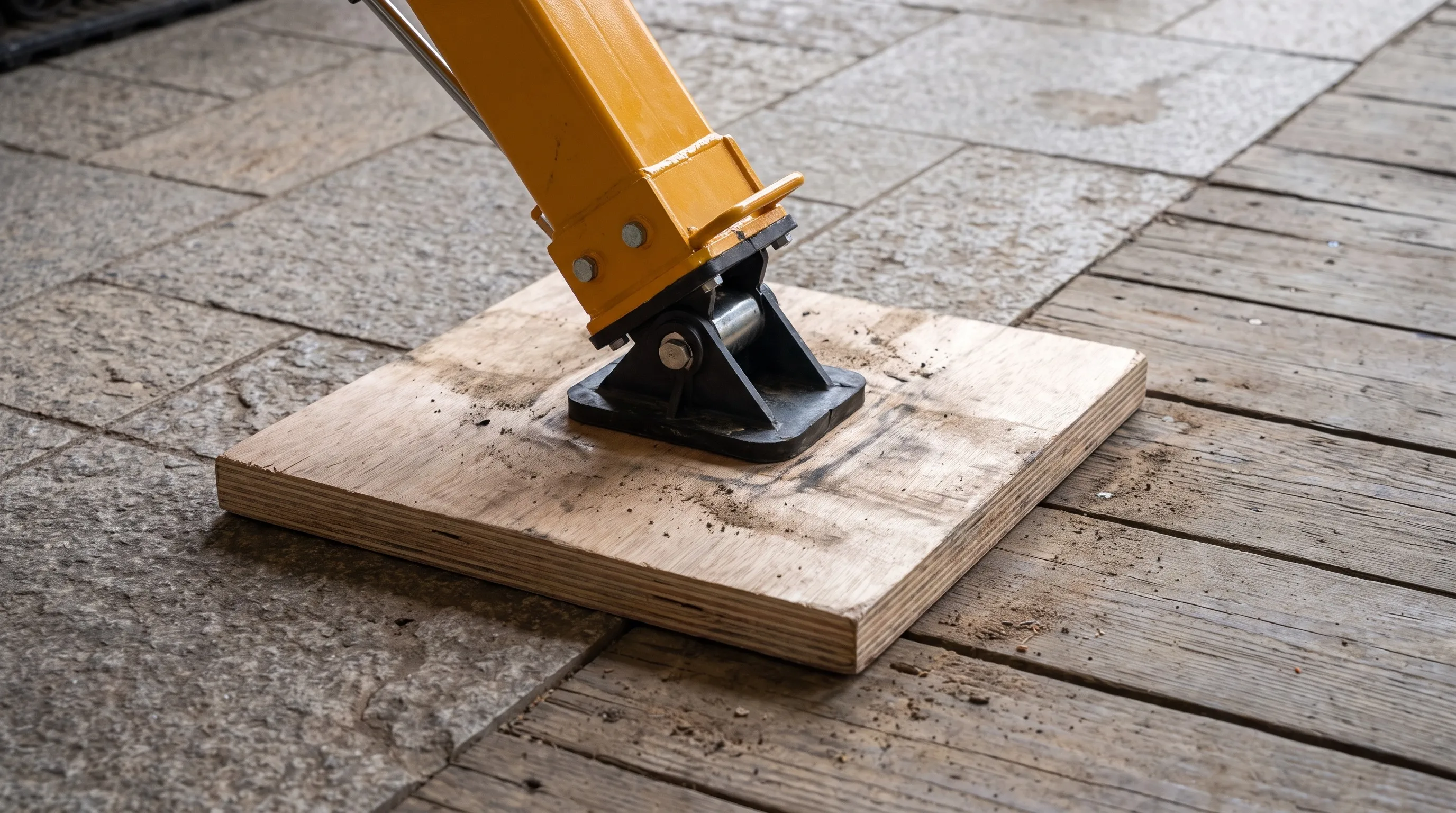
Working Safely Around Heritage Fabric
Confirm the floor load rating first. Use load-spreading mats and position outriggers over beams or structural walls, not on vaults or parquet.
Check for hidden voids beneath floors—old cellars and crawl spaces can collapse under concentrated loads.
Protect the floor: always use rubber-pad outrigger feet and plywood or specialist mats on stone, marble, and polished concrete.
Monitor wind and vibration when lifting near fragile masonry, murals, or plaster ceilings.
Plan the lifting path so loads never swing over scaffolding or ornamental stonework.
Electric vs. Diesel for Indoor Heritage Work
Inside a museum, chapel, or occupied heritage building, zero-emission electric models are almost always the right call. They eliminate exhaust in enclosed spaces and keep noise low enough to work near exhibitions or public areas. Dual-power machines add flexibility: silent electric mode indoors, diesel mode when moving across a large site or on external facades.
Choosing the Right Size for Conservation Work
1–2 ton units: ideal for glazing, small stone elements, and interior lifts through tight stairwells and elevators.
3-ton units: the most versatile size for facade restoration, roof works, and HVAC placement in listed buildings.
5-ton and up: for heavy structural steel, bridge and tower conservation, and large-scale heritage engineering.
Get a Machine That Respects the Building
Every heritage site is unique: floor capacity, doorway width, roof height, and the weight of the heaviest lift all shape the right choice. Jining Changsheng Machinery builds 1–8 ton mini spider cranes in electric, diesel, and dual-power configurations, with CE and EPA certification for export. Share your site's access width and heaviest lift, and we'll help you pick a model that protects the building and gets the job done.
 Spider Crane for Historic Building Renovation: Heritage Lift
 Spider Crane for Solar Panel Installation: Rooftop Lifting
 Spider Crane Common Faults & Troubleshooting Guide for M
 How to Choose Spider Crane Optional Attachments (Full Guide)