
Spider Crane

Spider Crane Functions: Boom, Outriggers, Remote & Safety Features

page views :
Release time : 2026-10-15

Spider Crane Functions Explained: Boom, Outriggers, Remote Control & Safety Features

Spider cranes earn their reputation as the most versatile lifting machines on confined sites. But what actually makes them work? This guide breaks down the core functional components of a spider crane — the boom, outriggers, power system, and remote controls — so you can understand exactly how each part contributes to safe, precise lifting in tight spaces.

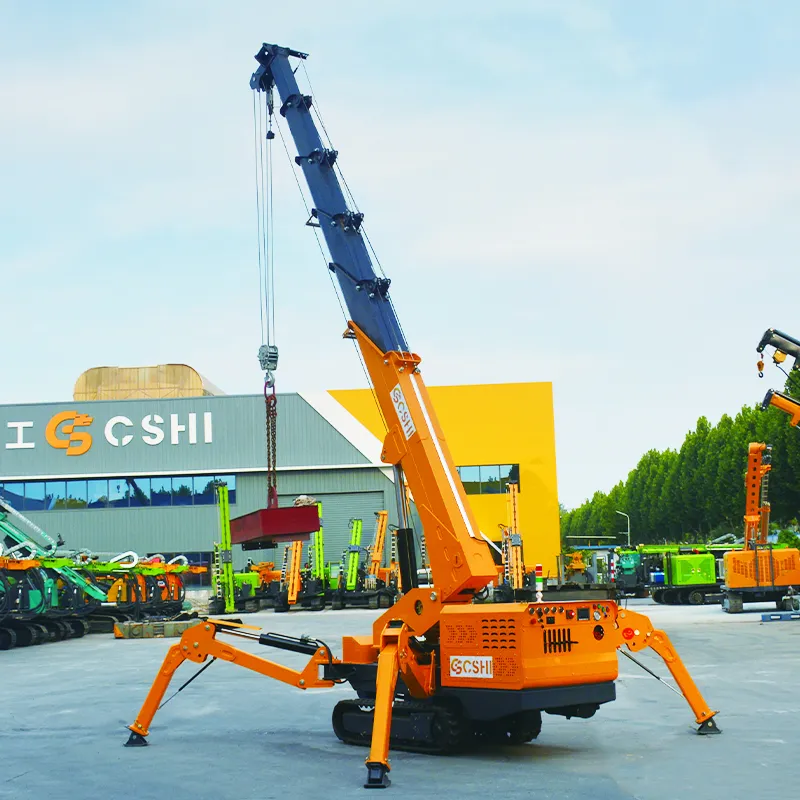
Spider Crane Functions: Boom, Outriggers, Remote & Safety Features(Image1)

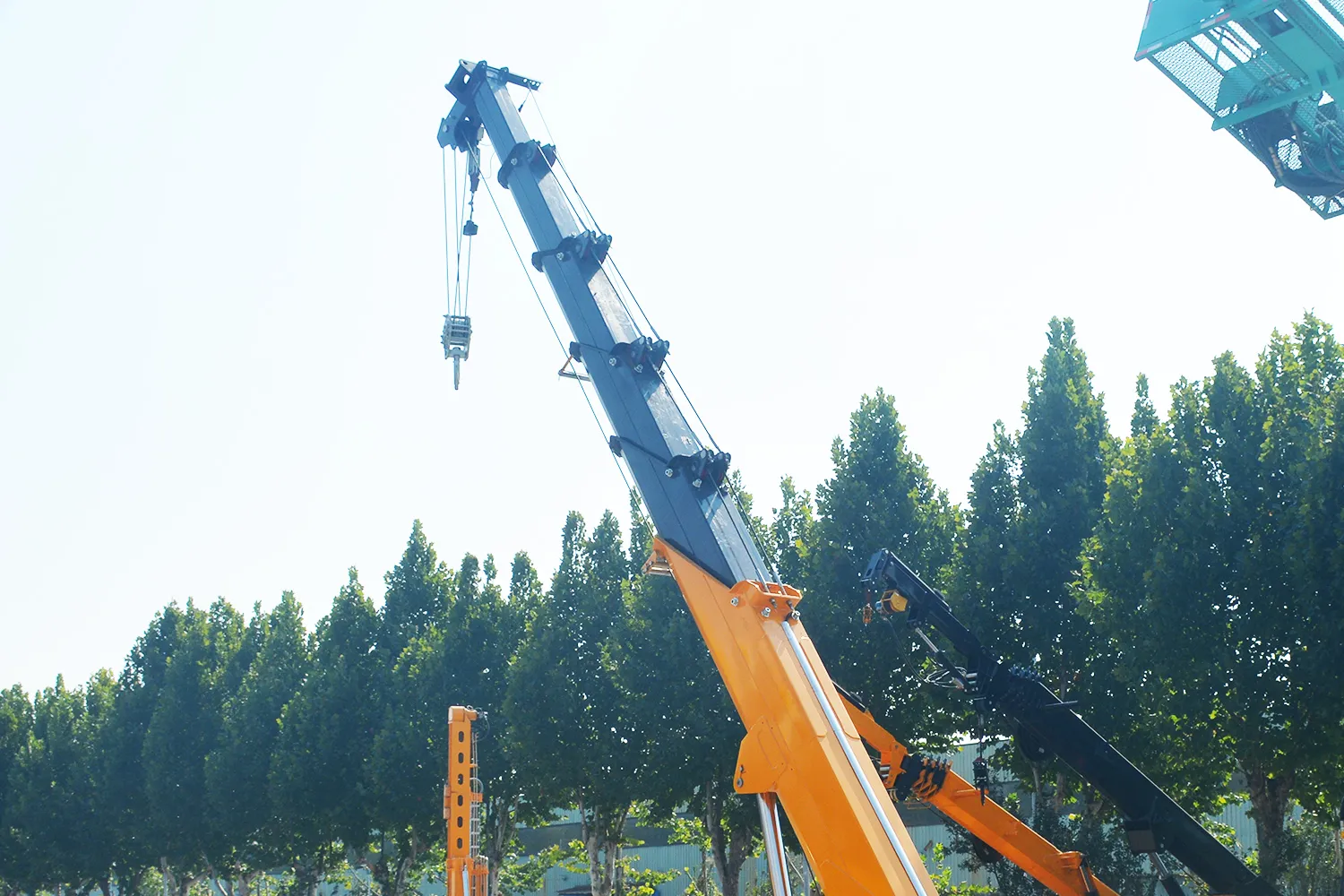
1. The Telescopic Boom: Reach and Working Radius

The boom is the crane's lifting arm, and in spider cranes it is almost always telescopic, meaning it extends in sections to reach the load.

  • Multiple boom sections let you extend the reach without increasing the machine's footprint.

  • Working radius is the horizontal distance from the crane's center to the load. The farther the radius, the lower the safe capacity.

  • Luffing (angle adjustment) allows the boom to raise and lower to position loads over obstacles and through openings.

The boom's geometry is the reason a compact spider crane can lift to rooftops, over parapets, and into upper-floor windows that other cranes cannot reach.

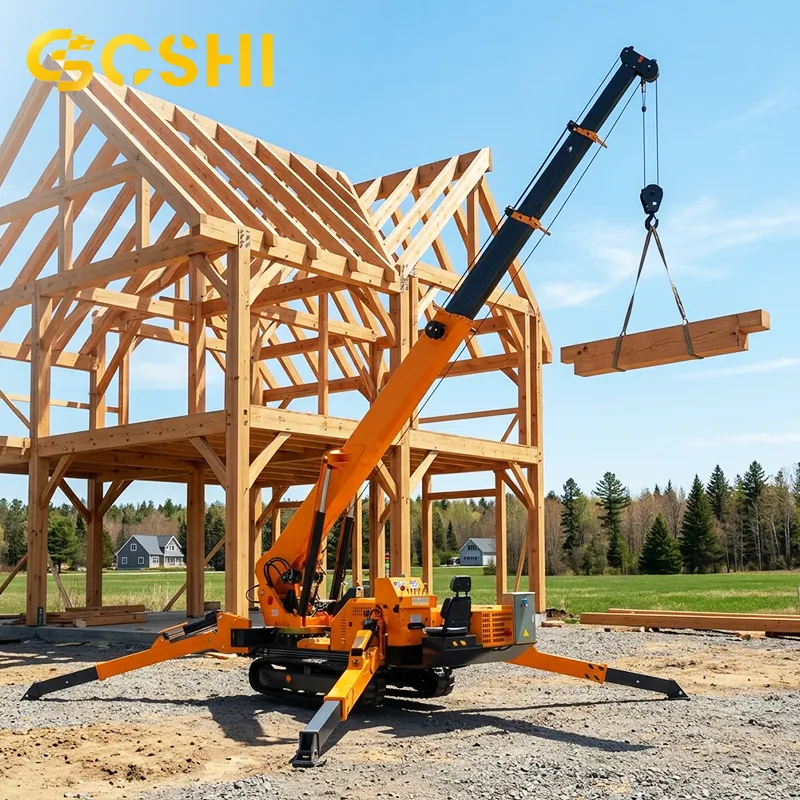
Spider Crane Functions: Boom, Outriggers, Remote & Safety Features(Image2)

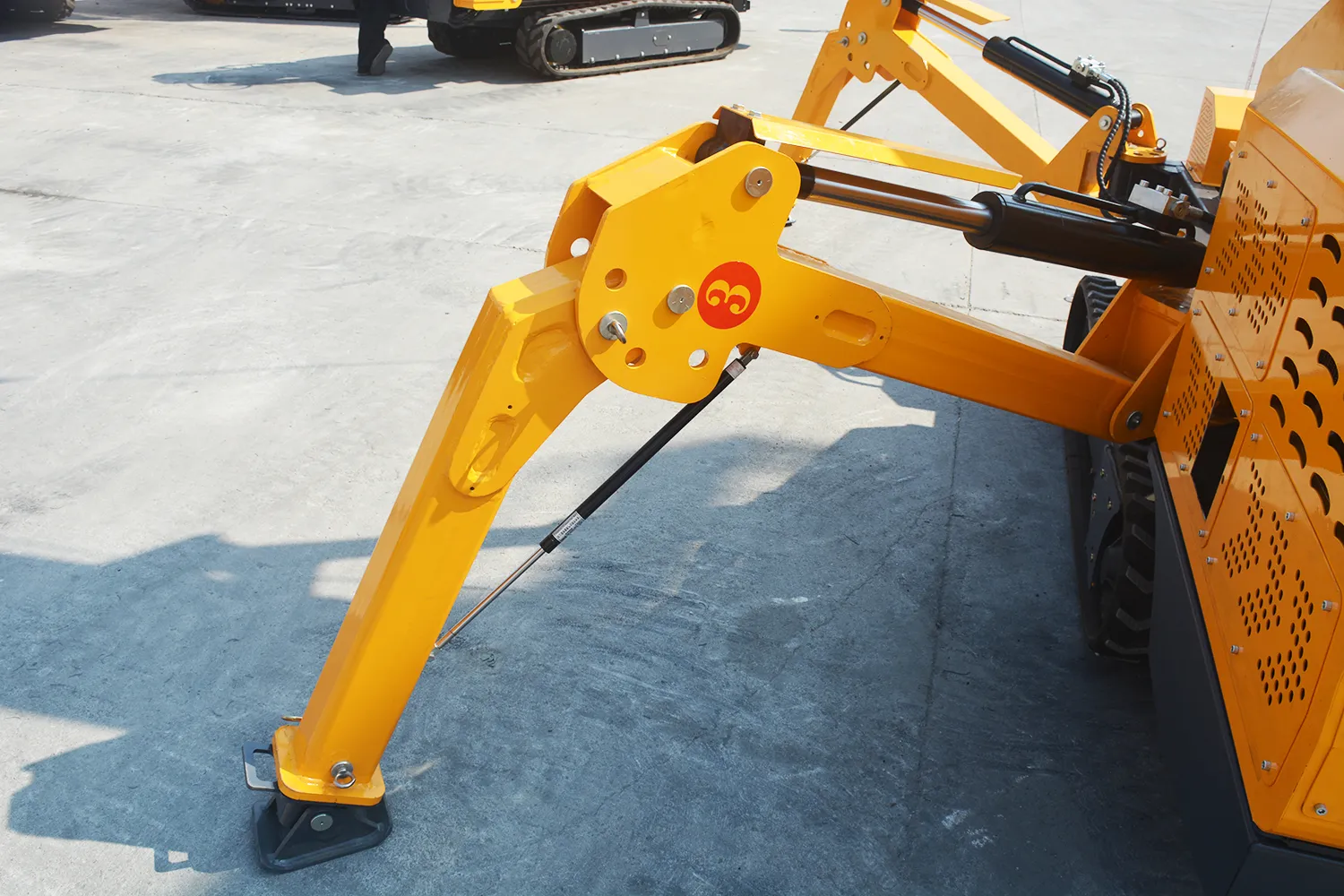
2. Outriggers: Stability That Keeps You Safe

Outriggers are the "spider legs" that give the crane its name — and they are its most important safety feature.

  • Four independently extendable legs spread outward to create a wide, stable base.

  • Telescopic extension lets operators adjust the footprint to fit narrow aisles and doorways.

  • Hydraulic leveling automatically keeps the crane platform level on uneven ground.

  • Outrigger pads distribute the load and protect fragile floors and roofs.

By extending the legs, the crane converts a small machine into a rock-solid lifting platform, dramatically increasing its safe capacity without making it any wider on site.

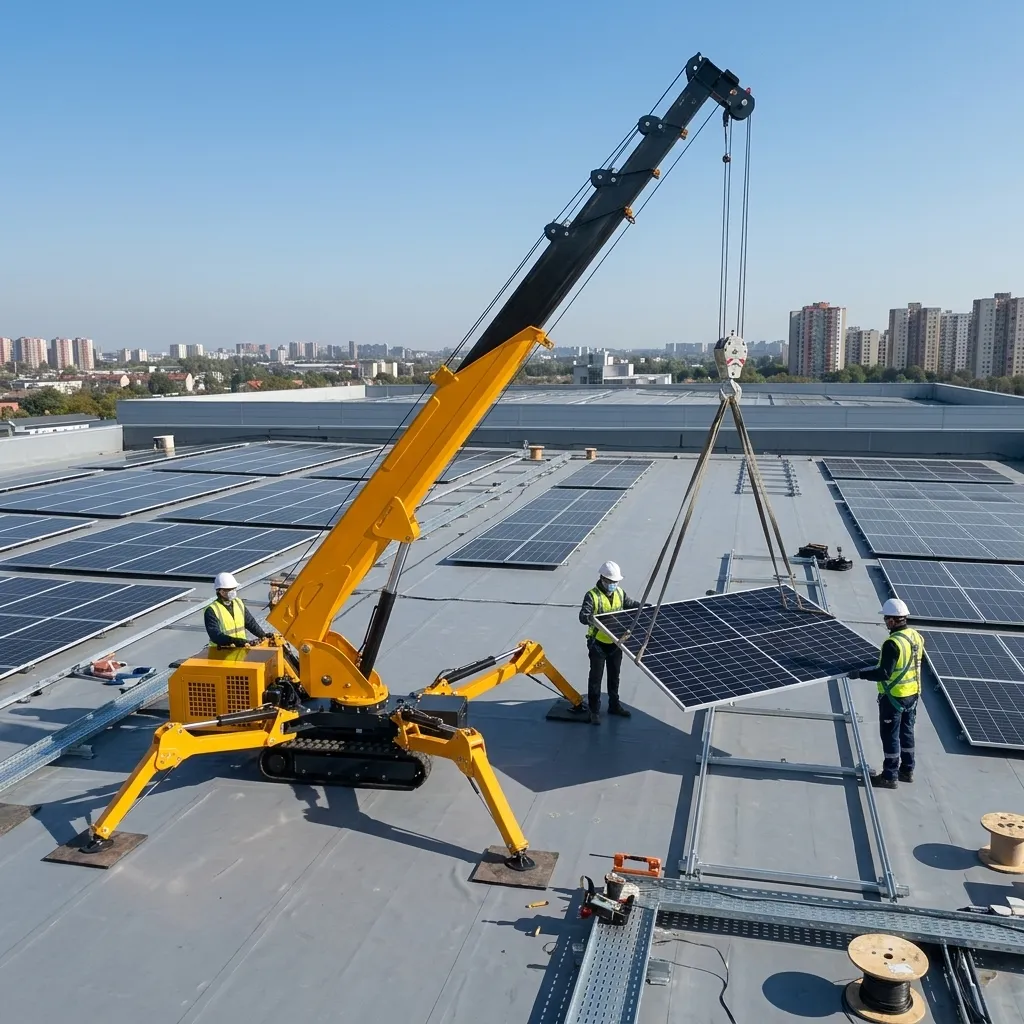
Spider Crane Functions: Boom, Outriggers, Remote & Safety Features(Image3)

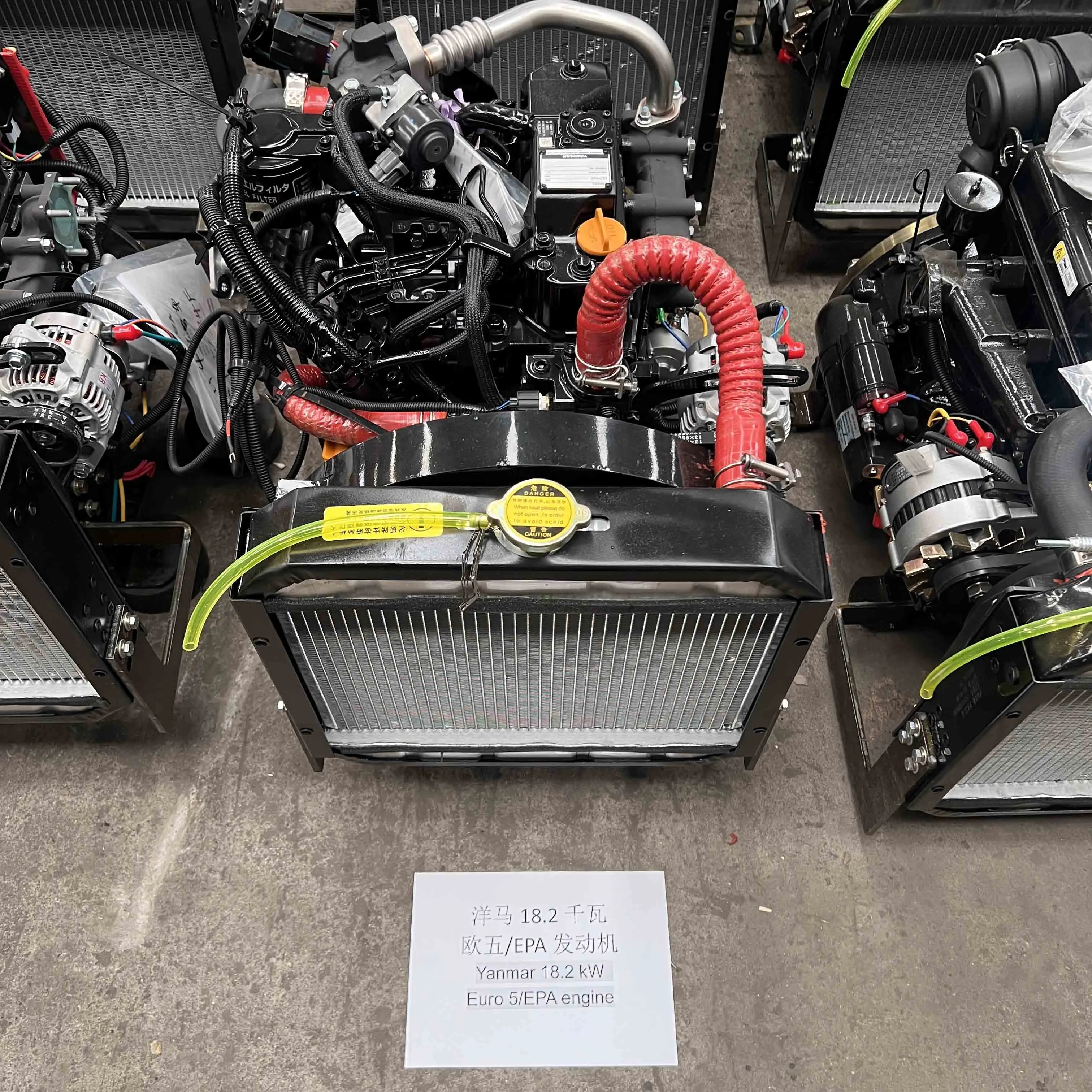
3. Power System: Electric, Diesel, and Dual-Power

Spider cranes are offered with different power systems to match the job site.

  • All-electric models run quietly with zero emissions, ideal for indoor use, food plants, hospitals, and glass installation.

  • Diesel models deliver higher power for heavy outdoor lifting and remote sites without power supply.

  • Dual-power (electric + diesel) models switch between the two, giving you clean indoor operation and powerful outdoor performance in one machine.

The power system drives the hydraulic pump, which powers the boom, outriggers, and winch.

Spider Crane Functions: Boom, Outriggers, Remote & Safety Features(Image4)

4. Winch and Lifting Accessories

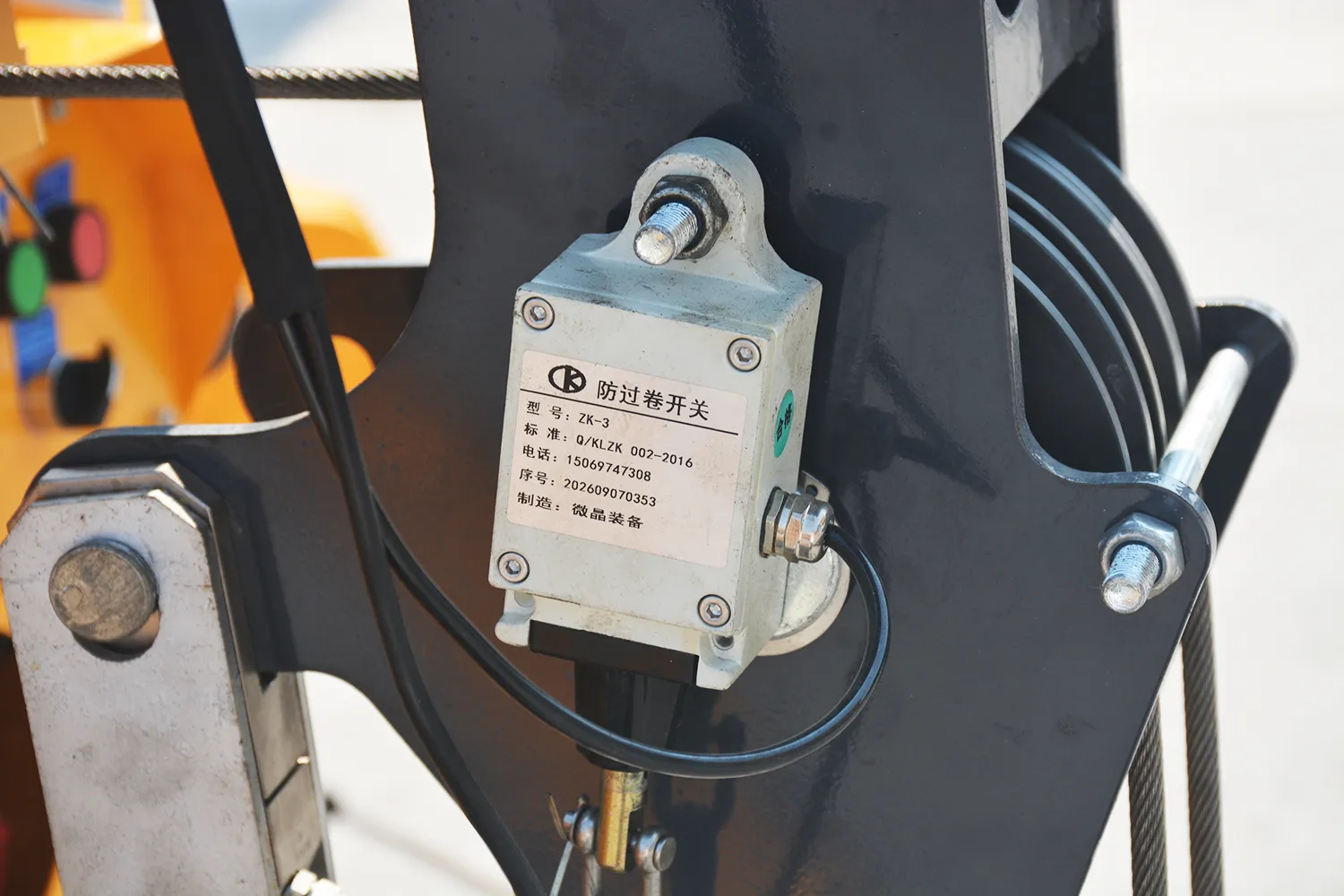
The winch is the component that actually raises and lowers the load.

  • The hoist drum spools the wire rope at controlled speeds for smooth, precise lifting.

  • Hooks, chains, and slings connect the winch to the load.

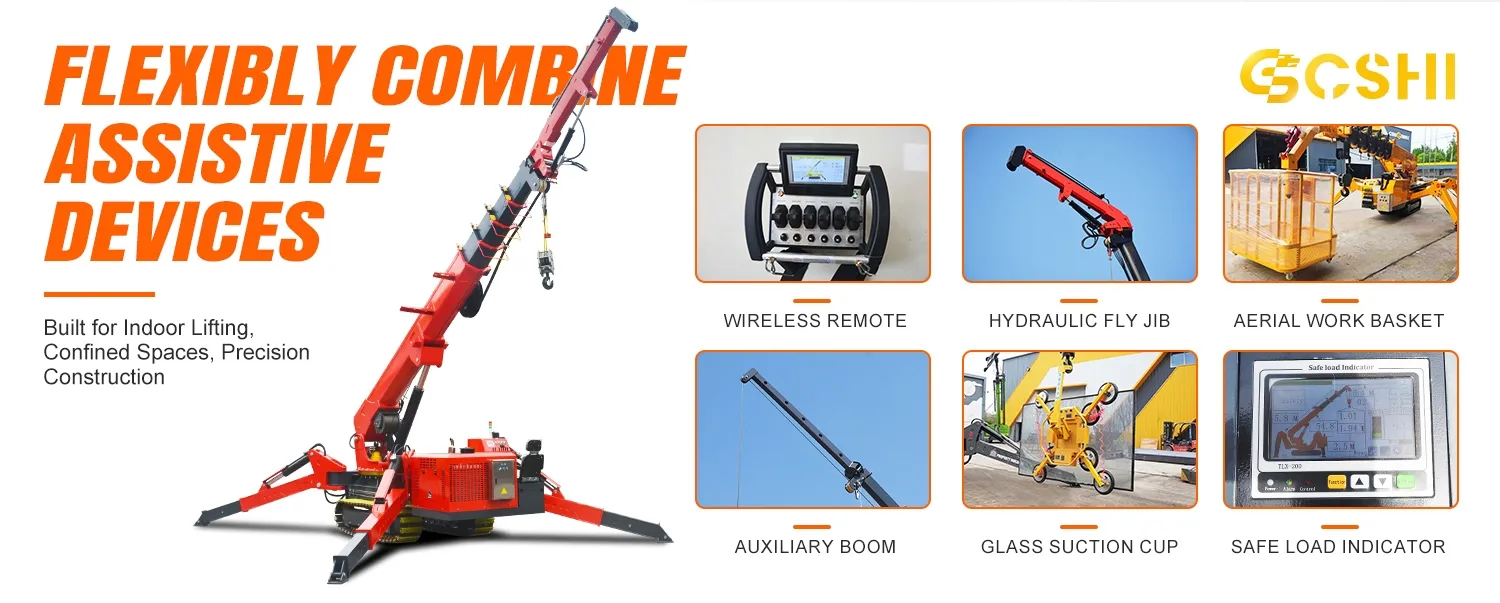
  • Optional accessories such as jibs, man-baskets, and glass-lifting clamps extend what a single crane can do.

Controlled winch speed is critical for fragile loads like glass panels, where sudden movement causes cracking.

Spider Crane Functions: Boom, Outriggers, Remote & Safety Features(Image5)


5. Wireless Remote Control: Precision From Where You Can See

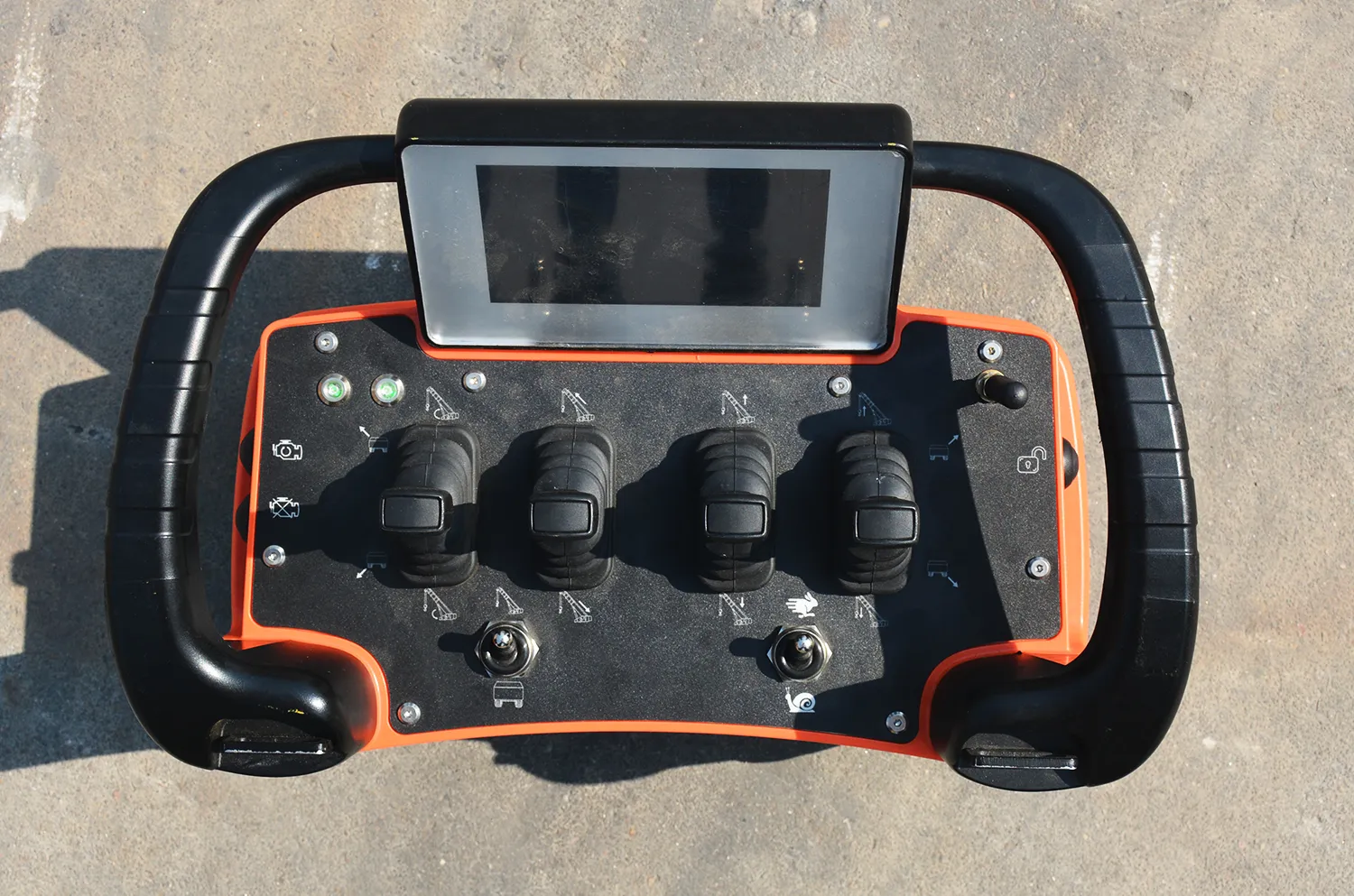
Unlike traditional cranes, most spider cranes are operated by wireless remote control.

  • The operator stands at the best vantage point, watching both the load and the surroundings.

  • Proportional joysticks give fine control over boom movement and winch speed.

  • Remote control lets one person handle positioning in tight spaces where a cab operator could not see.

This is a core functional advantage: precise placement from the operator's eyes, not from inside a cab.

Spider Crane Functions: Boom, Outriggers, Remote & Safety Features(Image6)

6. Safety Features That Protect People and Loads

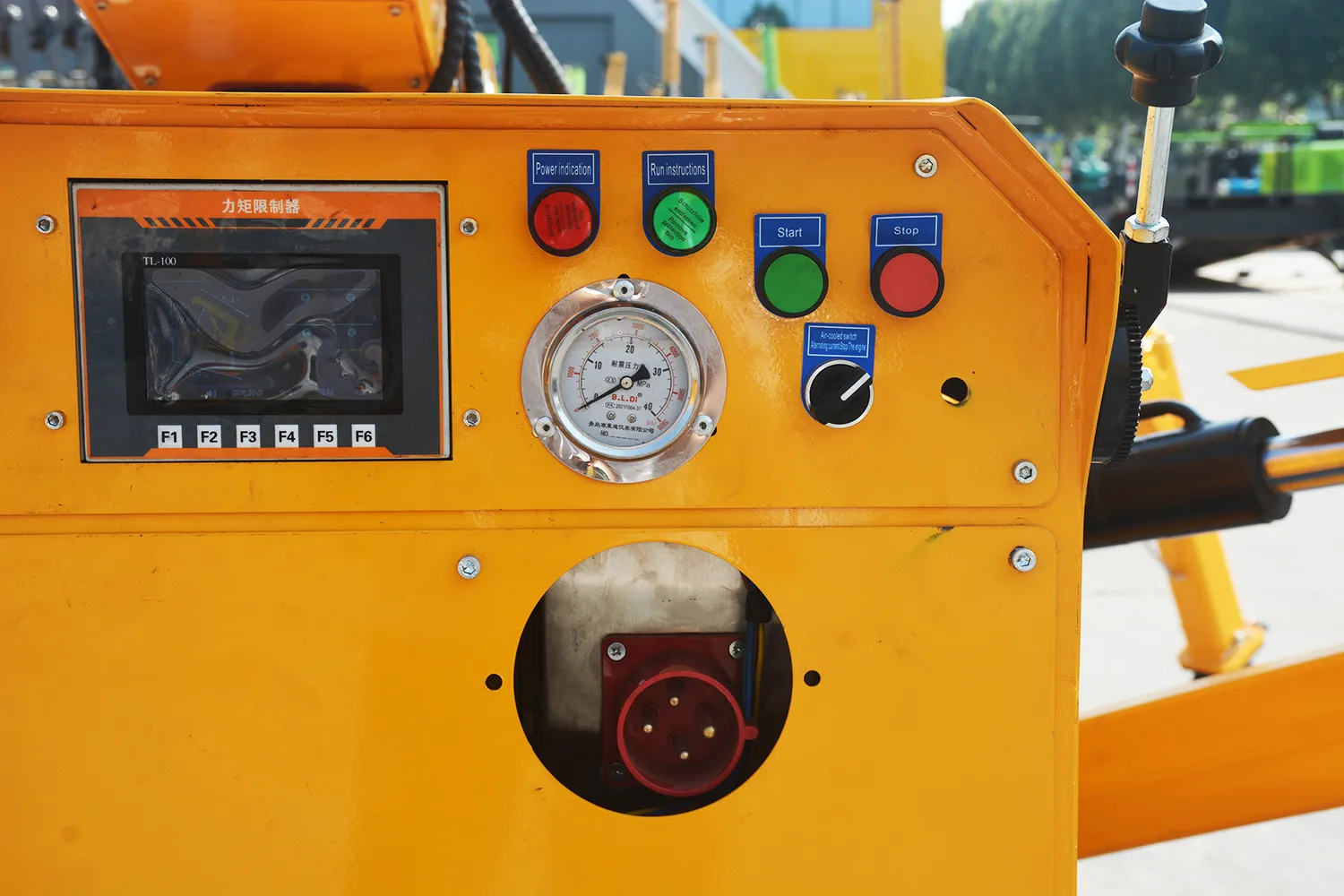
Modern spider cranes are built with multiple redundant safety systems.

  • Rated capacity limiters (RCL/LMI) monitor load, radius, and angle, and stop the crane before overloading.

  • Anti-tip protection continuously monitors stability across the outriggers.

  • Emergency stop instantly halts all movement.

  • Slew and boom limiters prevent over-rotation and over-extension.

  • Ground pressure monitoring helps protect fragile floors and roof surfaces.

Spider Crane Functions: Boom, Outriggers, Remote & Safety Features(Image7)

7. Compact Crawler Base: Mobility Without a Trailer

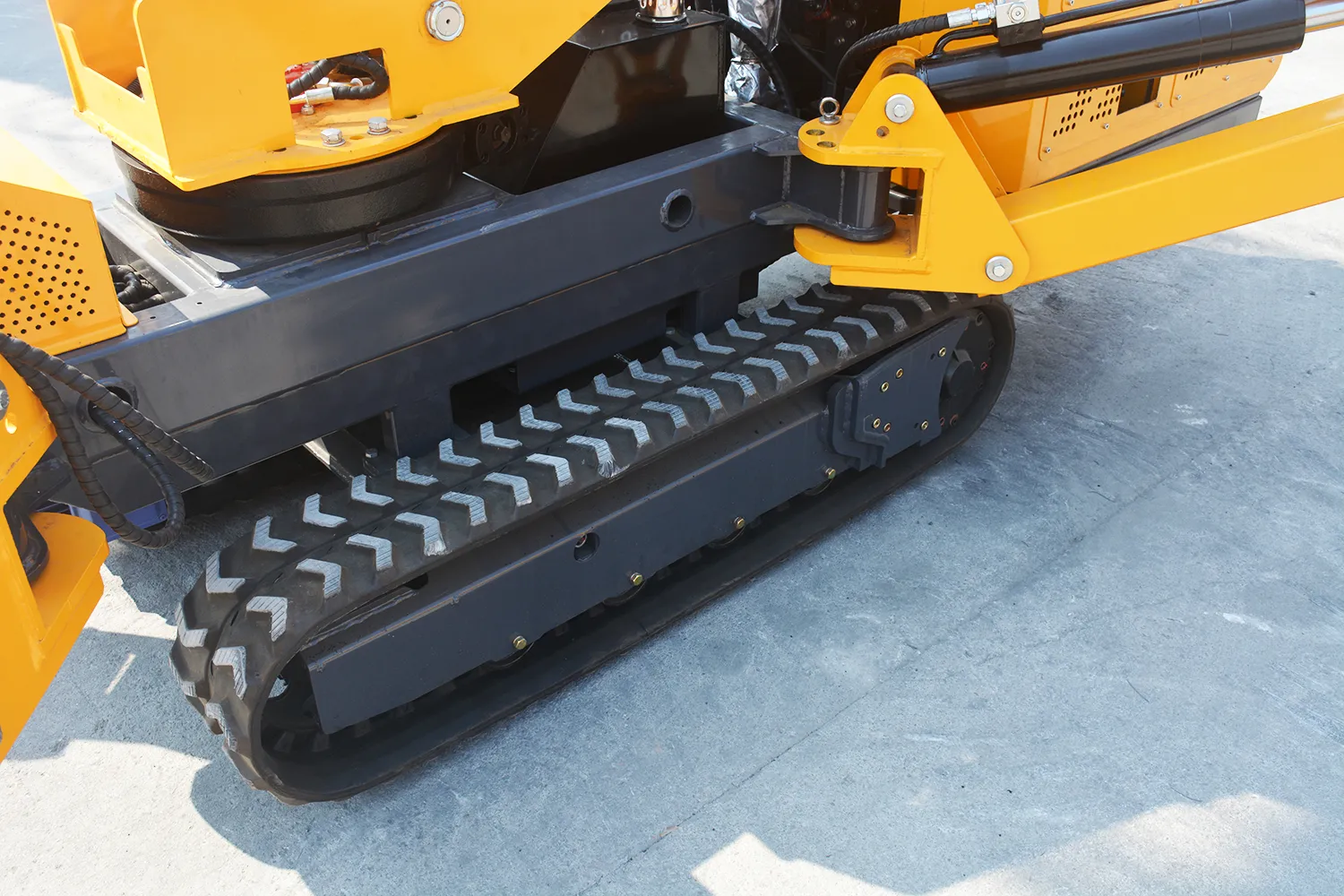
The crawler (tracked) base is what moves the crane around the site.

  • Rubber tracks protect finished floors and reduce ground pressure.

  • The machine can travel through standard doorways, elevators, and narrow corridors.

  • It climbs mild slopes and moves across uneven ground without a truck or trailer.

Because the crane carries its own mobility, it can be positioned exactly where the work happens — the key to its famous efficiency.

Spider Crane Functions: Boom, Outriggers, Remote & Safety Features(Image8)

How All Functions Work Together

In a typical rooftop lift, the operator moves the compact crawler base into place, extends the outriggers to a stable footprint, levels the platform hydraulically, and then uses the remote control to extend the telescopic boom and raise the load with the winch. Throughout the operation, the rated capacity limiter monitors load and stability, while the operator watches from the best vantage point. This is why a small spider crane can handle jobs that once required a truck crane — safely, quietly, and in spaces nothing else can reach.


related news
View More >>
Spider Crane Functions: Boom, Outriggers, Remote & Safet Spider Crane Functions: Boom, Outriggers, Remote & Safet
10 .15.2026
Learn the core functional components of spider cranes including telescopic boom, outriggers, power system, wireless remote control and built-in safety systems for confined-space lifting tasks.
Spider Crane for Historic Building Renovation: Heritage Lift Spider Crane for Historic Building Renovation: Heritage Lift
10 .13.2026
Discover how a spider crane lifts stone, steel and HVAC into historic buildings with narrow access and low floor loads. Quiet electric options protect heritage fabric.
Spider Crane for Solar Panel Installation: Rooftop Lifting Spider Crane for Solar Panel Installation: Rooftop Lifting
10 .10.2026
Discover how a spider crane lifts solar panels, racks and inverters onto rooftops. Low ground pressure, narrow access, electric/dual-power options for EPC contractors.
Spider Crane Common Faults & Troubleshooting Guide for M Spider Crane Common Faults & Troubleshooting Guide for M
10 .06.2026
Practical spider crane troubleshooting guide for hydraulic, electric, track and safety faults. Daily maintenance tips for mini crawler spider crane, ideal for indoor & glass lifting projects.
We use cookie to improve your online experience. By continuing to browse this website, you agree to our use of cookie.

Cookies

Please read our Terms and Conditions and this Policy before accessing or using our Services. If you cannot agree with this Policy or the Terms and Conditions, please do not access or use our Services. If you are located in a jurisdiction outside the European Economic Area, by using our Services, you accept the Terms and Conditions and accept our privacy practices described in this Policy.
We may modify this Policy at any time, without prior notice, and changes may apply to any Personal Information we already hold about you, as well as any new Personal Information collected after the Policy is modified. If we make changes, we will notify you by revising the date at the top of this Policy. We will provide you with advanced notice if we make any material changes to how we collect, use or disclose your Personal Information that impact your rights under this Policy. If you are located in a jurisdiction other than the European Economic Area, the United Kingdom or Switzerland (collectively “European Countries”), your continued access or use of our Services after receiving the notice of changes, constitutes your acknowledgement that you accept the updated Policy. In addition, we may provide you with real time disclosures or additional information about the Personal Information handling practices of specific parts of our Services. Such notices may supplement this Policy or provide you with additional choices about how we process your Personal Information.


Cookies

Cookies are small text files stored on your device when you access most Websites on the internet or open certain emails. Among other things, Cookies allow a Website to recognize your device and remember if you've been to the Website before. Examples of information collected by Cookies include your browser type and the address of the Website from which you arrived at our Website as well as IP address and clickstream behavior (that is the pages you view and the links you click).We use the term cookie to refer to Cookies and technologies that perform a similar function to Cookies (e.g., tags, pixels, web beacons, etc.). Cookies can be read by the originating Website on each subsequent visit and by any other Website that recognizes the cookie. The Website uses Cookies in order to make the Website easier to use, to support a better user experience, including the provision of information and functionality to you, as well as to provide us with information about how the Website is used so that we can make sure it is as up to date, relevant, and error free as we can. Cookies on the Website We use Cookies to personalize your experience when you visit the Site, uniquely identify your computer for security purposes, and enable us and our third-party service providers to serve ads on our behalf across the internet.

We classify Cookies in the following categories:
 ●  Strictly Necessary Cookies
 ●  Performance Cookies
 ●  Functional Cookies
 ●  Targeting Cookies


Cookie List
A cookie is a small piece of data (text file) that a website – when visited by a user – asks your browser to store on your device in order to remember information about you, such as your language preference or login information. Those cookies are set by us and called first-party cookies. We also use third-party cookies – which are cookies from a domain different than the domain of the website you are visiting – for our advertising and marketing efforts. More specifically, we use cookies and other tracking technologies for the following purposes:

Strictly Necessary Cookies
These cookies are necessary for the website to function and cannot be switched off in our systems. They are usually only set in response to actions made by you which amount to a request for services, such as setting your privacy preferences, logging in or filling in forms. You can set your browser to block or alert you about these cookies, but some parts of the site will not then work. These cookies do not store any personally identifiable information.

Functional Cookies
These cookies enable the website to provide enhanced functionality and personalisation. They may be set by us or by third party providers whose services we have added to our pages. If you do not allow these cookies then some or all of these services may not function properly.

Performance Cookies
These cookies allow us to count visits and traffic sources so we can measure and improve the performance of our site. They help us to know which pages are the most and least popular and see how visitors move around the site. All information these cookies collect is aggregated and therefore anonymous. If you do not allow these cookies we will not know when you have visited our site, and will not be able to monitor its performance.

Targeting Cookies
These cookies may be set through our site by our advertising partners. They may be used by those companies to build a profile of your interests and show you relevant adverts on other sites. They do not store directly personal information, but are based on uniquely identifying your browser and internet device. If you do not allow these cookies, you will experience less targeted advertising.

How To Turn Off Cookies
You can choose to restrict or block Cookies through your browser settings at any time. Please note that certain Cookies may be set as soon as you visit the Website, but you can remove them using your browser settings. However, please be aware that restricting or blocking Cookies set on the Website may impact the functionality or performance of the Website or prevent you from using certain services provided through the Website. It will also affect our ability to update the Website to cater for user preferences and improve performance. Cookies within Mobile Applications

We only use Strictly Necessary Cookies on our mobile applications. These Cookies are critical to the functionality of our applications, so if you block or delete these Cookies you may not be able to use the application. These Cookies are not shared with any other application on your mobile device. We never use the Cookies from the mobile application to store personal information about you.

If you have questions or concerns regarding any information in this Privacy Policy, please contact us by email at . You can also contact us via our customer service at our Site.


Product Inquiry