
Spider Crane: A Compact Lifting Solution for Narrow and Confined Spaces
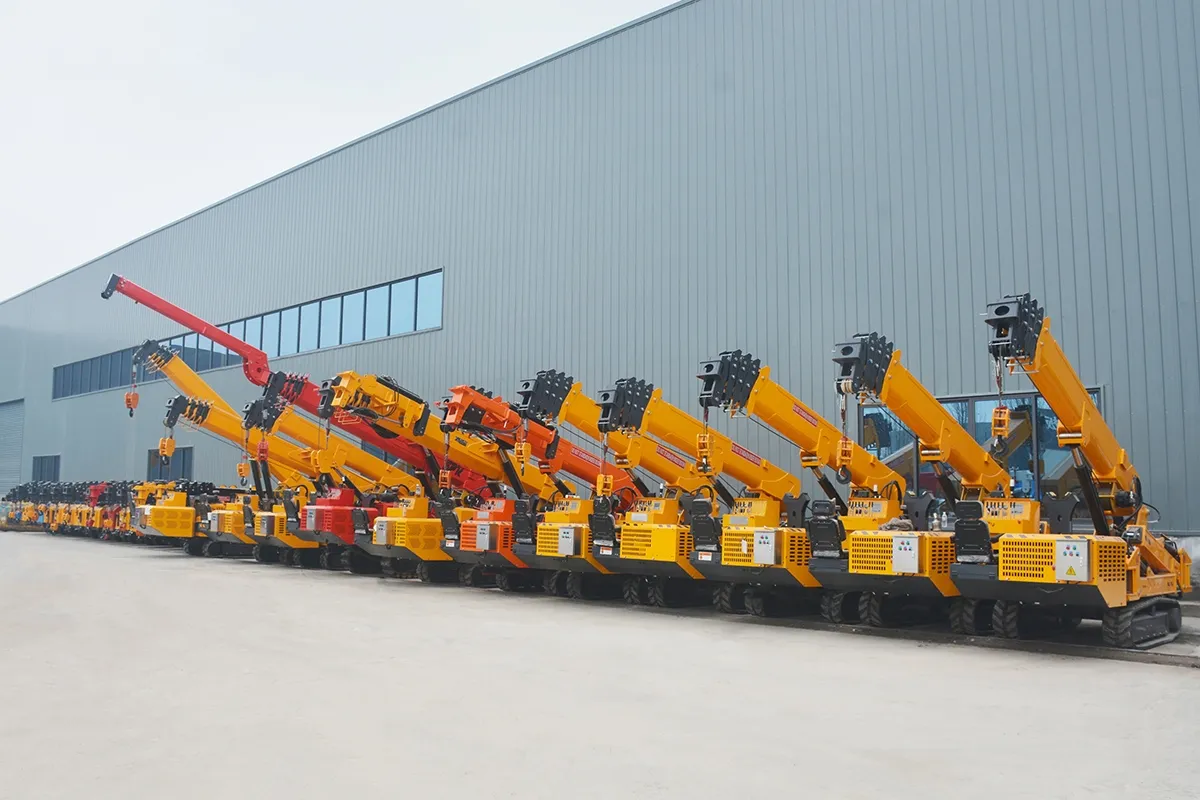
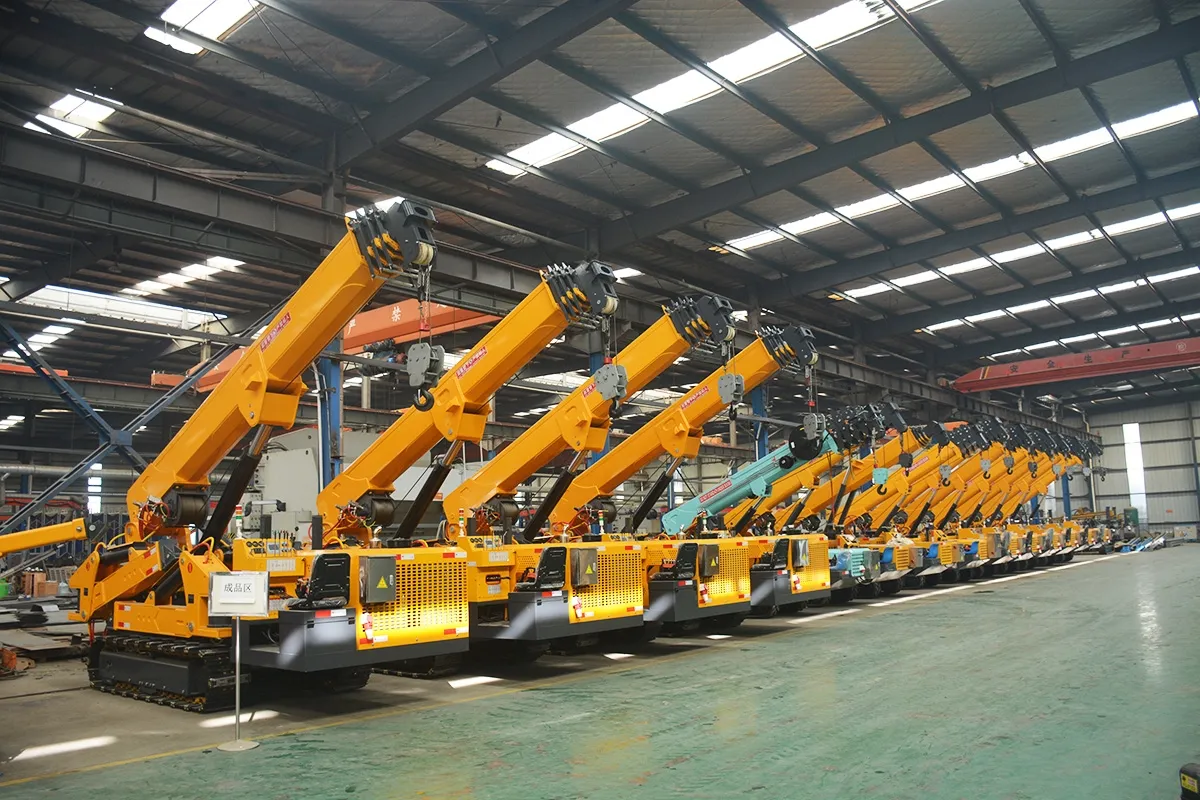
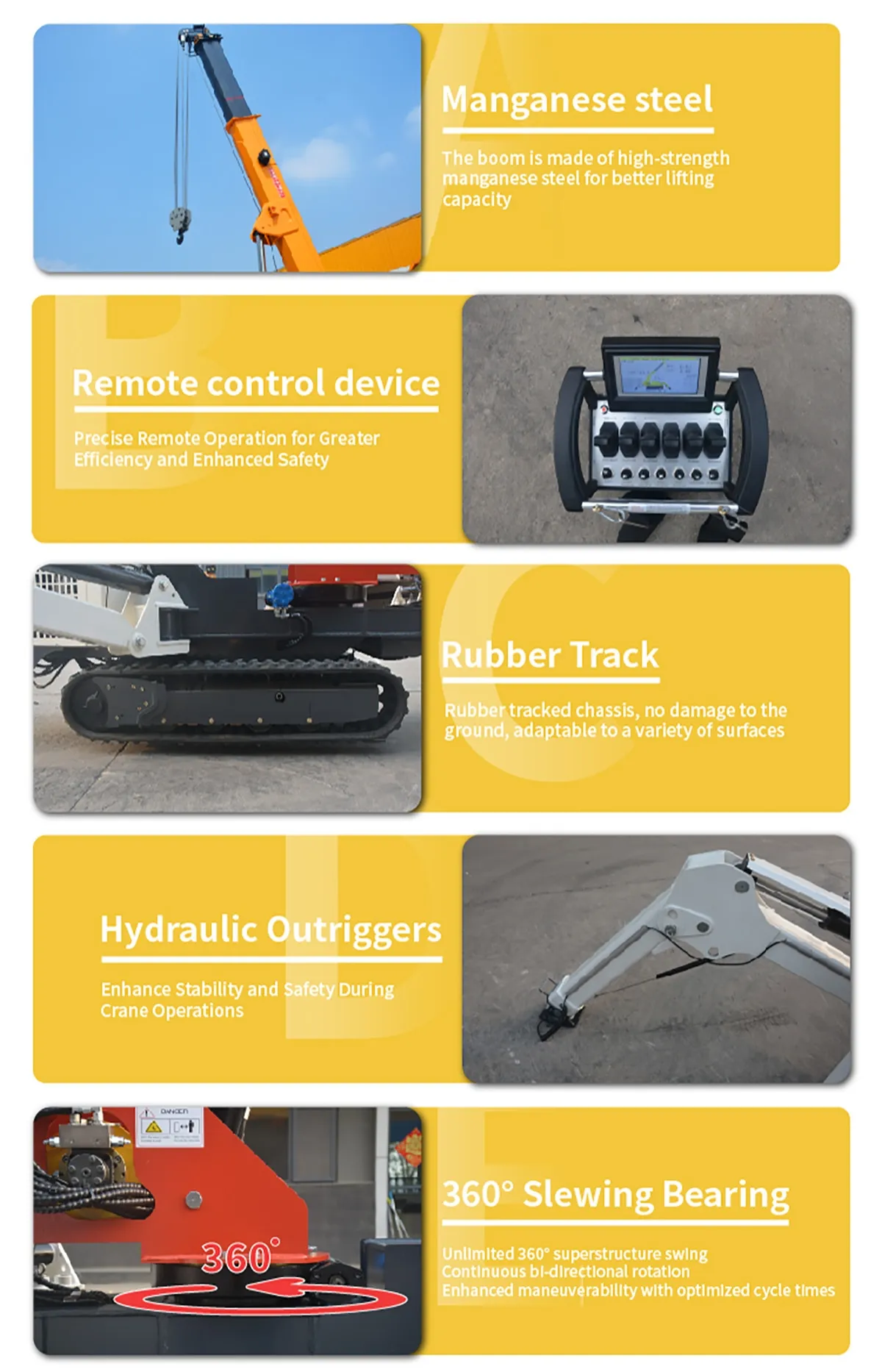
Spider cranes, also known as mini spider cranes, compact spider cranes, and crawler spider cranes, are becoming increasingly important for lifting work where conventional cranes cannot operate efficiently. With a compact body, adjustable outriggers, crawler tracks, and a telescopic boom, a spider crane can work in narrow spaces, indoor areas, construction sites, gardens, and other locations with limited access.
What Is a Spider Crane?
A spider crane is a compact mobile lifting machine designed for work in restricted spaces. Unlike conventional mobile cranes, a spider crane has a narrow chassis and multiple outriggers that provide stability during lifting.
The machine can be transported through narrow entrances and positioned close to buildings, walls, glass façades, or other structures. Depending on the model, spider cranes can provide different lifting capacities and working heights for applications ranging from indoor installation to outdoor construction.
Common search terms include spider crane, mini spider crane, small spider crane, compact crane, crawler spider crane, mini crawler crane, and narrow space crane.
Why Are Mini Spider Cranes Becoming More Popular?
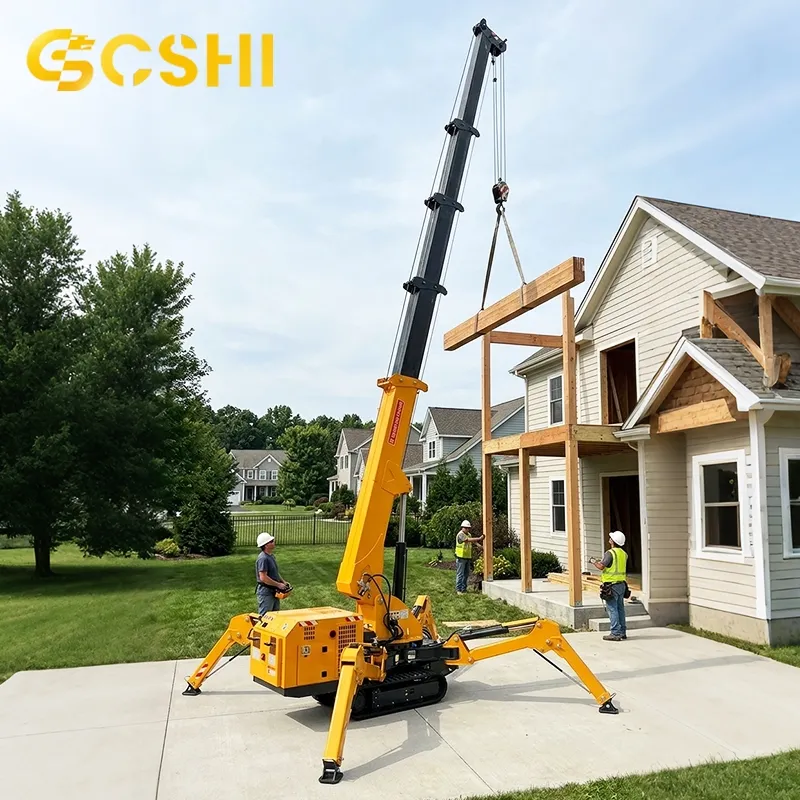
Modern construction projects often involve restricted access. European cities, residential areas, shopping centers, industrial facilities, and existing buildings may have narrow entrances where a conventional crane cannot enter.
A mini spider crane solves this problem by combining a compact transport width with a powerful lifting system. After reaching the working position, the outriggers can be deployed to create a stable lifting platform.
This makes spider cranes particularly useful when contractors need lifting equipment that is:
Compact and easy to transport
Suitable for narrow access
Capable of indoor lifting
Stable on limited working areas
Flexible around buildings and obstacles
Suitable for glass, steel, stone, and construction materials
Spider Crane for Narrow Spaces
One of the biggest advantages of a spider crane is its ability to operate in confined areas.
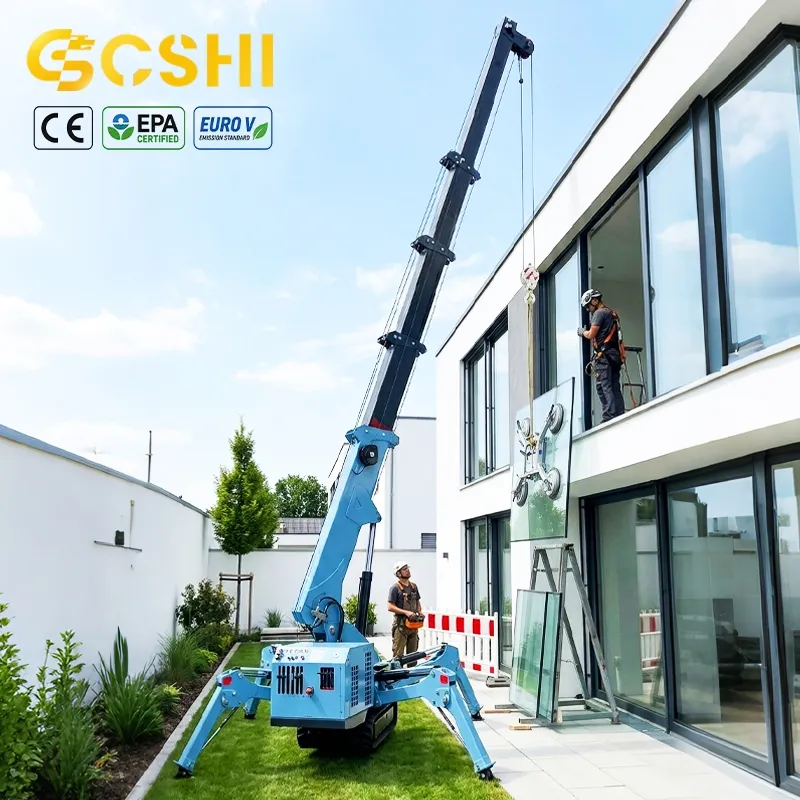
A small spider crane for narrow spaces can pass through gates, corridors, courtyards, alleys, and building entrances that are inaccessible to larger lifting equipment. Its compact dimensions allow contractors to position the crane much closer to the lifting point.
This is particularly valuable in European renovation and construction projects, where old buildings and narrow streets can make access difficult.
For projects involving limited access, choosing a crane based only on lifting capacity is not enough. Transport width, overall height, working radius, outrigger configuration, ground conditions, and boom length should also be considered.
Spider Crane for Glass Installation
Glass installation is one of the most common applications for compact lifting equipment.
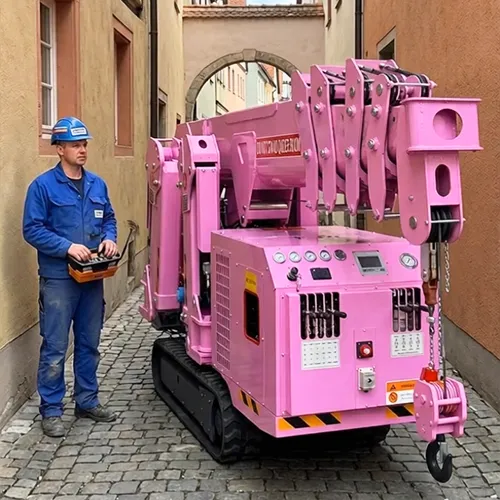
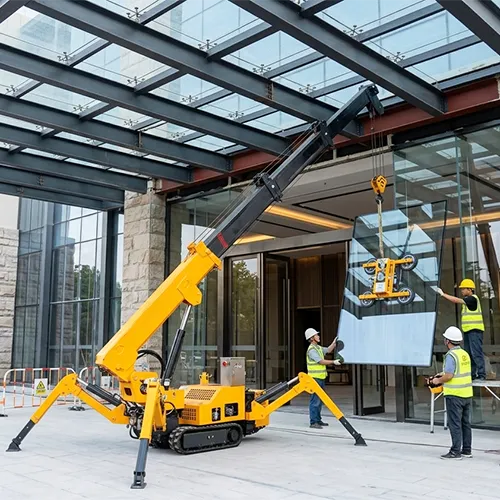
A spider crane can work together with a vacuum glass lifter or glass suction cup to lift large glass panels into position. This is useful for curtain wall installation, window replacement, residential construction, commercial buildings, and modern villa projects.
Compared with manual handling, mechanical glass lifting can reduce the amount of physical labor required and provide more controlled positioning.
For indoor glass installation, the compact dimensions of a spider crane are especially important. The crane may need to pass through an existing doorway before setting up inside the building.
Spider Crane for Steel Structure Lifting
Spider cranes are also widely used for lifting steel components.
Typical applications include:
Steel beams
Structural frames
Metal components
Roof structures
Building materials
Mechanical equipment
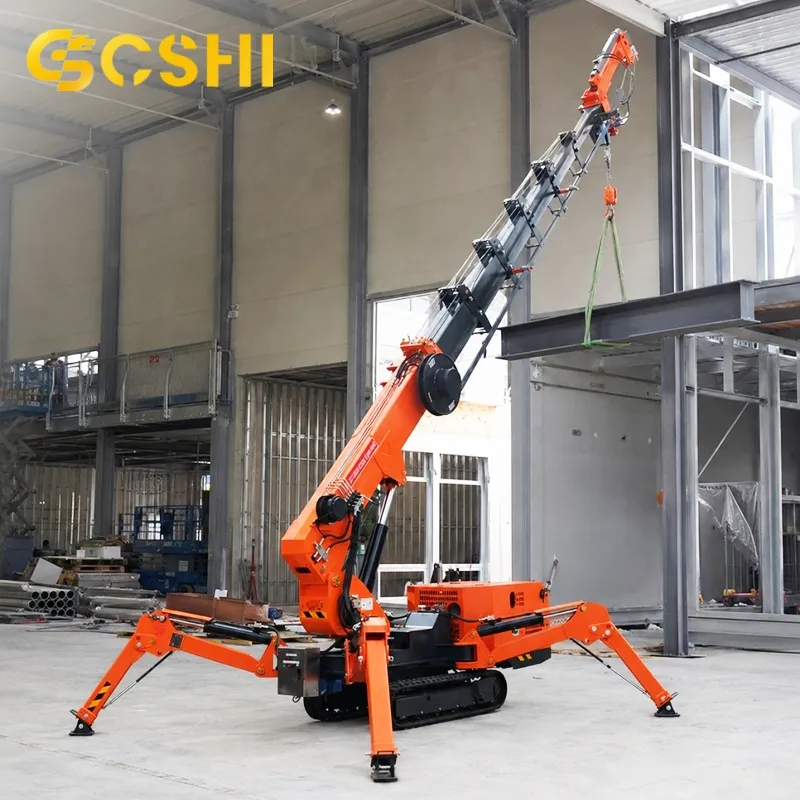
A crawler spider crane for steel erection can be positioned close to the installation point while using its boom to reach over obstacles.
For steel lifting projects, contractors should consider the total load weight, lifting radius, boom configuration, lifting height, and required safety margin before selecting a crane model.
Spider Crane for Stone and Marble Installation
Construction and renovation projects frequently require heavy stone materials to be positioned accurately.
A spider crane can be used for lifting:
Marble slabs
Granite
Stone countertops
Architectural stone
Landscape stones
Precast concrete components
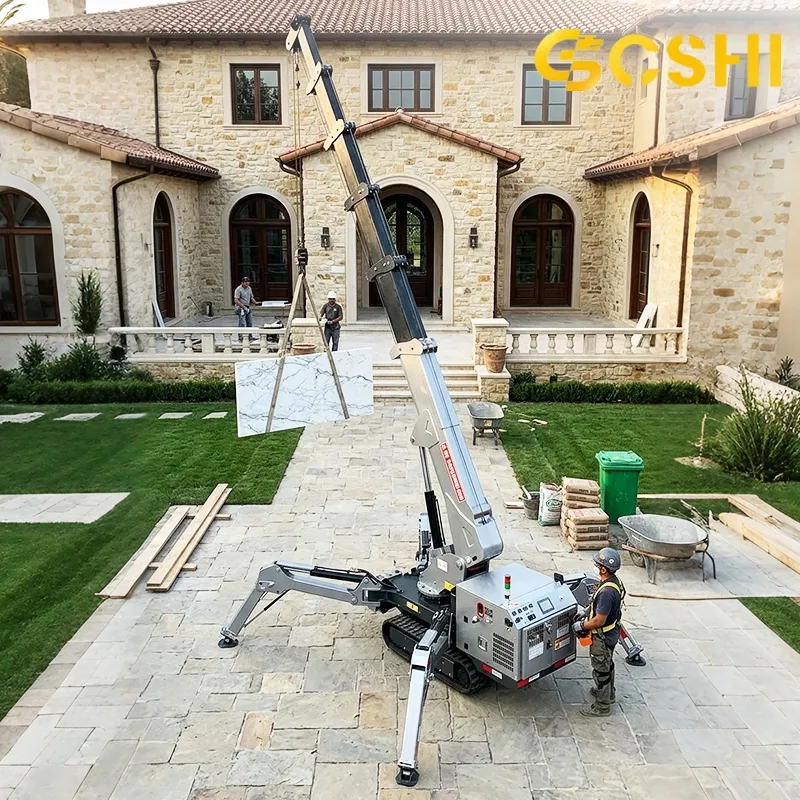
The compact footprint is particularly useful in residential projects where the lifting area may be surrounded by walls, landscaping, vehicles, or existing structures.
Indoor Spider Crane Applications
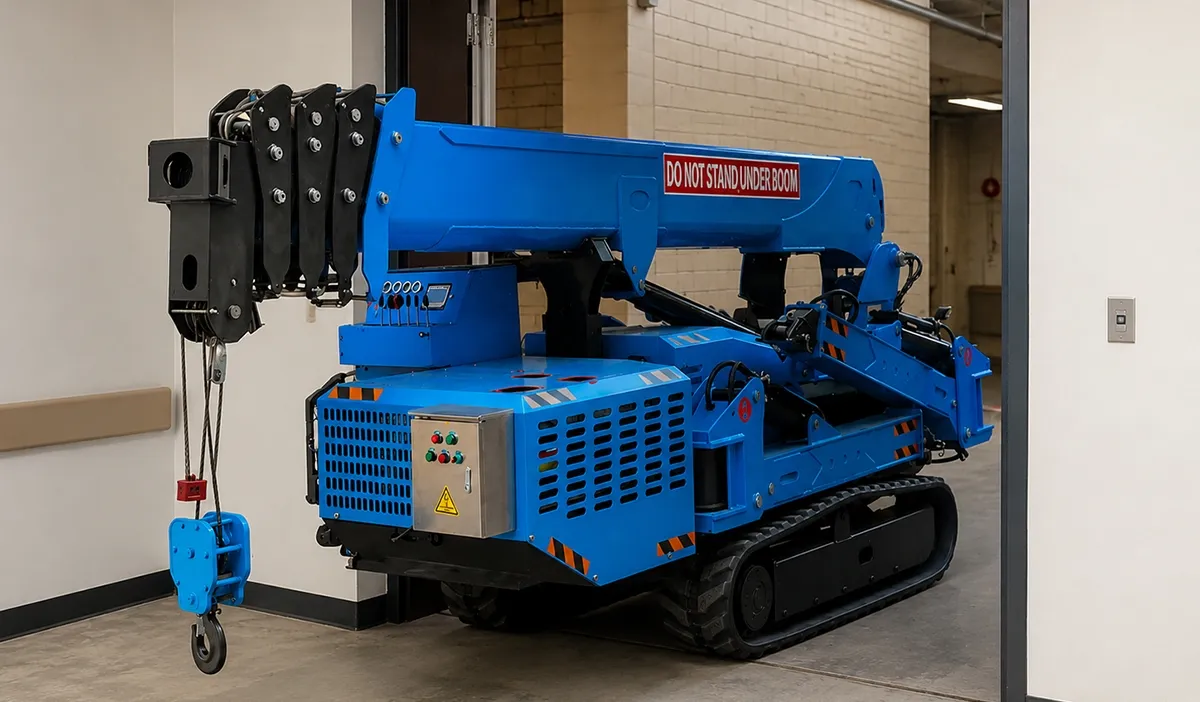
A major advantage of compact spider cranes is their ability to work indoors when the site conditions and machine specifications are suitable.
Indoor applications may include:
Glass installation: lifting curtain wall panels and large windows.
Factory maintenance: moving machinery and components inside production facilities.
Shopping mall construction: lifting materials in atriums and restricted areas.
Building renovation: positioning heavy materials inside existing structures.
Mechanical installation: moving HVAC equipment, pumps, electrical equipment, and other components.
Before indoor operation, contractors should check floor load capacity, ceiling clearance, entrance dimensions, ventilation requirements, and the crane's power system.
Spider Crane vs. Traditional Mobile Crane
A traditional mobile crane is generally designed for larger lifting operations and open construction sites. A spider crane focuses more on accessibility and flexibility.
The key difference is often not simply lifting capacity, but where the crane can operate.
A large crane may have excellent lifting performance but cannot enter a narrow courtyard or building entrance. A spider crane, meanwhile, can sacrifice some lifting capacity for a much smaller transport footprint and greater positioning flexibility.
Therefore, a mini crawler crane or spider crane can be a practical alternative when access restrictions are the main challenge.
How to Choose the Right Spider Crane
Choosing the right spider crane requires more than looking at the maximum lifting capacity.
1. Lifting Capacity
Determine the maximum weight that needs to be lifted. More importantly, check the actual load capacity at the required working radius.
2. Working Radius
A crane may lift a certain maximum weight close to the machine but have a lower capacity when the boom is fully extended. Always check the load chart for the actual working radius.
3. Lifting Height
For multi-story construction, glass installation, and rooftop work, the required lifting height should be calculated before selecting the machine.
4. Transport Dimensions
For narrow-space applications, transport width can be one of the most important specifications. Measure doors, gates, corridors, alleys, and other access points before transportation.
5. Outrigger Configuration
Outriggers provide stability during lifting. Different projects may require different outrigger positions depending on the available working area.
6. Power System
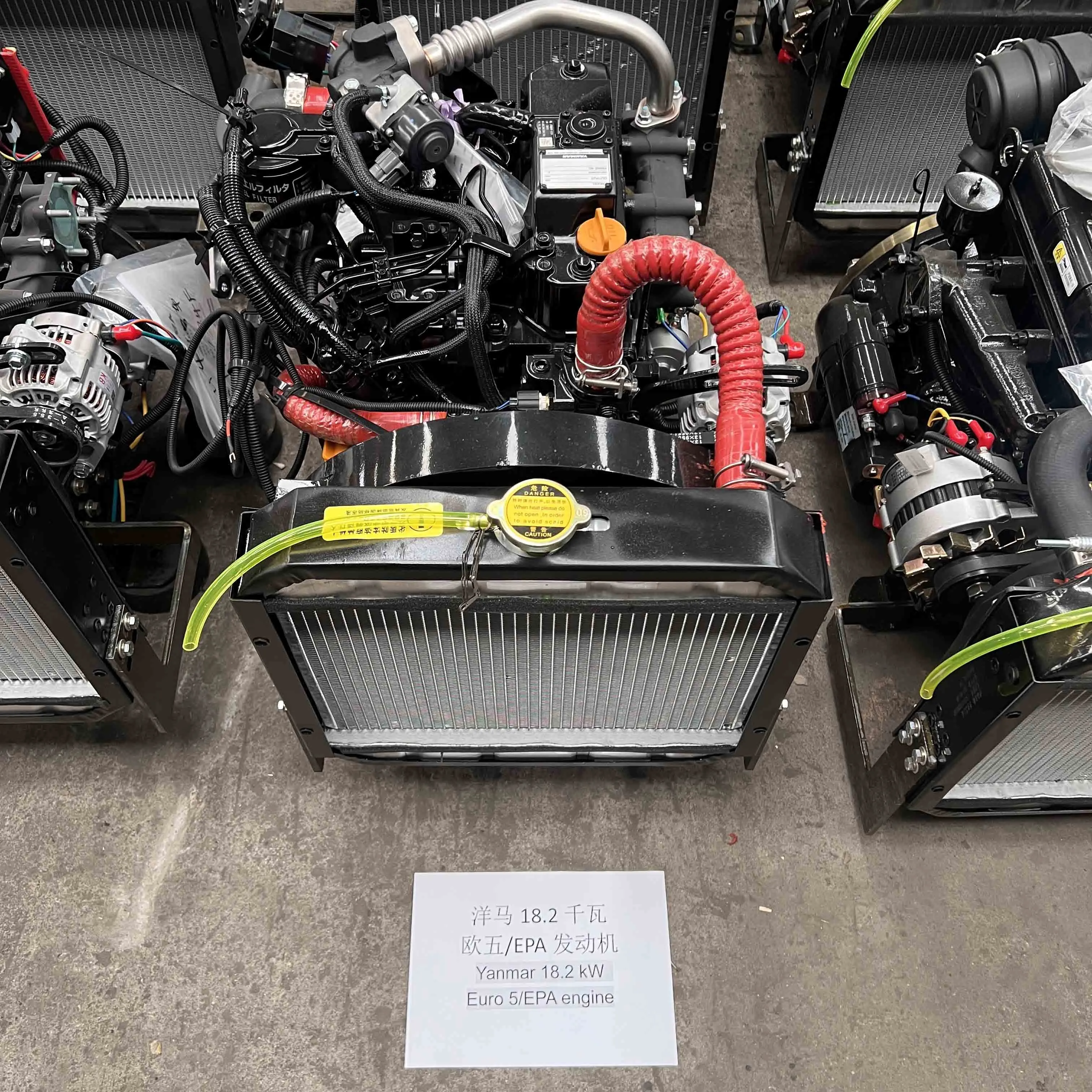
Indoor projects may favor electric-powered spider cranes because of their low-emission characteristics and suitability for enclosed environments, while outdoor projects may use different power configurations depending on site requirements.
Common Spider Crane Keywords
For businesses researching compact lifting equipment, common industry search terms include spider crane, mini spider crane, small spider crane, compact spider crane, crawler spider crane, mini crawler crane, spider crane for sale, narrow space crane, indoor spider crane, glass lifting crane, compact lifting crane, and mini crane.
These keywords represent different ways contractors and equipment users search for compact lifting solutions based on machine type, application, and working environment.
Frequently Asked Questions
What is a spider crane used for?
A spider crane is mainly used for lifting heavy materials in locations where conventional cranes have difficulty operating. Common applications include glass installation, steel erection, stone installation, equipment handling, building renovation, and indoor construction.
Can a spider crane work indoors?
Yes. Suitable electric spider crane models can be used for indoor lifting when the site has adequate access, floor capacity, ventilation, ceiling clearance, and working space.
How small is a mini spider crane?
The transport dimensions vary by model. Some compact models are designed specifically to pass through narrow doors, gates, and restricted construction access points.
Can a spider crane lift glass?
Yes. Spider cranes are commonly combined with vacuum glass lifters to install large glass panels, windows, and curtain wall systems.
What is the difference between a spider crane and a mini crane?
The terms are sometimes used interchangeably, but spider cranes typically refer to compact cranes equipped with multiple outriggers that resemble spider legs. Their design allows stable lifting from relatively small working areas.
What should I check before using a spider crane?
Check the load weight, lifting radius, lifting height, ground conditions, access dimensions, outrigger position, overhead obstacles, and the manufacturer's load chart before operation.
Conclusion
The growing demand for spider cranes and mini crawler cranes reflects a clear trend in modern construction: lifting equipment needs to become more compact without sacrificing practical lifting performance.
From narrow European streets and residential gardens to indoor factories, glass installation projects, steel construction, and building renovation, a compact spider crane can provide a flexible solution where conventional cranes are difficult to use.
For contractors working in restricted spaces, the right combination of compact dimensions, lifting capacity, working radius, lifting height, crawler mobility, and outrigger stability can make a significant difference in project efficiency.
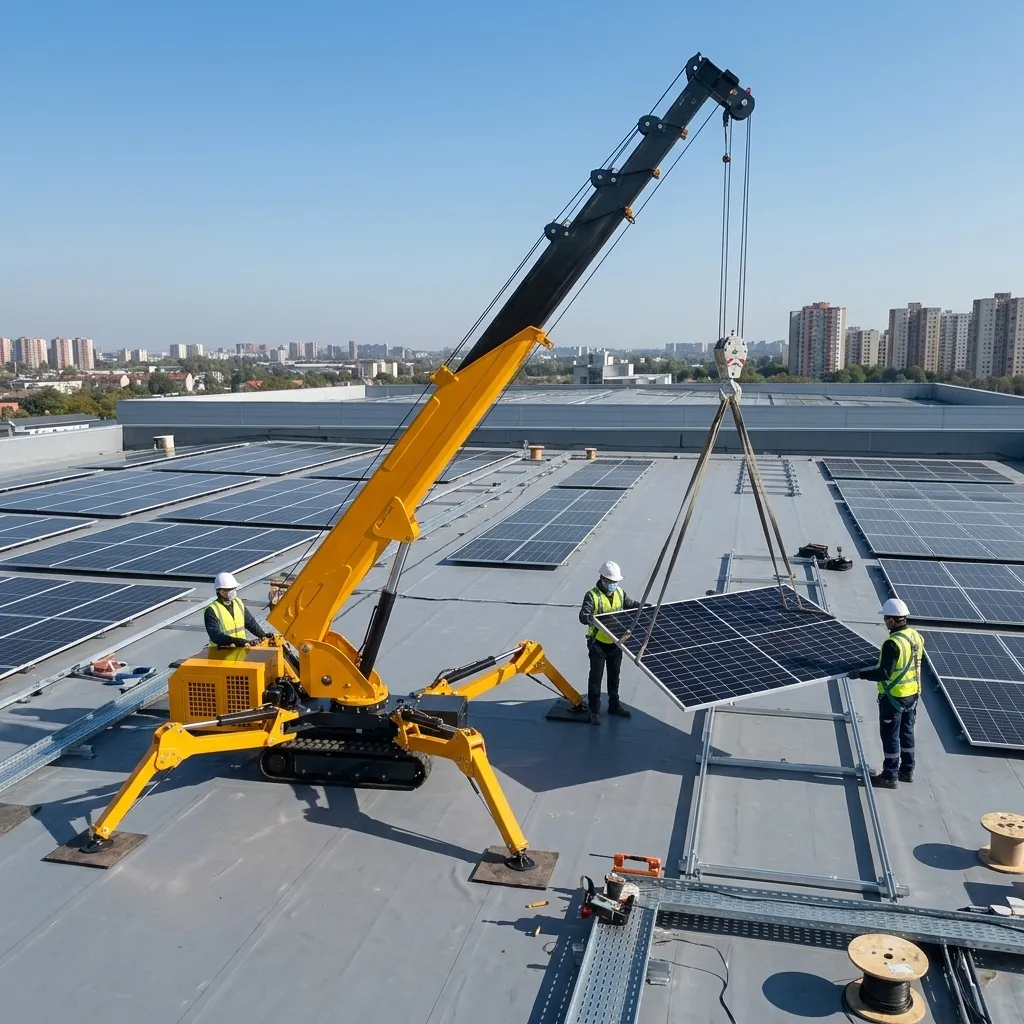 Spider Crane for Solar Panel Installation: Rooftop Lifting
 Spider Crane Common Faults & Troubleshooting Guide for M
 How to Choose Spider Crane Optional Attachments (Full Guide)
 How to Lift an HVAC Unit to a Roof with a Spider Crane