
Top 8 Applications of Spider Cranes in Construction
In current civil engineering and building operations, projects are becoming more difficult and space-restricted. Therefore, contractors must find suitable equipment that can lift heavy things inside limited areas. Spider crane, which is named because of its outriggers look like spider legs, is becoming very popular choice. In this essay, I will introduce the top eight practical usages of spider cranes in modern building sites.
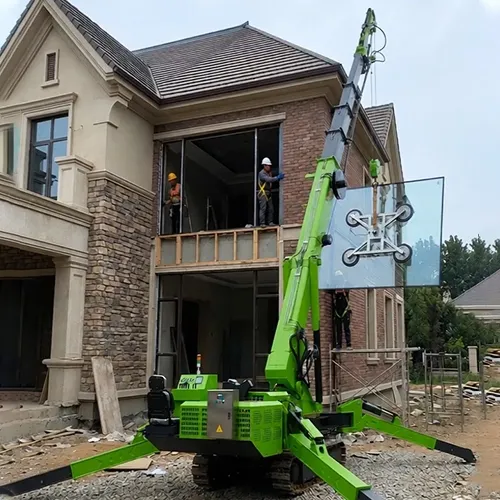
1. Glass Curtain Wall Installation
Installing large glass panels on high buildings is very hard work. Traditional big cranes cannot stand near the wall because space is small. Spider crane can go very close to the building edge. When people attach a vacuum suction device on the boom, the crane can lift and move glass sheets very carefully without breaking them.
2. Steel Structure Erection
In many steel building projects, workers need to put steel beams and columns into accurate places. Big mobile cranes take too much ground area. But spider crane has small size and strong lifting force. It helps workers assemble steel frames in factories, bridges, and warehouse construction easily.
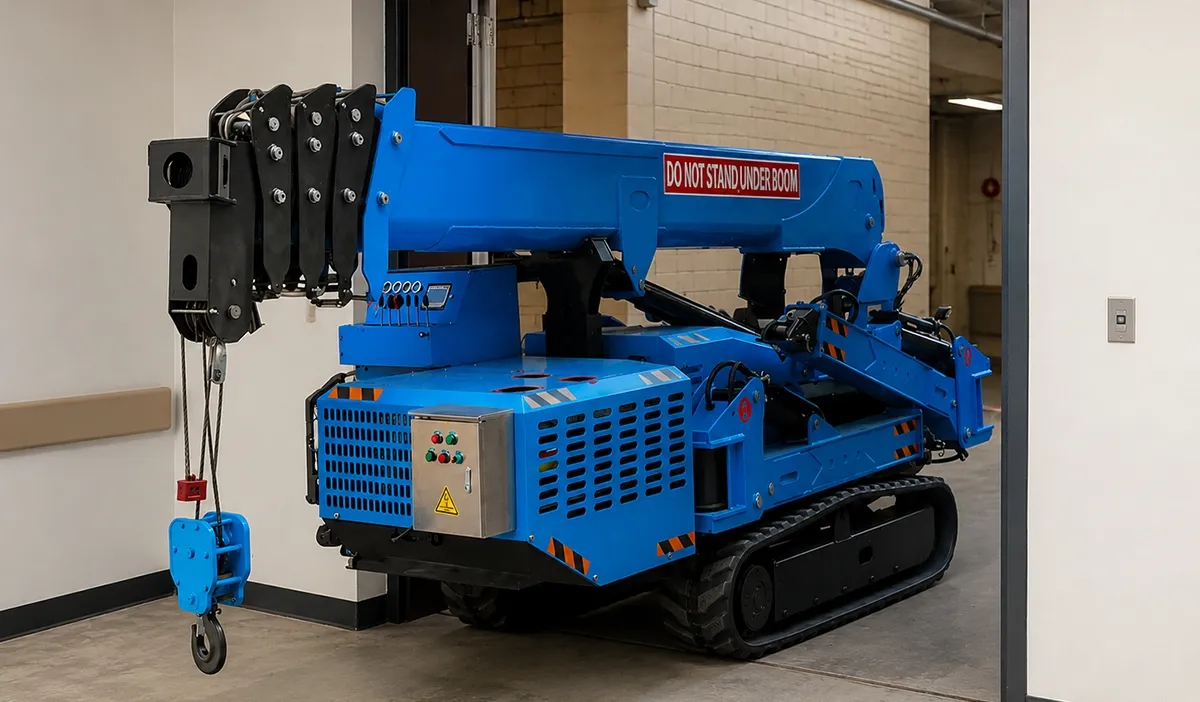
3. Indoor Building Work
Most large cranes cannot enter inside a finished or half-finished building. However, spider crane can pass through standard doors or double doors. Because it uses rubber tracks, it will not damage the indoor floors. People often use it inside shopping centers, airports, and hospitals to lift heavy decoration or equipment.
4. Rooftop Operations
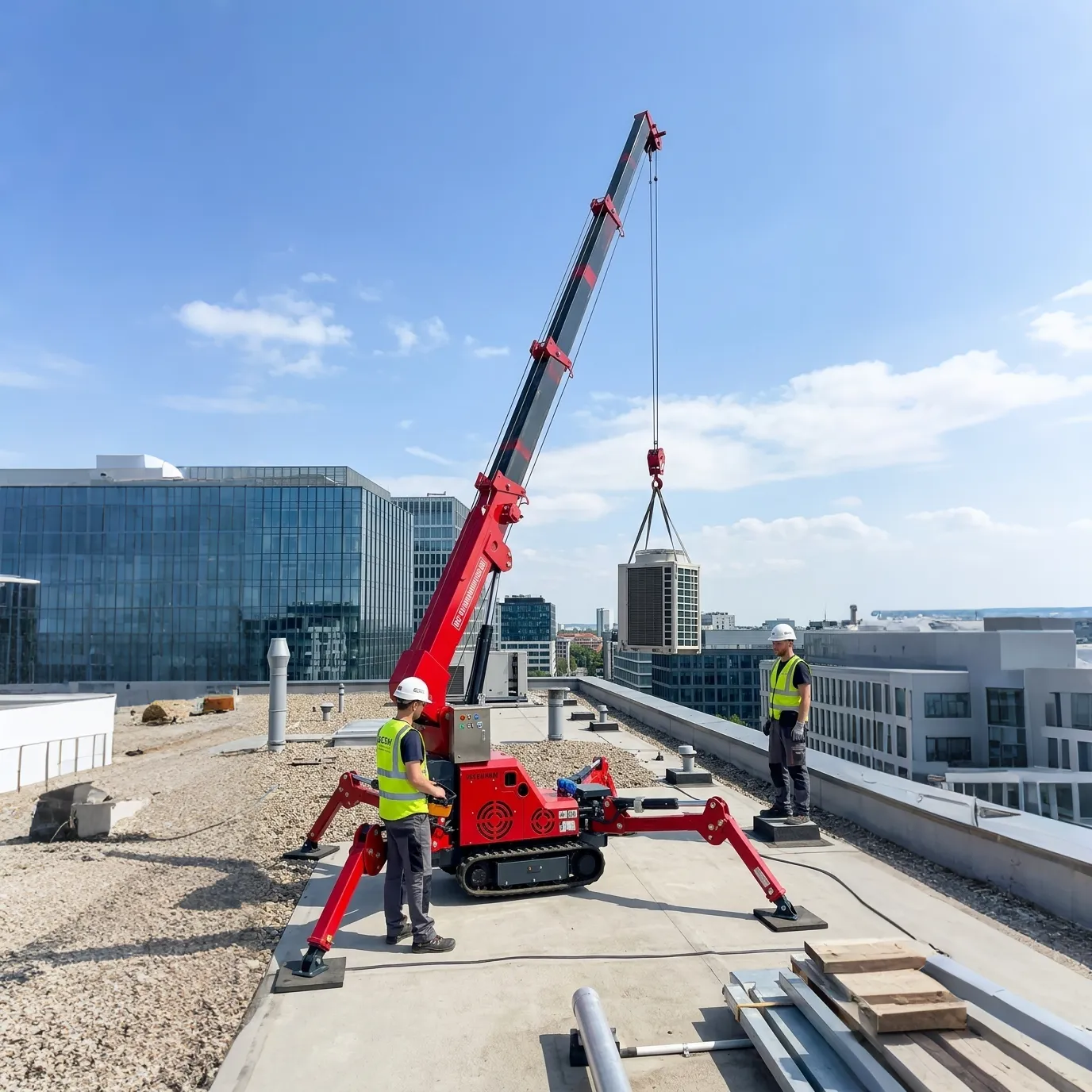
Sometimes material must be lifted on the roof of a high building, but ground cranes are not long enough to reach. Workers can lift the spider crane up to the roof top by using a big tower crane or heavy elevator. Then, the spider crane can work directly on the roof to install solar panels, air conditioners, or steel frames.
5. Heavy Machinery Relocation in Factories
Inside industrial plants, machines are very heavy and space between production lines is narrow. If a factory wants to change new machines without stopping all work, spider crane is useful. It can move through narrow passages and lift machine parts precisely.
6. Residential and Small Commercial Sites
In modern city, apartments and houses are built very crowded. There is no wide road for big trucks. Spider cranes can drive into narrow gardens or alleyways. They are used for putting up windows, swimming pool shells, big stones, and prefabricated concrete units.
7. Historic Building Renovation
When repairing old or historic buildings, workers must be extremely careful not to break the fragile ground or walls. Spider cranes are much lighter than standard trucks. They can setup in small courtyards and heritage sites to do restoration work without causing heavy vibrations or structural damage.
8. Infrastructure and Utility Facilities
In public construction like subway stations, power plants, and railway bridges, working space is usually blocked by existing structures. Spider cranes can be placed in subterranean floors or tight corners to help maintenance and installation of big pipes or heavy cables.
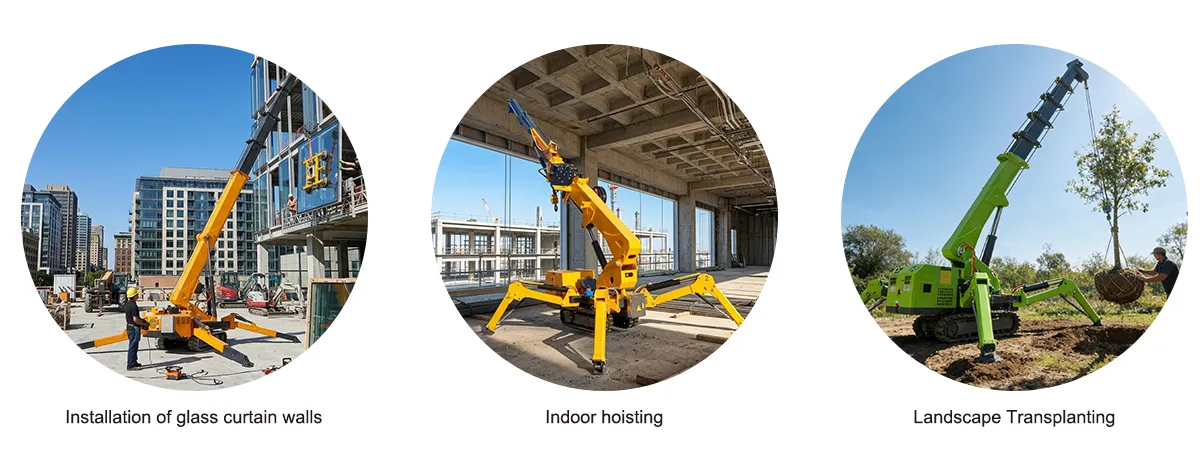
Important Advantages of Spider Cranes
From my observation, spider cranes have several distinct merits compared to old-style cranes:
Small dimension: It can enter narrow paths and doors.
Good stability: Hydraulic outriggers spread out to support the body, so it stays safe on uneven ground.
Flexible movement: The boom can rotate 360 degrees and can be operated by remote controller.
Low weight: Easy to transport on small trucks or lift to high floors.
Conclusion
To summarize, spider crane is a very useful tool for current construction problems. Although it looks smaller than common truck cranes, its capacity in confined spaces is very impressive. By using spider cranes in glass installation, indoor work, and historic restoration, engineering teams can save time and improve safety on sites. Contractors should choose the correct capacity model according to their specific lifting weight and site boundary.
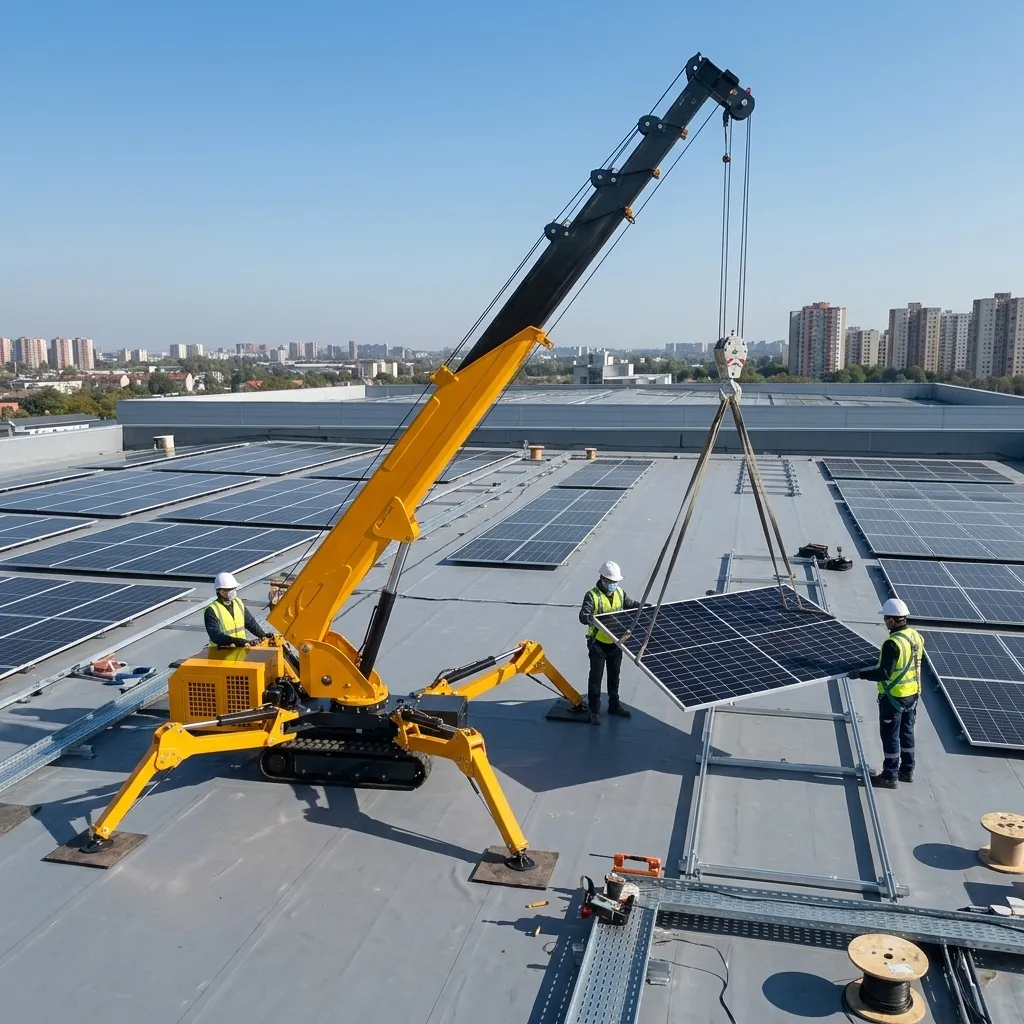 Spider Crane for Solar Panel Installation: Rooftop Lifting
 Spider Crane Common Faults & Troubleshooting Guide for M
 How to Choose Spider Crane Optional Attachments (Full Guide)
 How to Lift an HVAC Unit to a Roof with a Spider Crane