
What Is a Spider Crane Used For? Industry Applications Guide
Compact Lifting Across Industries
Spend time around lifting work and the same small machine keeps turning up in places that don't belong together — glazing a facade one week, setting equipment in a substation the next, lifting a boulder into a garden after that. It looks like a toy next to a truck crane, yet it handles jobs the big iron can't reach. If you've wondered what a spider crane is used for, the short answer is: any lift where access is tight, ground is sensitive, or work moves indoors and out.
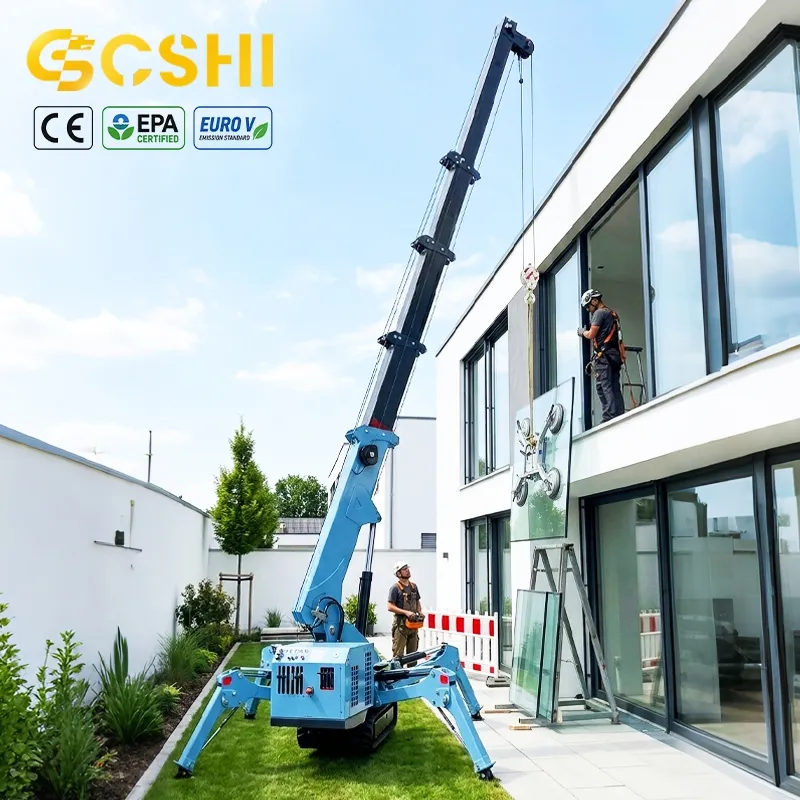
Why One Machine Covers So Many Jobs
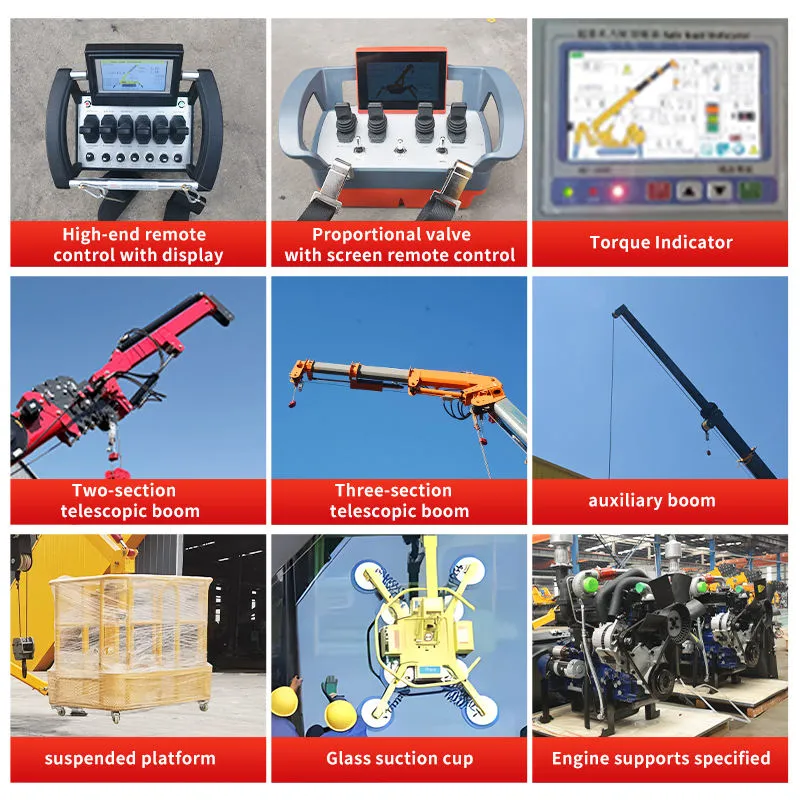
A spider crane pairs a tracked chassis that folds narrow enough for doorways and elevators with four independent hydraulic outriggers that level and stabilize it once parked. The boom telescopes and slews a full 360 degrees, and CSHI dual-power models run on AC380V electric indoors and diesel outdoors. Bolt on a glass lifter, fly jib, auxiliary boom, or man basket and the same machine switches trades. That versatility, more than capacity, puts it on many sites.
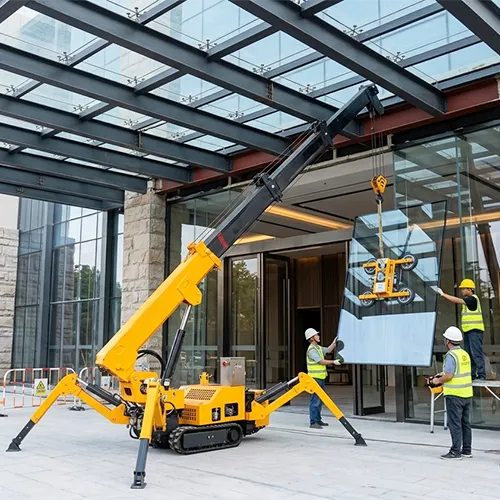
Glass, Curtain Wall and Interior Fit-Out
This is the work most people picture. Glass panels are heavy, fragile, and often installed from inside a finished building or through a narrow facade opening where an external crane can't position. The small CSHI models — the 1.2-ton CS-1200, 1.5-ton CS-1500, and 2-ton CS-2000 — fold to around 0.7 metres wide, pass standard doorways, and run electric with no fumes in occupied spaces. With a vacuum lifter, panels, curtain wall sections, interior steel, stone cladding, and atrium glazing go in floor by floor with millimeter control.
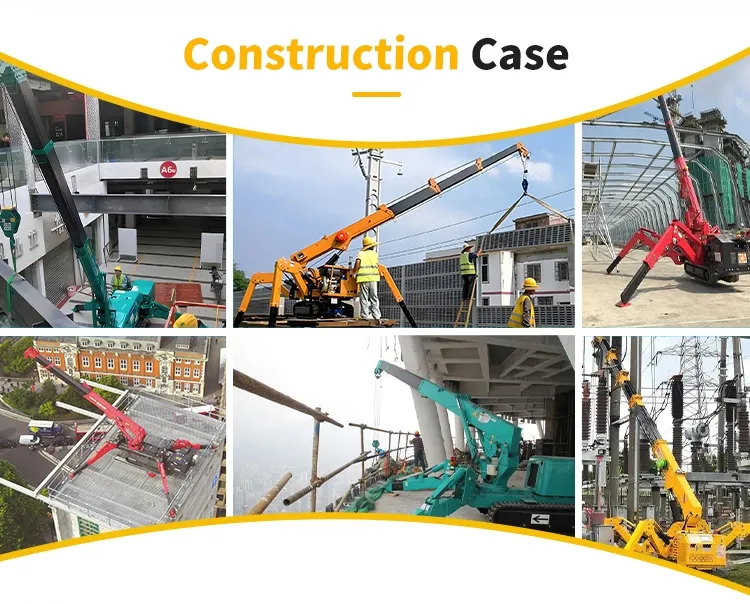
Construction, Municipal and Structural Steel
Outside, the mid-range machines take over. The 3-ton to 5-ton class — up to the CS-5000 with its 15-metre radius — handles structural steel, facade frames, bridge work, and tight urban infill where a larger mobile crane has no room to rig. Add a fly jib for reach over parapets or an auxiliary boom for awkward pick points. Continuous 360-degree slew lets one set position serve lifts all around.
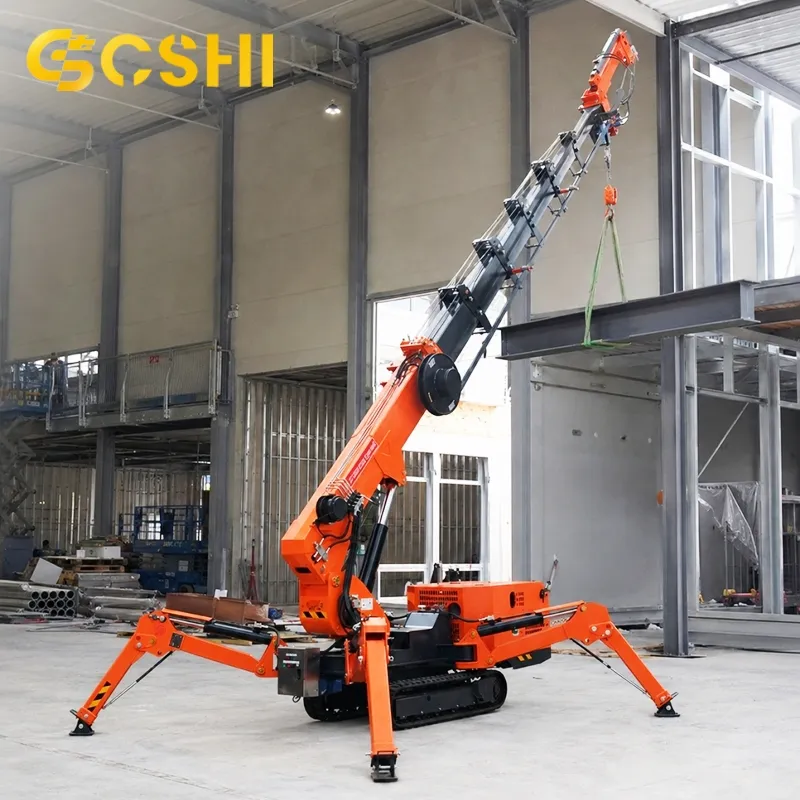
Power Construction and Substations
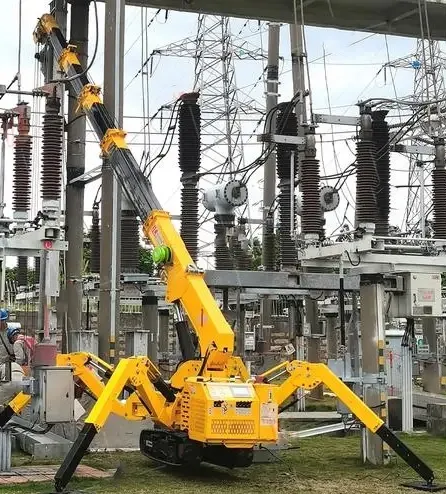
Utility work has its own constraints: equipment is dense, access lanes are narrow, and ground around substations and transmission towers is rarely a smooth hardstand. A tracked spider crane moves between switchgear and towers without a truck crane's wide swing, setting transformers, insulators, cable reels, and structural members precisely. Tracks spread weight, reach 2.5 km/h, and climb 25-degree gradients to spots wheeled cranes never reach.
Factory, Plant and Automotive Work
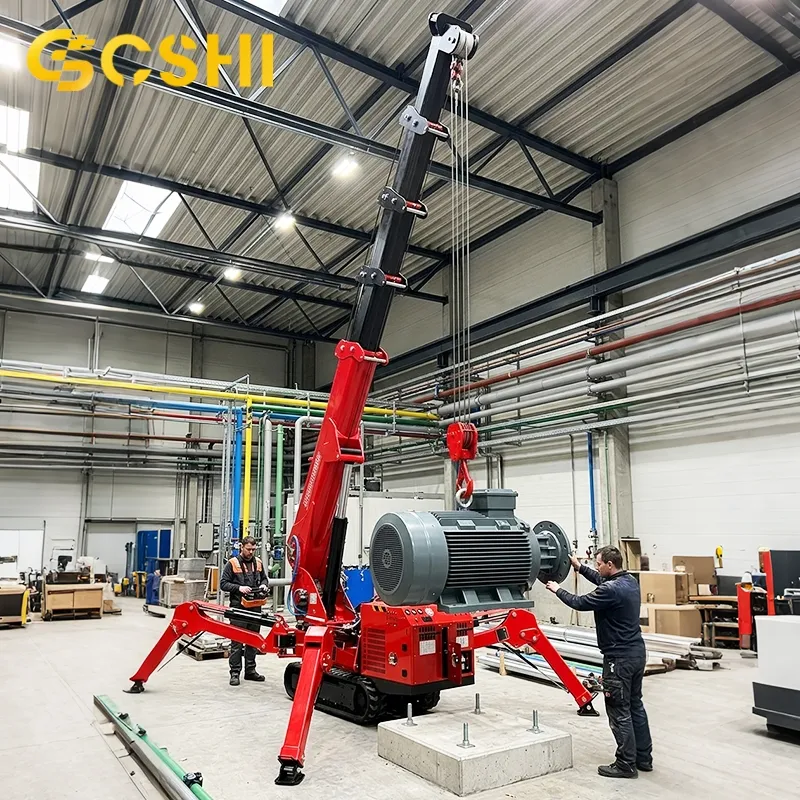
Inside a working plant, production often continues around the install, floors are finished and load-limited, and combustion engines are off-limits. Here electric mode earns its keep: a compact spider crane sets machinery, presses, conveyors, and tooling, or supports line maintenance without exhaust. With a man basket it doubles as a stable platform for overhead pipe, duct, and lighting. Low self-weight — 1.3 to 1.8 tons on small units — keeps point loads manageable on mezzanines.
Confined Spaces, Heritage and Renovation
Old buildings, basements, courtyards, and rooftop retrofits share one problem: the load must reach a spot no full-size crane can. A spider crane can be tracked or lifted onto a roof, wheeled through a heritage archway, or set in a light well, then stabilized on its outriggers. Independent legs adjust to uneven floors and steps.
Disaster Relief and Rough Terrain
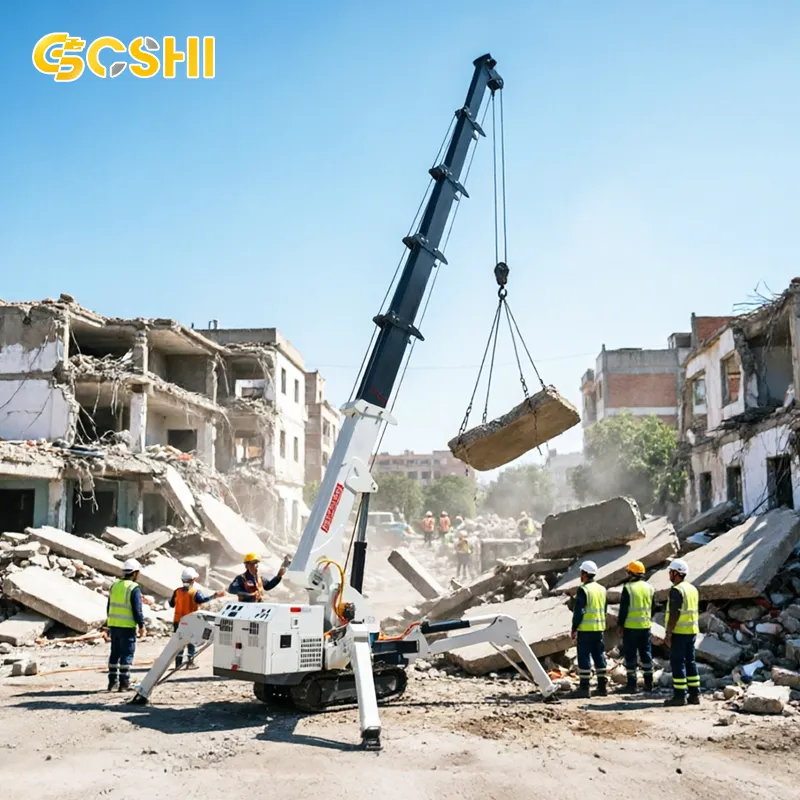
When roads and hardstands are damaged, the tracked chassis becomes the whole point. These machines work across riverbanks, sand, mud, snow, and rough ground where wheeled equipment bogs down. On diesel, a unit runs independent of site power for debris clearance, temporary structures, and utility repair after storms.
Landscaping, Stone and Specialty Lifts
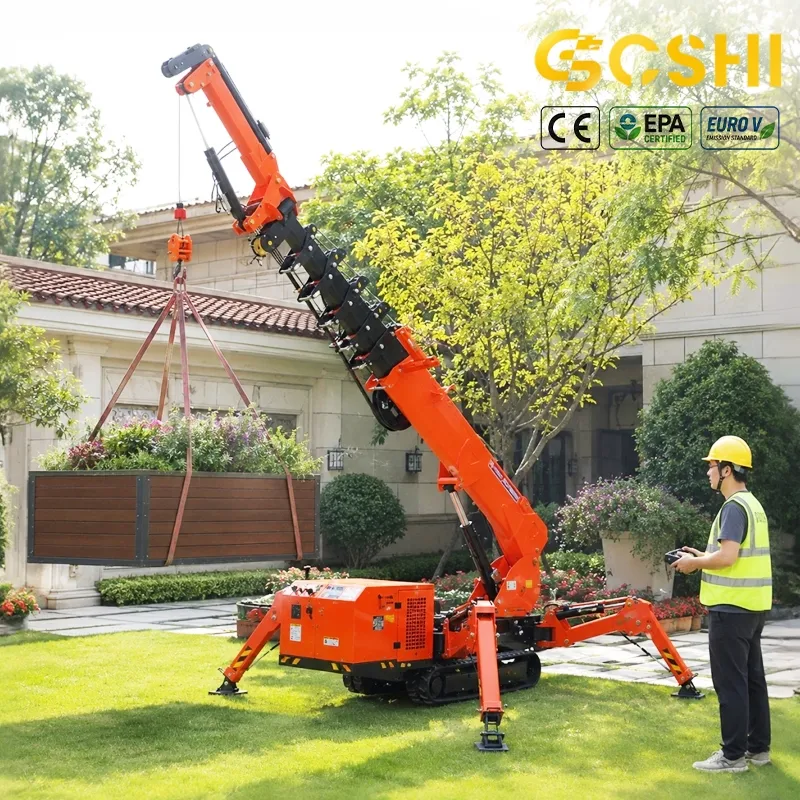
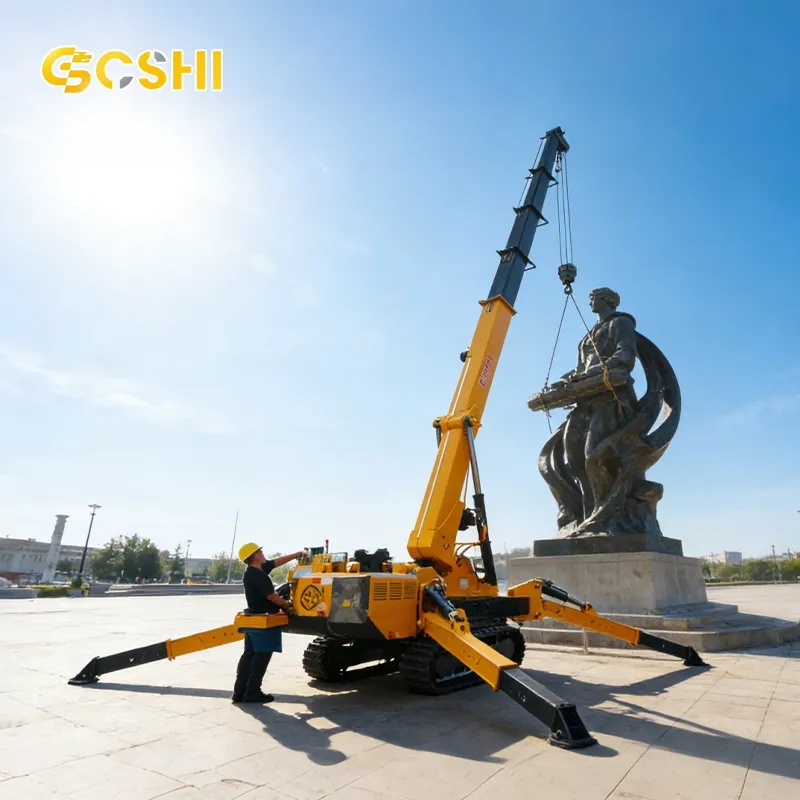
The same precision serves softer work: setting boulders, mature trees, sculptures, fountains, and garden structures over finished lawns and paving without tearing them up. Low ground pressure and the ability to lift over obstacles make spider cranes a favorite for landscaping, monument installs, dockside work, and entertainment rigging.
Matching the Industry to a Machine
The right model follows from three questions: how heavy is the load at the radius you need, how tight is the way in, and are you working indoors, outdoors, or both. Small 1.2–2 ton units favor glazing and interiors; 3–5 ton units cover most structural and municipal work; the 8-ton through 16-ton CS-16000 — reaching 23 metres on a 25-metre boom — handles heavy industrial and structural lifts. Specify dual power for mixed indoor-outdoor work, and pick attachments for the trade rather than running separate machines.
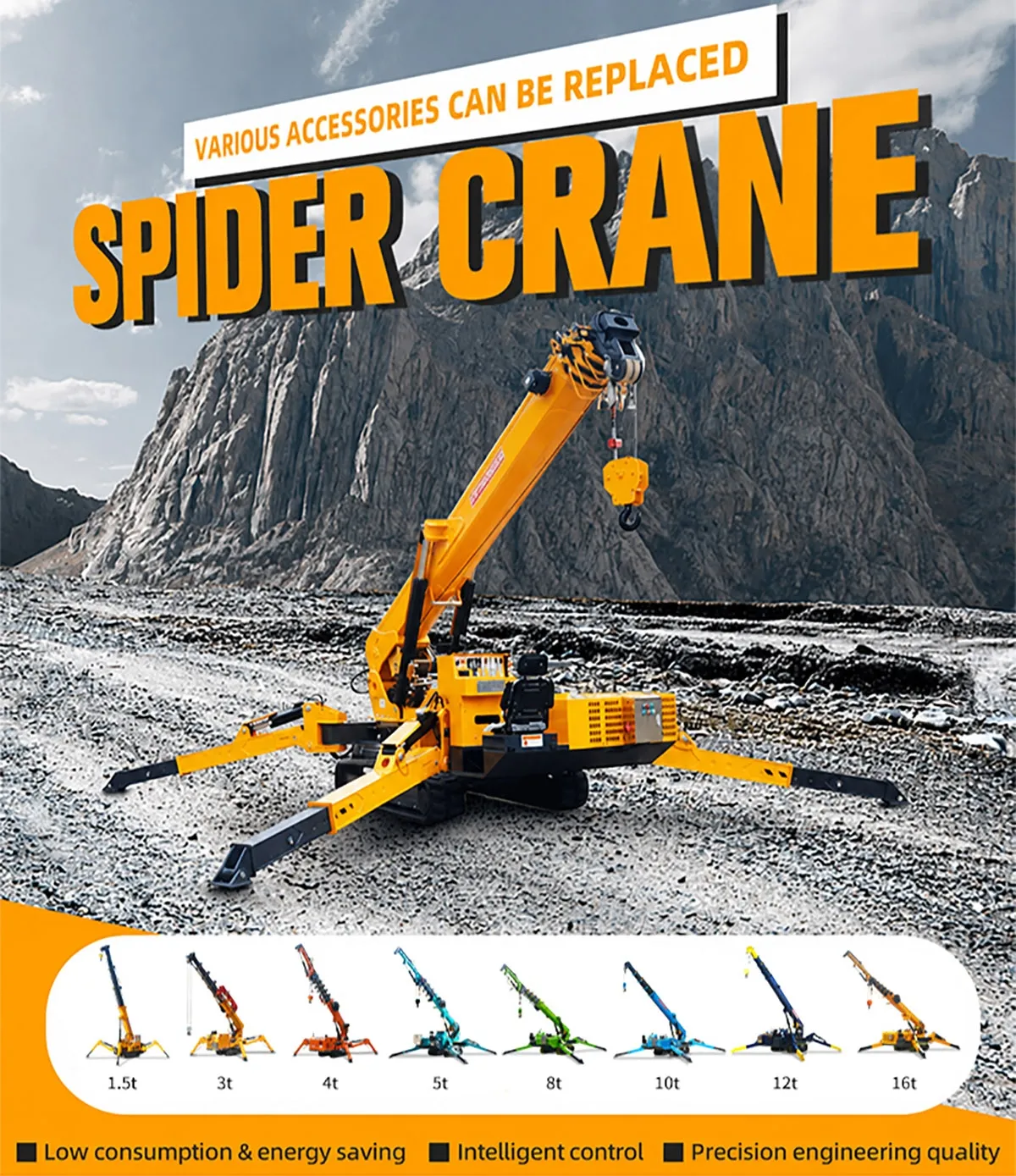
Whatever the industry, the logic is the same: take the lift where a conventional crane can't go. Tell CSHI your sector, access width, ground, and typical loads, and we'll match a model, power setup, and attachments to your work.
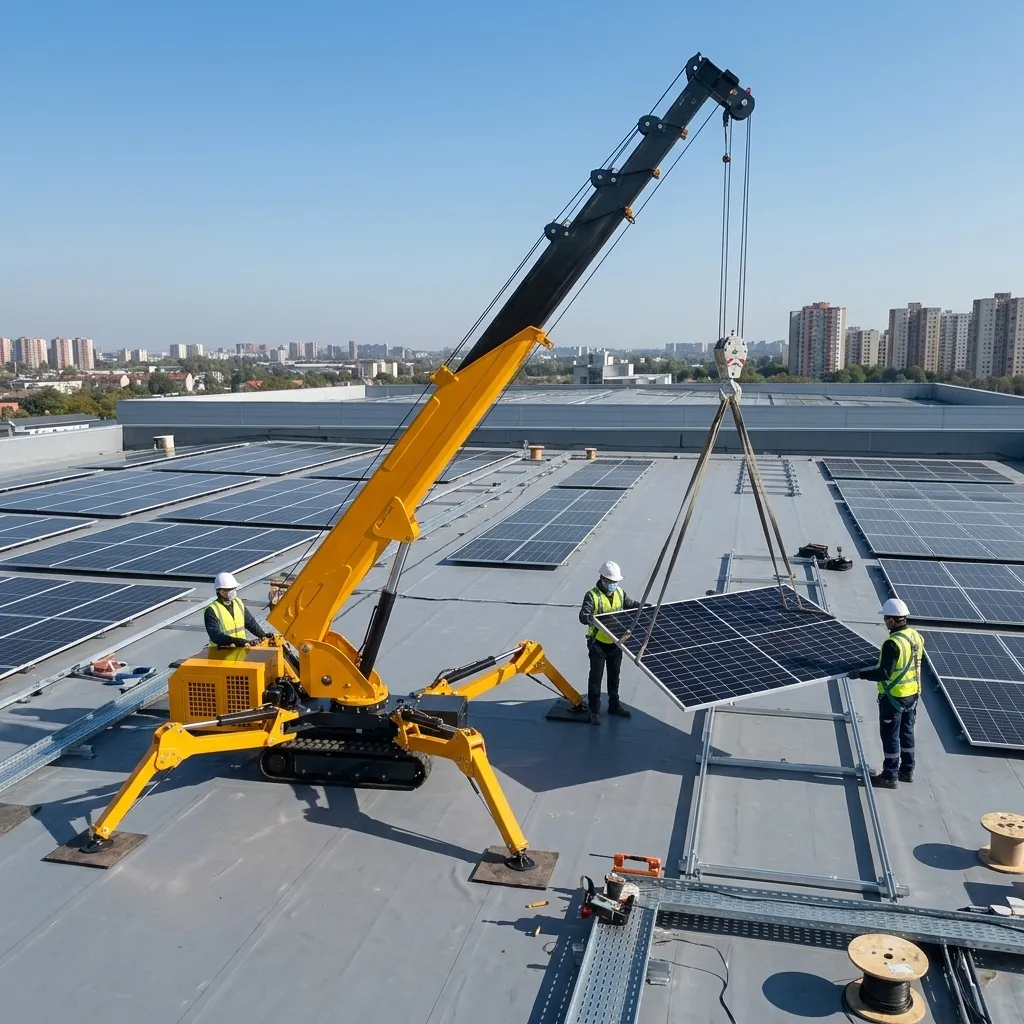 Spider Crane for Solar Panel Installation: Rooftop Lifting
 Spider Crane Common Faults & Troubleshooting Guide for M
 How to Choose Spider Crane Optional Attachments (Full Guide)
 How to Lift an HVAC Unit to a Roof with a Spider Crane