
Getting a Spider Crane to Your Site
Transport, Delivery and Moving It Around
Customers ask how high a spider crane lifts and how much it carries, then hit a more basic question before delivery — how does the thing actually reach the lift? Can it fit in a container, ride our freight elevator, squeeze through that narrow corridor, get up to the roof? On tight urban and indoor jobs, transport and access decide whether a lift is even possible long before the boom goes up. Here's how the machine actually moves, from our factory floor to your pick point.
It Folds Small by Design
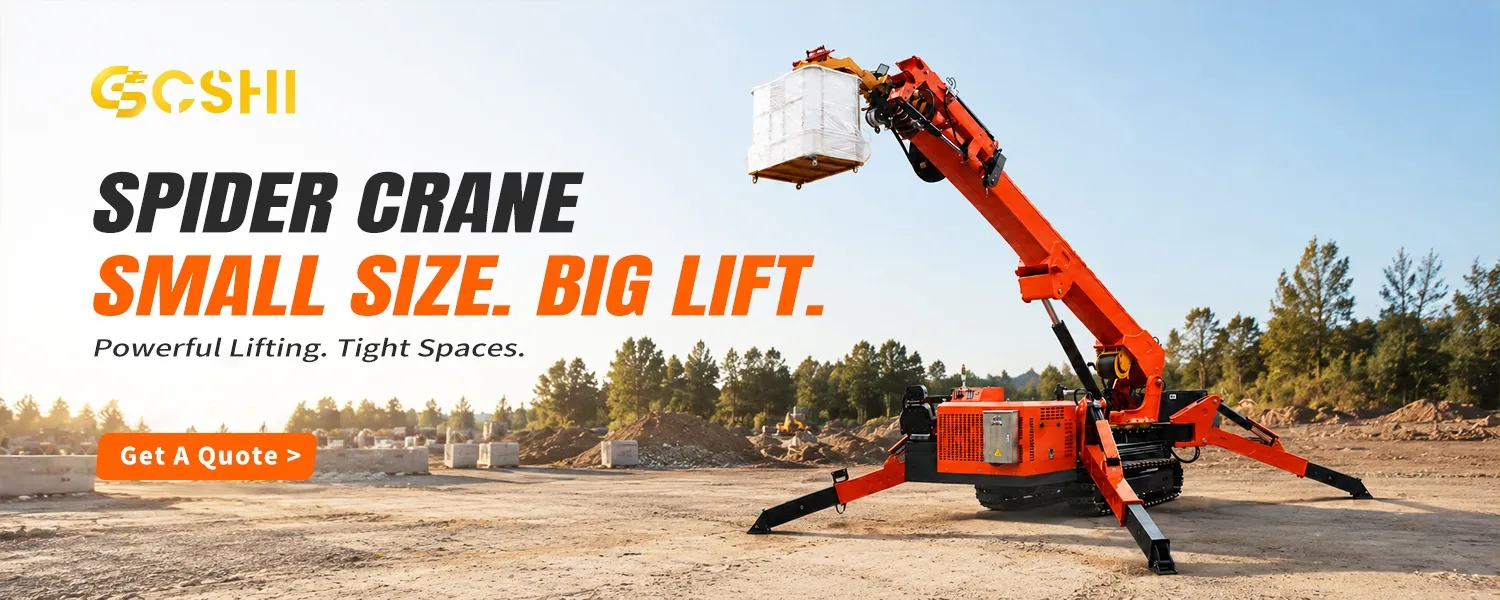
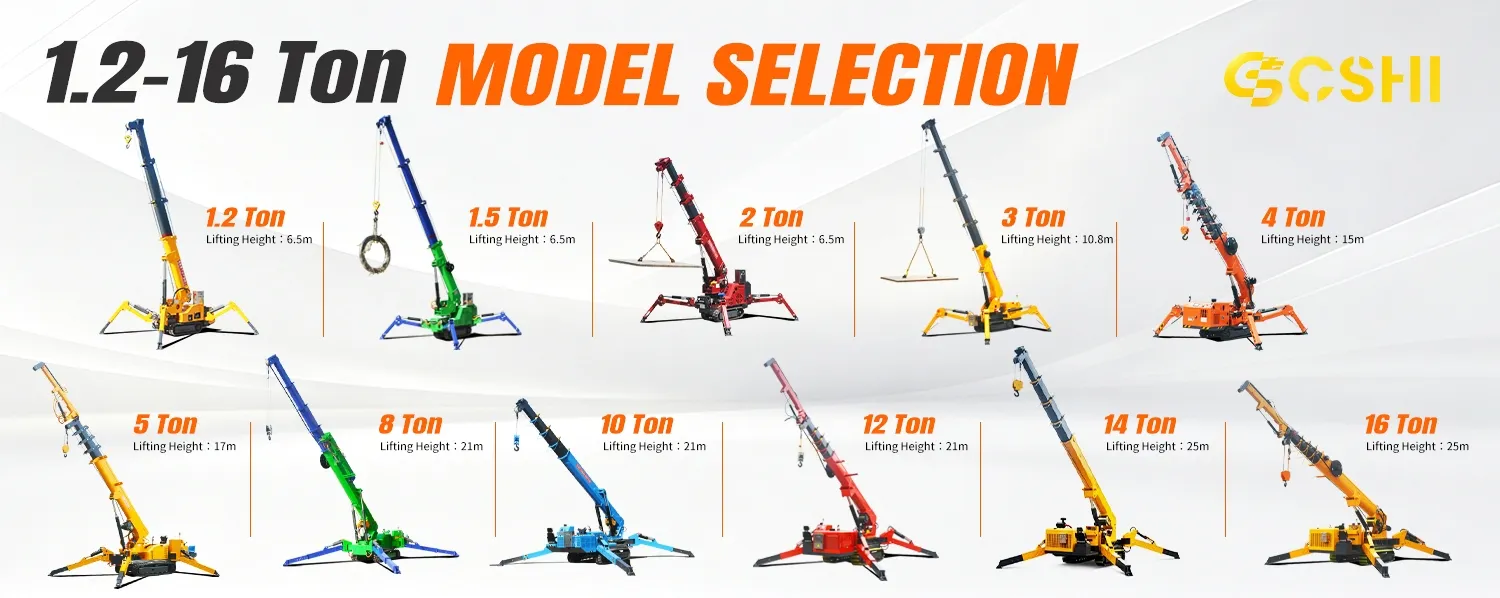
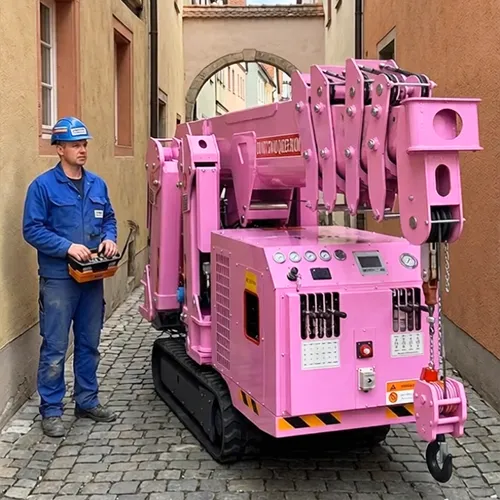
A spider crane is built to be moved, not just to lift. Once the boom is retracted, the fly jib stowed and the four outriggers folded in, the whole machine becomes a low, narrow tracked package — the smallest units sit around 700–800mm wide and not much taller than a person, while the bigger ones stay far more compact than a conventional crane of the same capacity. There are no counterweight slabs to separate and no boom sections to pin together on arrival, so what ships is essentially the working machine.
How It Leaves the Factory for an Overseas Site
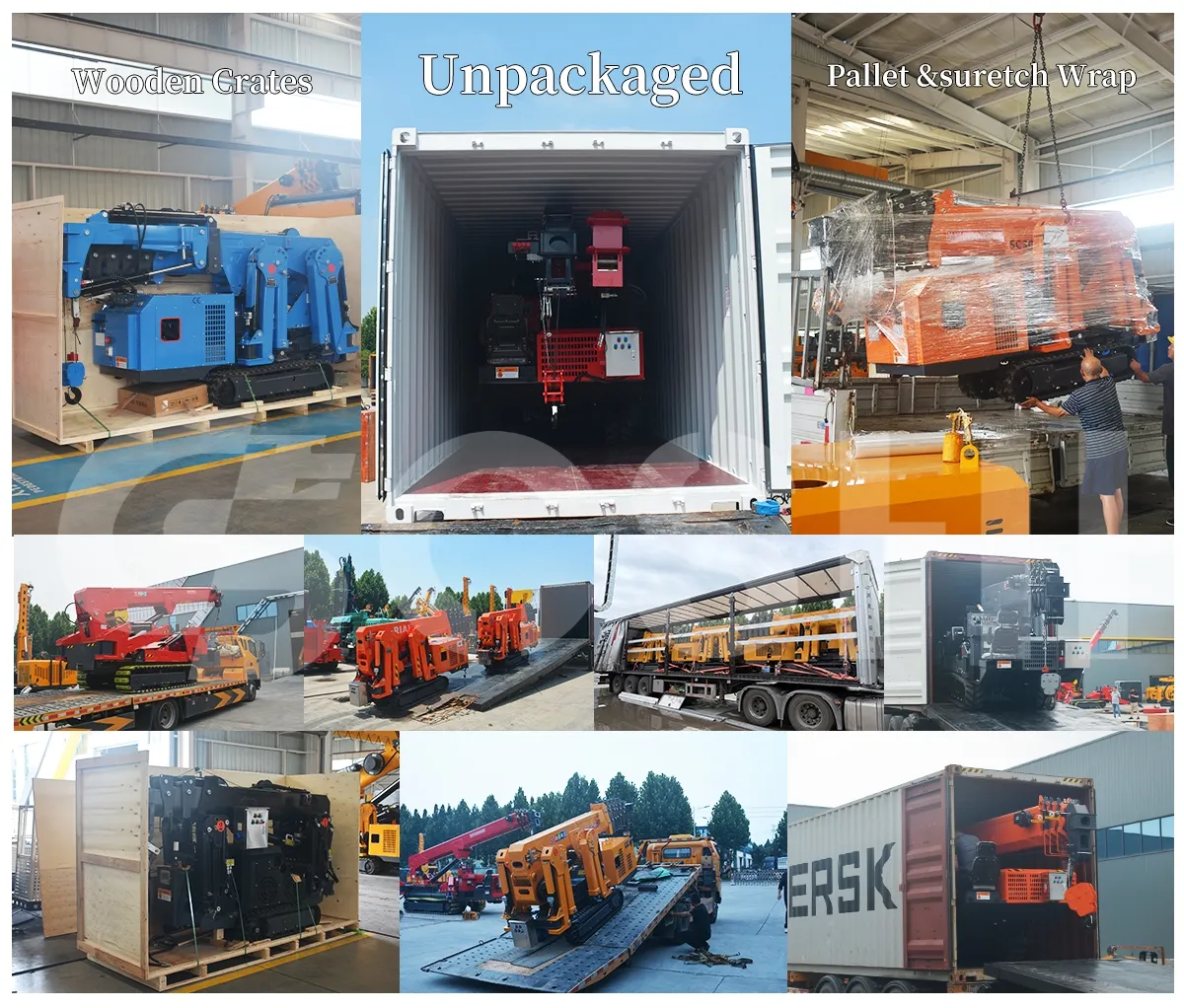
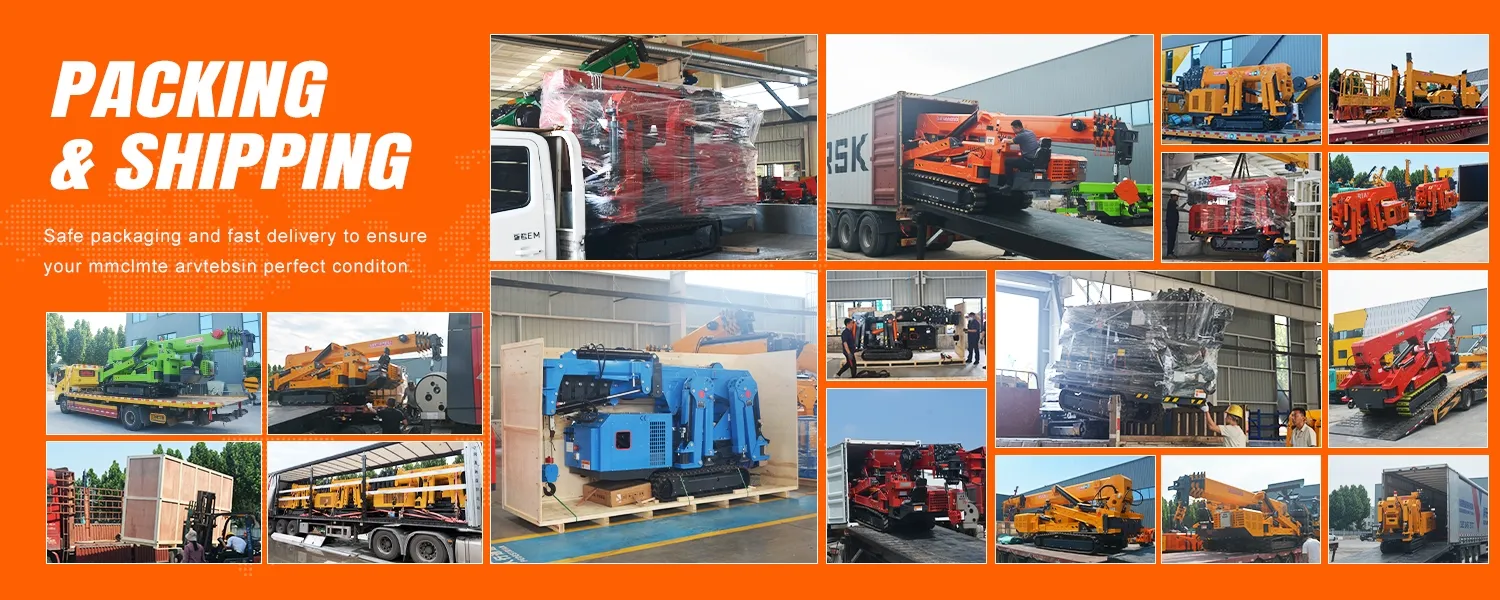
As an exporter sending these machines to more than twenty countries, loading is something we've worked out. A small or mid-size unit travels as one piece, driven on its own tracks into a standard container or onto a flat rack, then blocked and lashed so it can't shift at sea. Larger models may go on flat racks or roll-on, roll-off vessels, and we can strip off non-essential parts where an extra few centimetres matter. Before anything is booked, we match the folded dimensions against your container and the receiving port's handling gear, so there are no surprises waiting on the dock.
It Drives Off the Truck by Itself
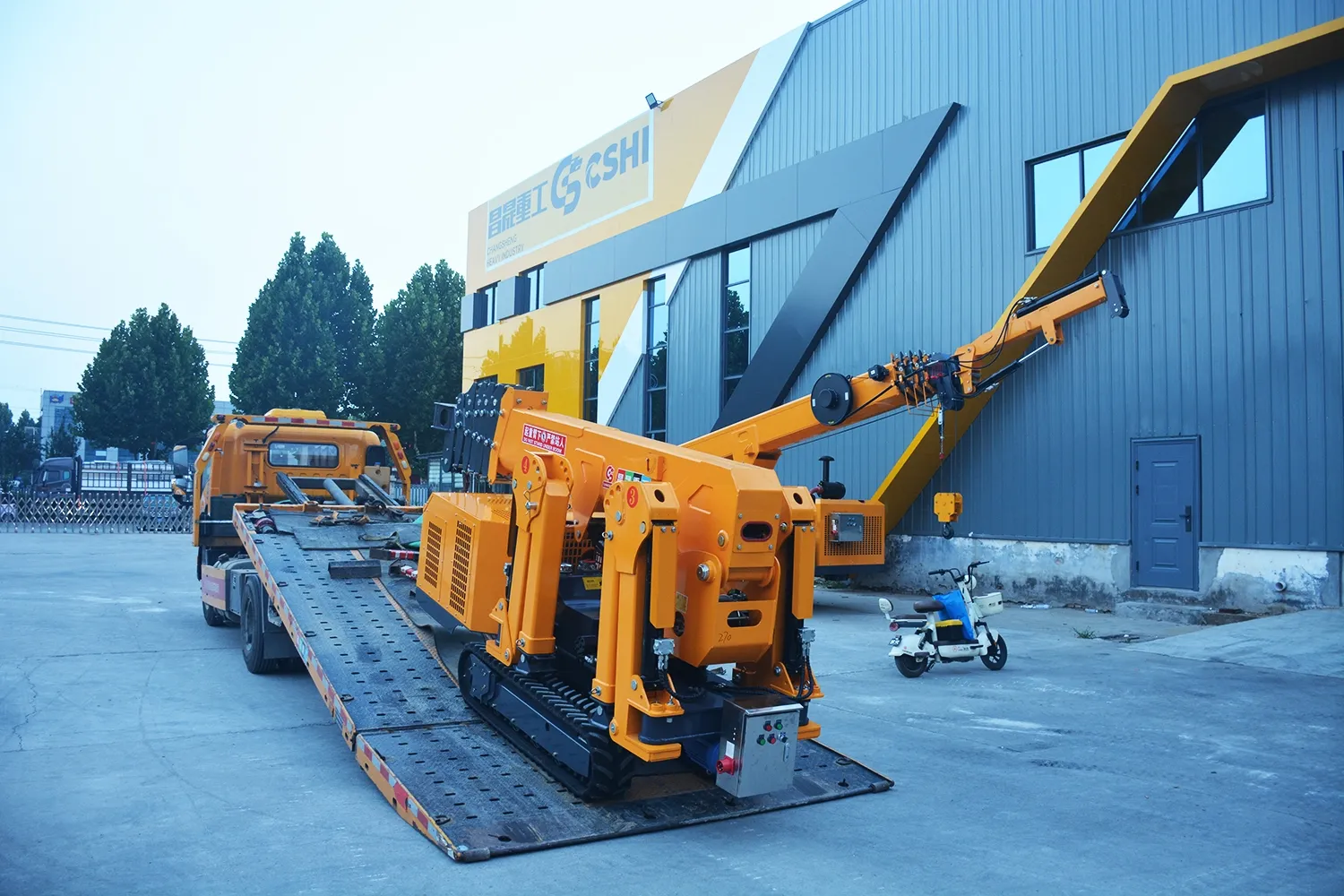
Here's a quiet advantage people only notice on site: a spider crane doesn't need a second crane to unload. Under its own diesel power it tracks straight off the low-loader, down ramps and across rough or sloped ground to wherever it's needed — the crawler base handles gradients that stop a wheeled mini crane. That self-loading, self-walking ability removes the extra machine, extra crew and extra coordination most other cranes need just to climb off the delivery vehicle.
Through Doors, Lifts and Corridors
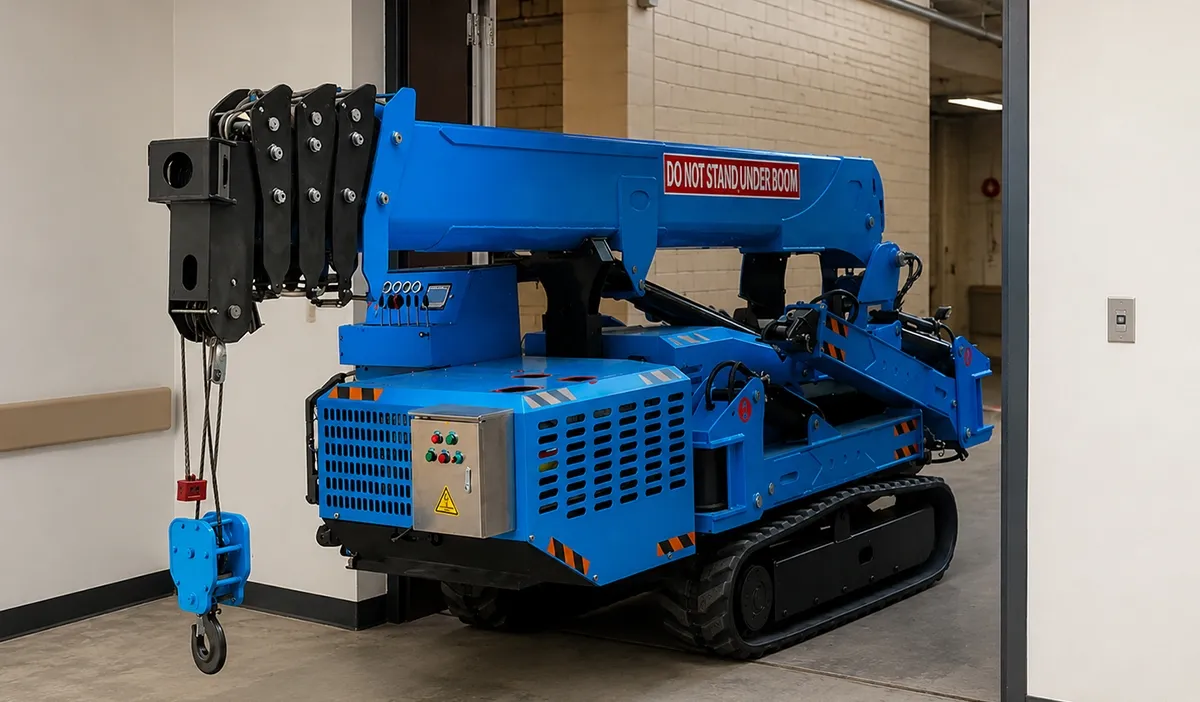
Indoor work is where folded size really earns its keep. A compact unit rolls through a standard doorway, along a finished corridor and into a service or freight elevator — provided you check the elevator's rated load against the machine's operating weight first, and remember to count rigging and attachments in that total. We usually lay protection boards over finished floors, keep the boom trailing straight and move slowly around corners. On a dual-power CSHI machine you switch to electric the moment you're inside, so the crossing is fume-free and quiet even in an occupied building.
Up to Rooftops and Upper Floors
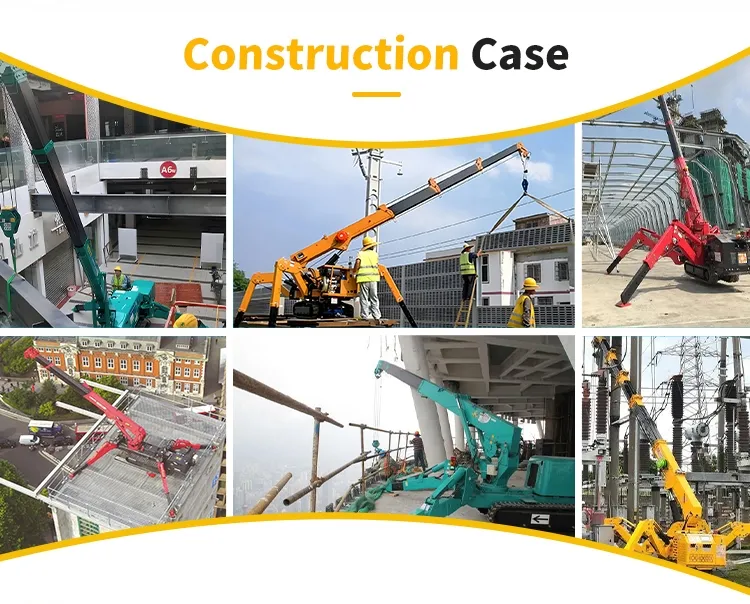
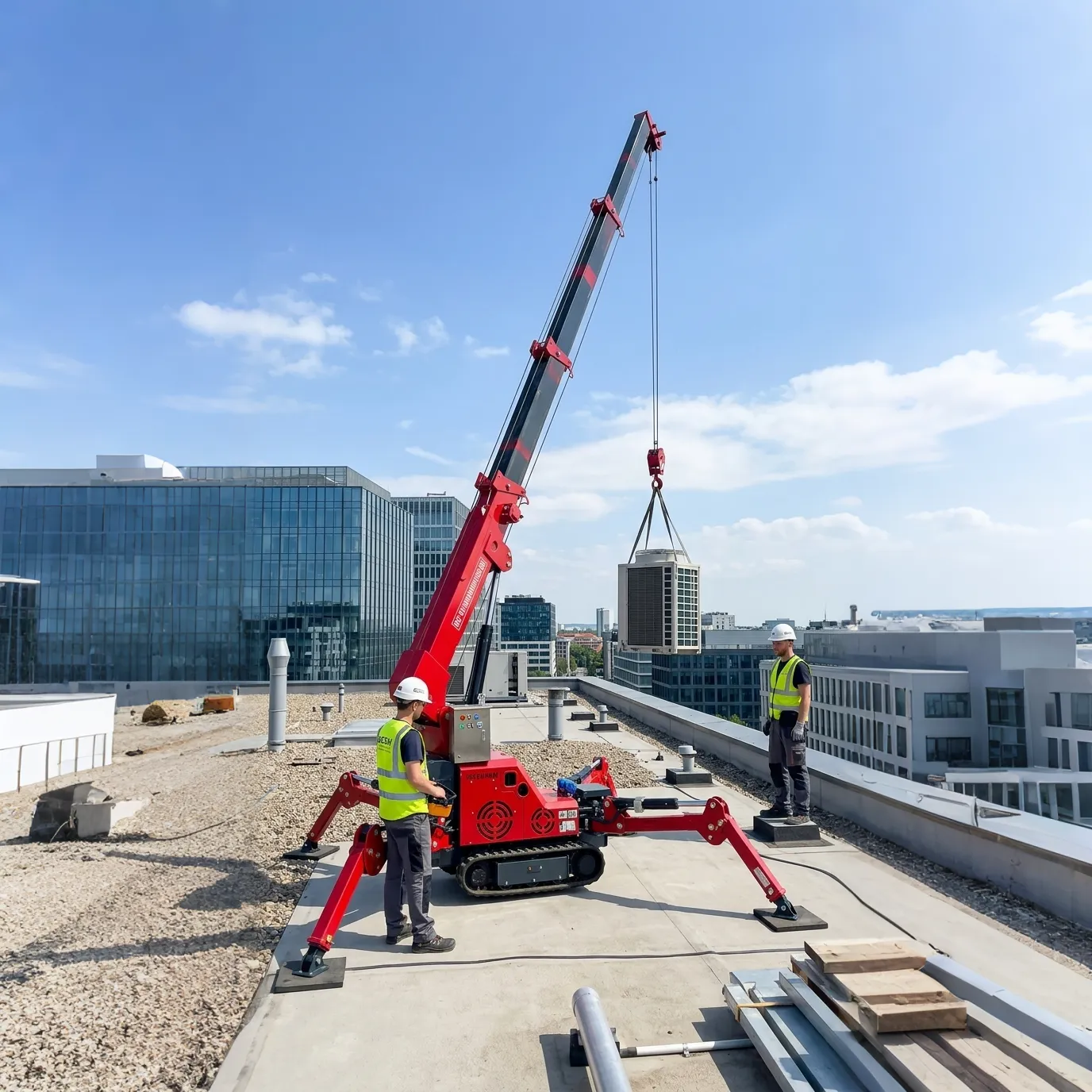
Rooftop and high-floor lifts follow the same logic. The crane goes up in a construction hoist or material elevator, or travels as a single slung load on the site's tower crane, then tracks across the slab to its working position. Because the machine is comparatively light and its weight spreads across rubber tracks and four padded outriggers, it works on suspended floors where a wheeled crane could never go — the slab still has to be checked by the project engineer, though, and outrigger pads sized to spread the leg loads. We'll hand you the weights and footprint that calculation needs.
Moving From Pick to Pick on a Live Site
Jobs rarely have just one lift. With a spider crane, moving between picks is quick: retract and stow the boom, lift the legs, track a few metres, set the legs again and you're working, often with the same one or two people while nearby trades carry on around you. There's no waiting for a truck to come back, no road to re-close, no second mobilisation. Across a long curtain wall, a floor-by-floor fit-out or a row of rooftop units, that short repositioning cycle is where a lot of the schedule gets saved.
What to Send Us Before We Dispatch
To make sure the machine you order actually reaches the lift, gather a few things up front: your narrowest doorway or aisle width, the elevator's internal size and rated load, floor levels and slab load limits, the route from loading bay to work area, and how the unit is received at your port or site. Photos and a rough sketch go a long way. Send them over and we'll say plainly which model clears every point, and flag anything to rethink before it ships.

Wrapping Up
Transport isn't a side issue with compact cranes; it's half of why they exist. A machine that folds for a container, walks off its own truck, rides an elevator, climbs to a roof and re-positions in minutes turns "we can't get a crane in there" into a routine lift. Give CSHI your access route and site constraints, and we'll match the right dual-power spider crane that genuinely gets to where the work is.
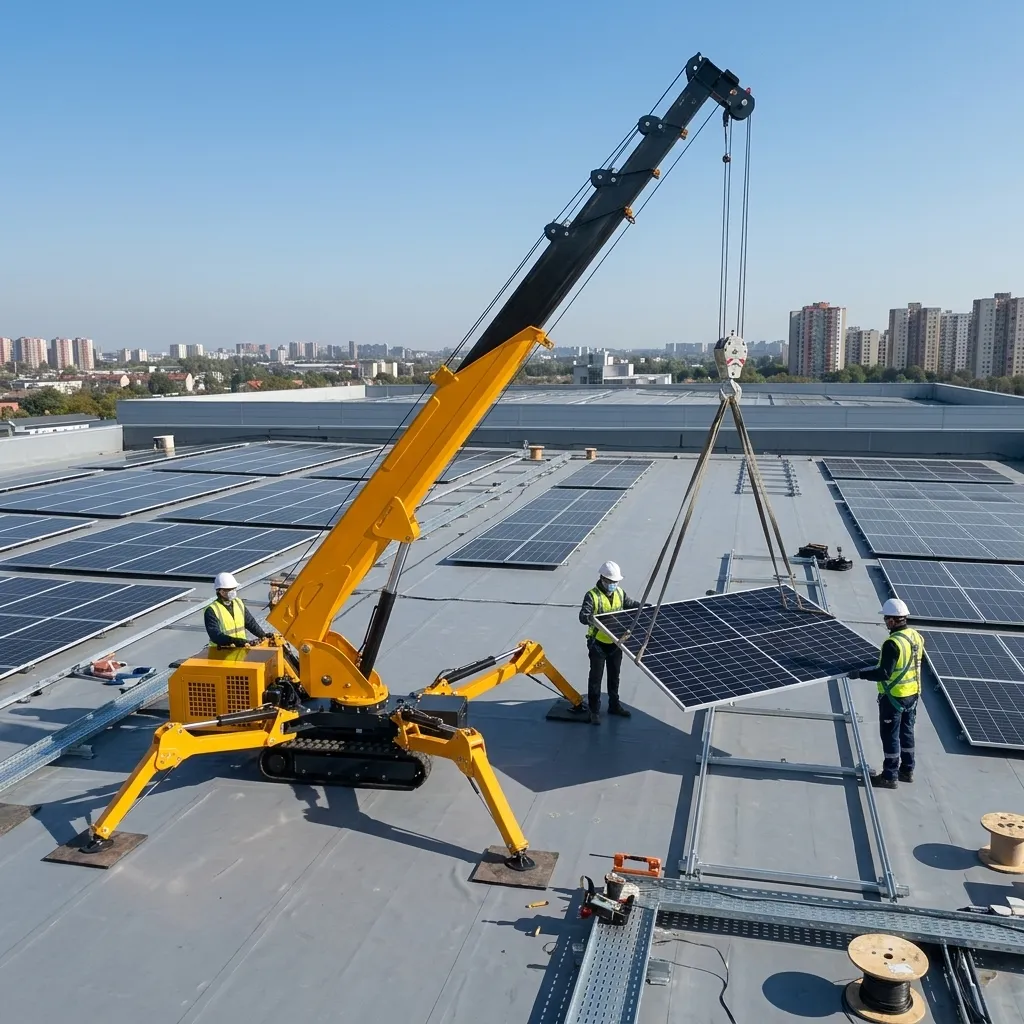 Spider Crane for Solar Panel Installation: Rooftop Lifting
 Spider Crane Common Faults & Troubleshooting Guide for M
 How to Choose Spider Crane Optional Attachments (Full Guide)
 How to Lift an HVAC Unit to a Roof with a Spider Crane