
How to Actually Pick a Spider Crane
Start With the Basics: How Much Do You Need to Lift, and Where?
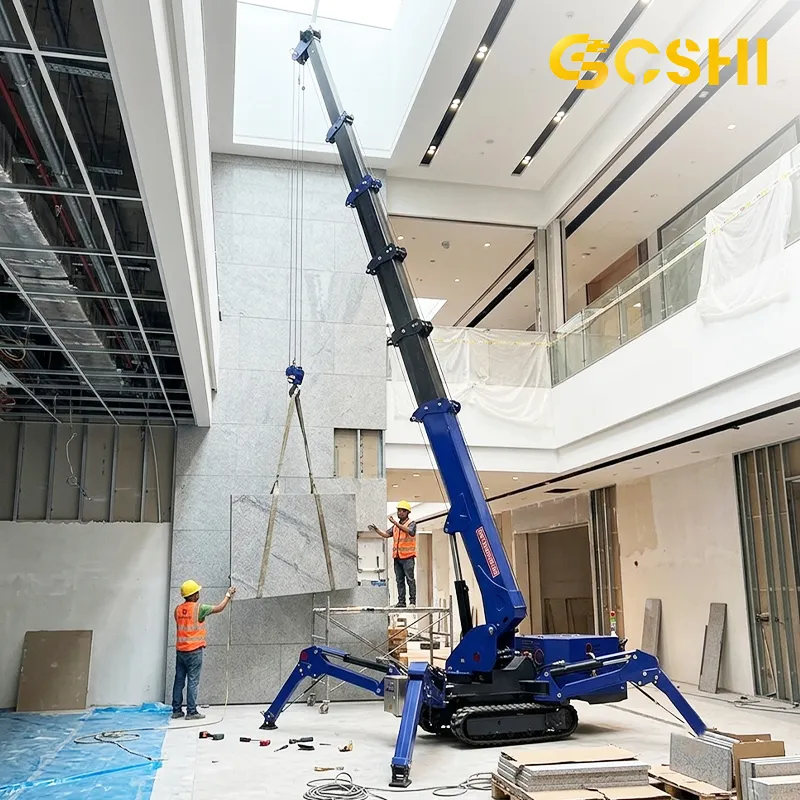
If you're doing indoor stuff—glass curtain walls, some roofing panels, maybe a small steel structure going up inside a building—you're looking at the 3–5 ton range. These little guys weigh around 2 to 2.7 tons themselves, which means they can actually ride up in a freight elevator. Boom length sits somewhere between 8.3 and 10.5 meters, working radius maybe 5 to 8.45 meters. Not glamorous numbers, but they get the job done in tight spaces where nothing else fits.
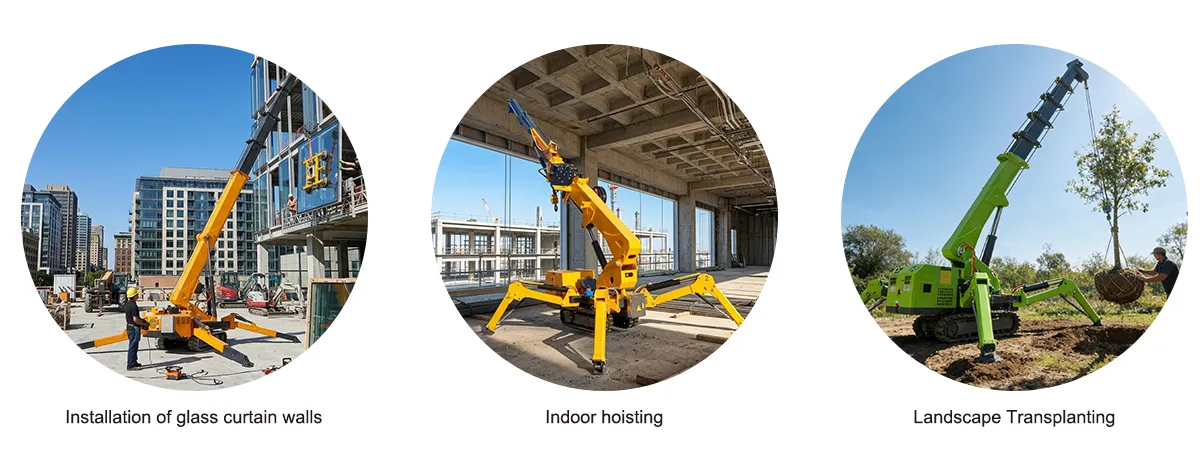
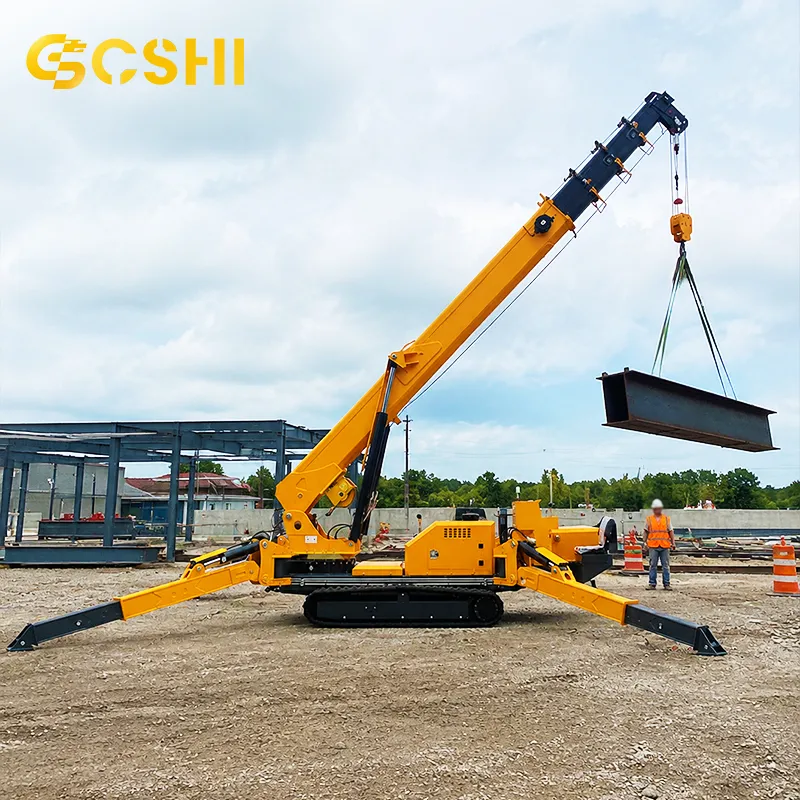
Now, if you're pulling prefabricated bridge sections or working on a subway project, forget the small stuff. You need an 8–12 ton compact crawler crane. Boom stretches out to 23.3 meters, radius hits 22.7 meters. Obviously bigger footprint, obviously harder to maneuver—but that's the tradeoff for actually lifting the thing you need lifted.
One thing that trips people up: ground lift height is roughly 9.2 to 9.5 meters. But if you're going down—underground work, shafts, that sort of thing—some models handle 10 to 40 meters deep. Here's the catch nobody mentions upfront: your actual lifting capacity drops depending on the wire rope magnification ratio. Do the math before you commit. I've seen projects stall because someone assumed the rated capacity held at depth. It doesn't.
Will It Actually Fit Through the Door?
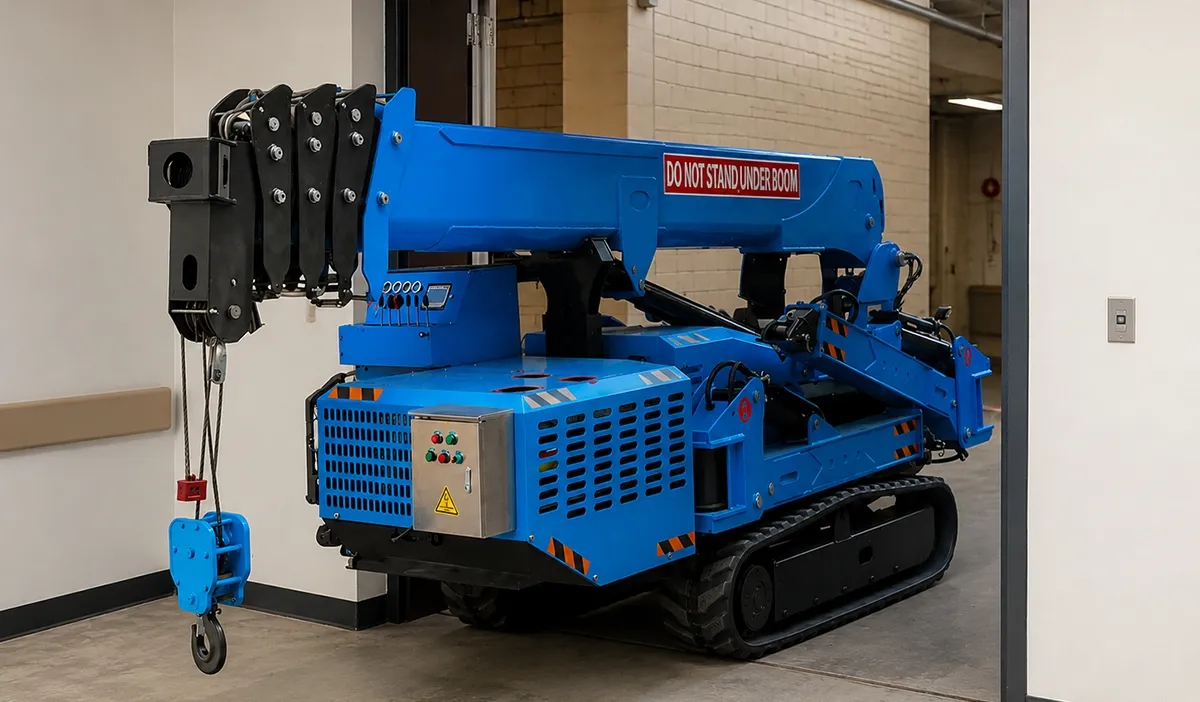
You want width under 0.9 meters and height under 1.6 meters if you plan on getting through standard doorways, down stairwells, along indoor corridors. Check the track ground pressure too—something like 42kPa or lower, or even 36kPa on some of the 3-ton units. Matters a lot if you're working on muddy ground or a slope. Most of these can handle 20° to 30° grades, which is more than enough for most job sites.
Diesel or Electric? Both?
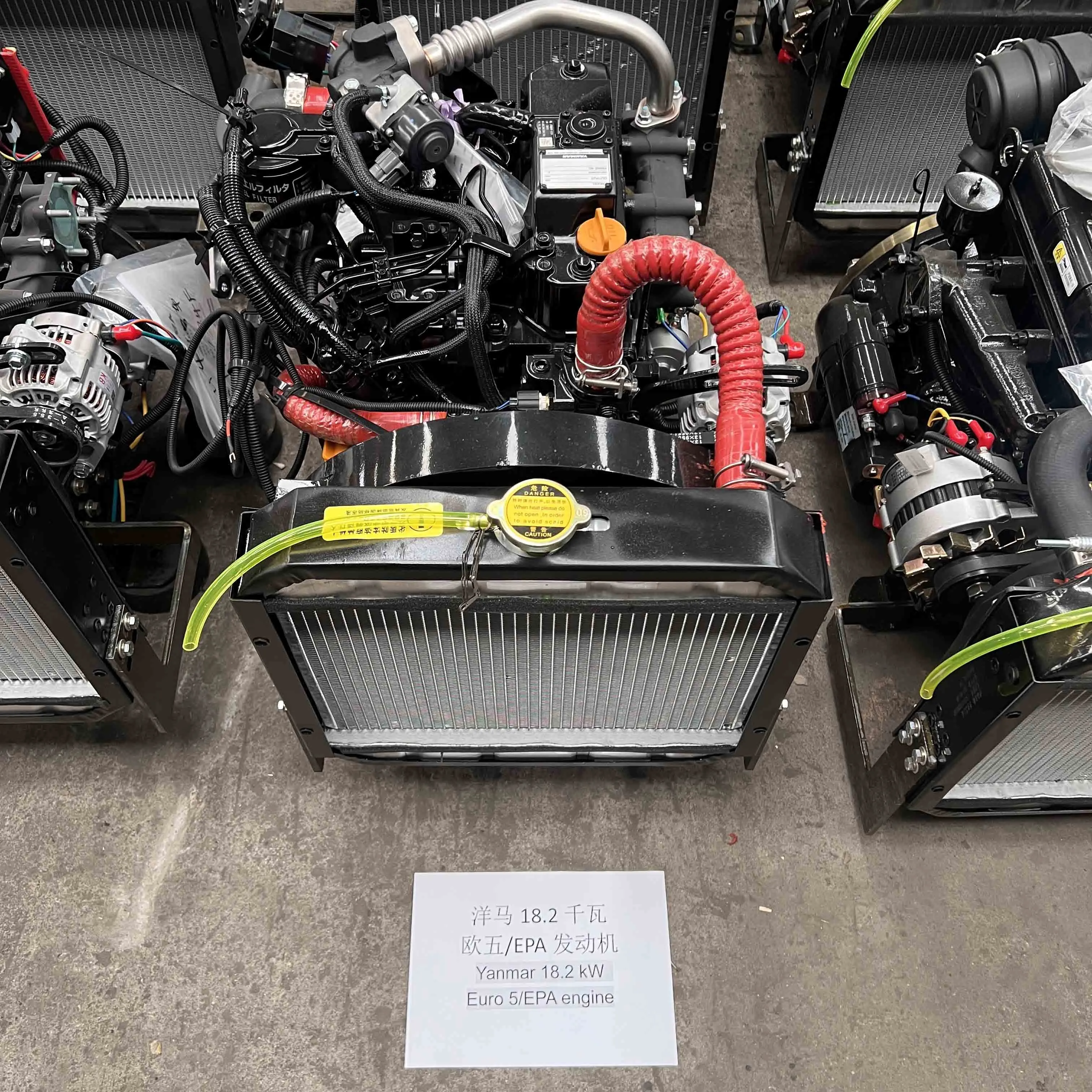
The dual-power setup has become pretty standard: a diesel engine (7.5–10.3KW) for outdoor work, plus a 3–4KW electric motor running on AC380V for indoor use. Practical compromise. But—and this is worth saying—if you're working inside a warehouse, a shopping mall, anywhere with zero-emission requirements, just go pure electric. Don't try to make the diesel work with ventilation hacks. It's not worth the headache.
The Stuff That Actually Matters Day-to-Day
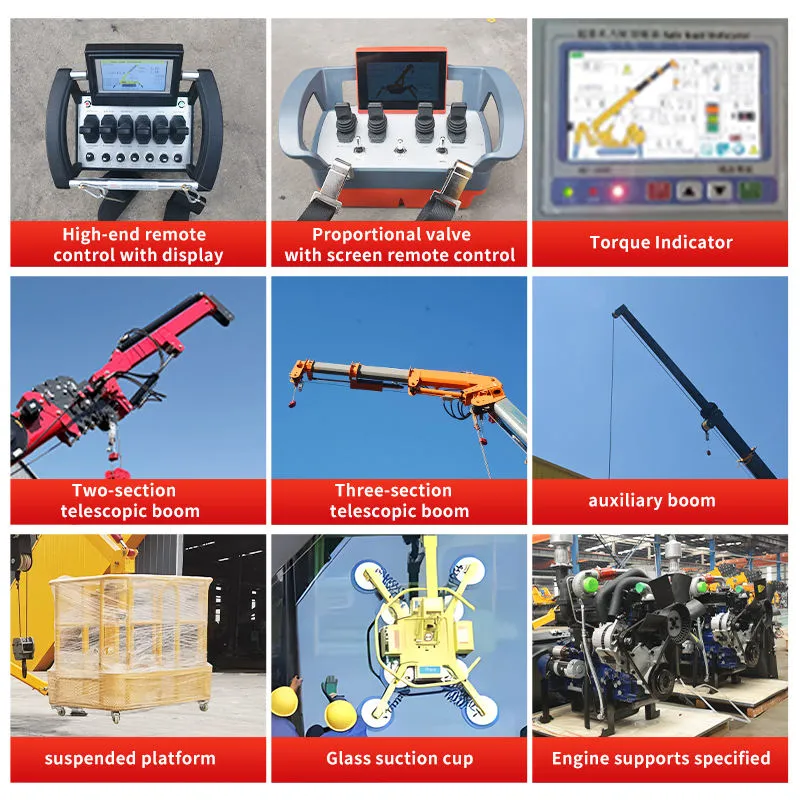
Accessories. The usual suspects: cradle (handles 0.6–0.7 tons), jib extension, climbing frame, support blocks. If you're doing underground work, pay attention to whether you need single or double rope winch config—it directly affects how deep you can operate.
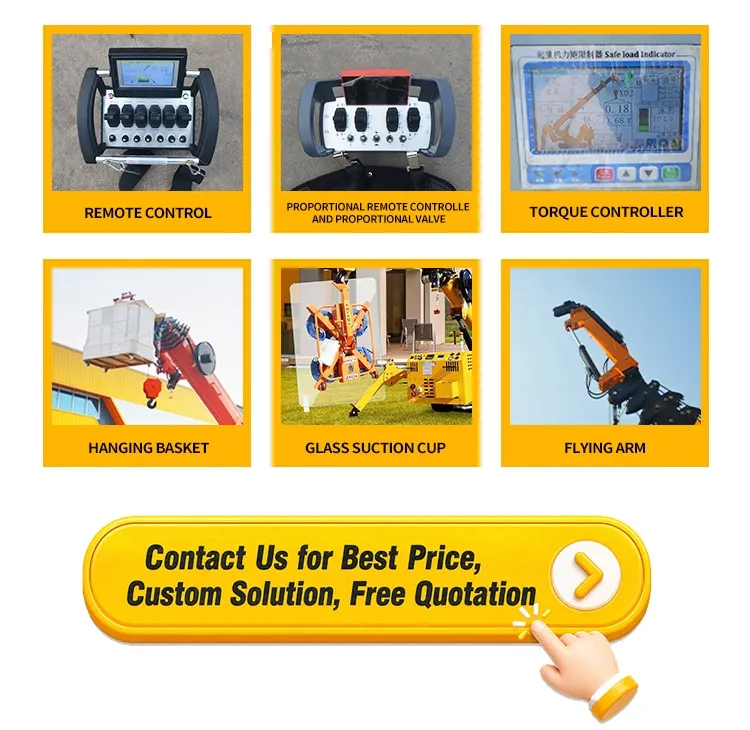
Safety Stuff (Don't Skip This Section)
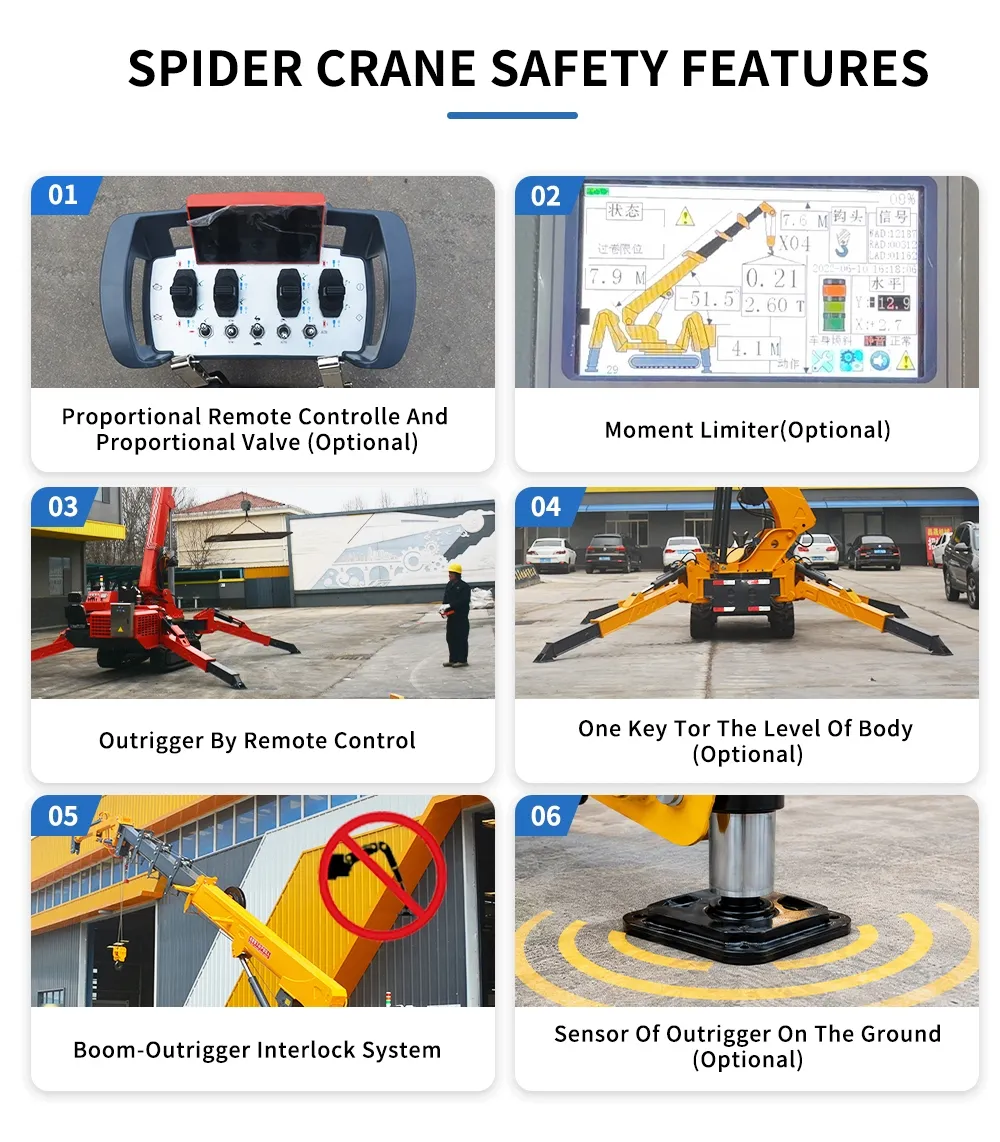
For stability, hydraulic outriggers should spread out to roughly 4.7m × 4.57m. Frog-style legs, manual or auto adjustment depending on the model. Keep an eye on the level meter during setup. Uneven ground is the number one cause of stability incidents with these machines, and it's entirely preventable.
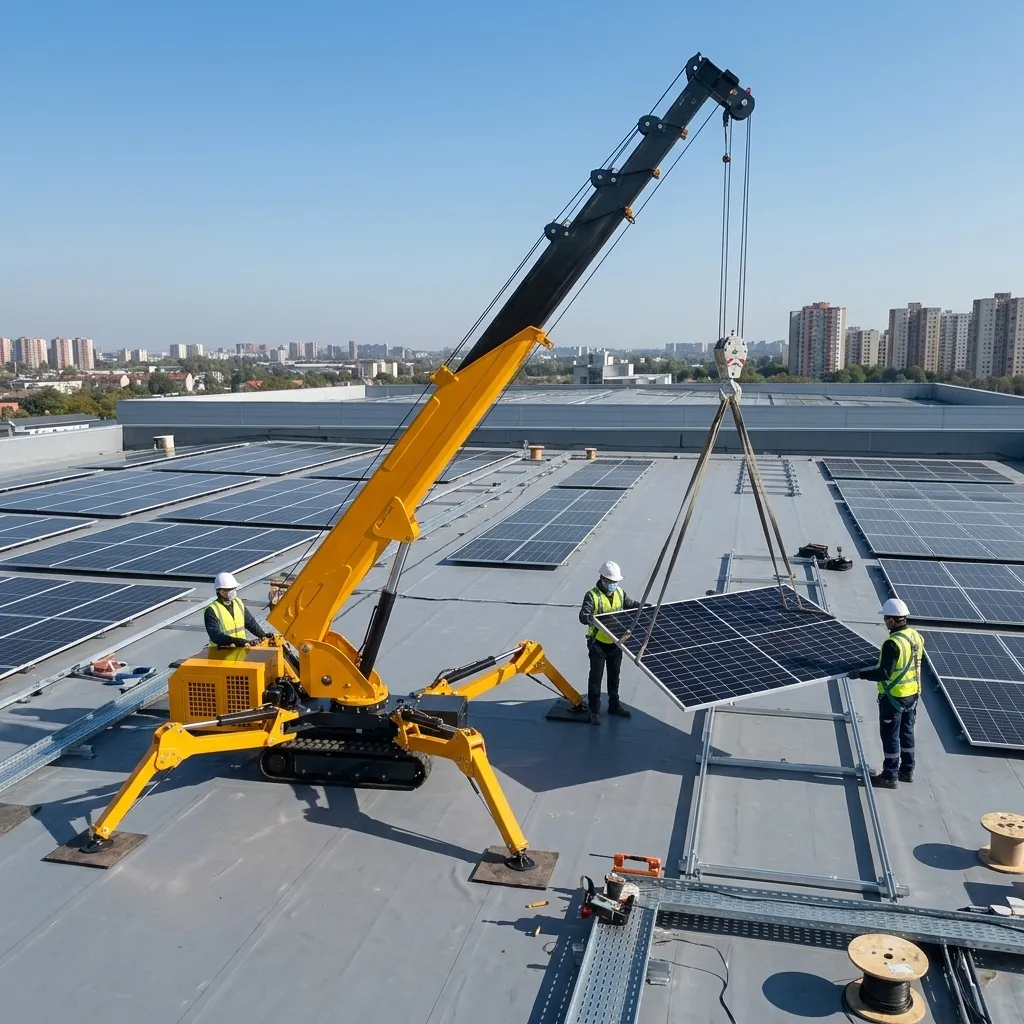 Spider Crane for Solar Panel Installation: Rooftop Lifting
 Spider Crane Common Faults & Troubleshooting Guide for M
 How to Choose Spider Crane Optional Attachments (Full Guide)
 How to Lift an HVAC Unit to a Roof with a Spider Crane