A practical comparison for contractors, project managers, and equipment buyers who are tired of guessing.
You've got a lifting job on your hands. Maybe it's a glass curtain wall going up on the 14th floor. Maybe it's a transformer swap inside a substation with barely enough room to swing a cat. Or maybe you're pouring concrete on a high-rise and need something that can reach 25 meters straight up.
The question isn't whether you need a crane. The question is which type.
Pick wrong, and you're looking at mobilization fees that eat your margin, a machine that can't fit through the doorway, or a rental that sits idle three weeks out of four. Pick right, and the job runs smooth, the budget holds, and your crew actually finishes on time.
This guide breaks down the three most common options — spider cranes, mobile cranes, and tower cranes — across the factors that actually matter on a jobsite. No fluff. Just the numbers and the real-world trade-offs.
Quick Comparison Table
| Factor | Spider Crane | Mobile Crane | Tower Crane |
|---|
| Typical capacity | 1.2 – 16 tons | 25 – 500+ tons | 5 – 80 tons |
| Max lifting height | 6.3 – 25 m | 40 – 150+ m | 100 – 300+ m |
| Max working radius | 5.35 – 23 m | 30 – 100+ m | 50 – 85 m |
| Minimum access width | 0.65 m | 3.0 – 4.5 m | 4.0+ m (base) |
| Self-weight | 1.3 – 16.5 T | 30 – 200+ T | 20 – 100+ T (counterweight) |
| Setup time | 10 – 30 min | 30 – 60 min | 2 – 5 days |
| Indoor use | ✅ Yes | ❌ No | ❌ No |
| Ground pressure | Very low (rubber tracks) | High (outriggers) | Very high (foundation) |
| Mobility on site | Self-propelled, crawls | Drives on roads | Fixed / rail-mounted |
| Best for | Tight spaces, indoor, light-to-medium lifts | Open sites, heavy lifts, road access | Long-duration high-rise projects |
What Is a Spider Crane, Exactly?
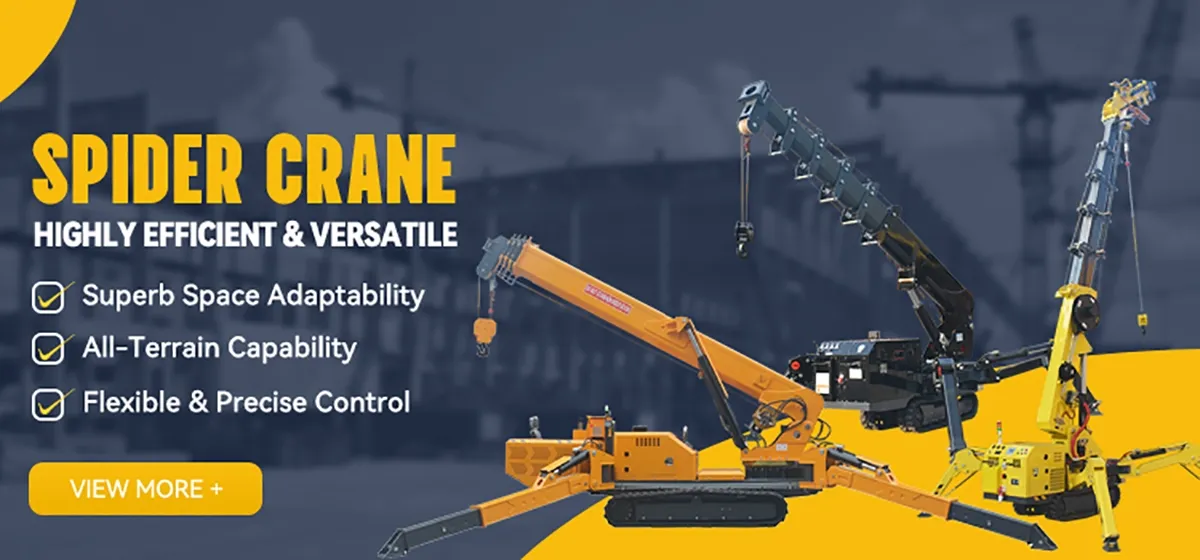
A spider crane (sometimes called a mini crawler crane or compact crawler crane) is a small, tracked lifting machine that gets its name from the outrigger legs that spread out like a spider's. It runs on rubber or steel tracks, fits through standard doorways, and can operate in places where no other crane can physically go.
Here's what makes it different from everything else on this list: it was designed for the spaces other cranes can't reach.
A 3-ton spider crane, for example, weighs just 2.7 tons, fits through an 800mm-wide opening, and can lift to 10.8 meters. A 5-ton model at 1.5 meters wide still squeezes into elevator shafts and basement levels. Even the largest 16-ton spider crane only needs 2.13 meters of width — narrower than most parking spaces.
These machines come in capacities from 1.2 tons all the way up to 16 tons, with working radii ranging from 5.35m to 23m and lifting heights up to 25 meters. Many models offer dual power — a diesel engine for outdoor work and an electric motor for indoor or emission-sensitive environments. That's a feature you simply won't find on a 100-ton mobile crane.
What Is a Mobile Crane?
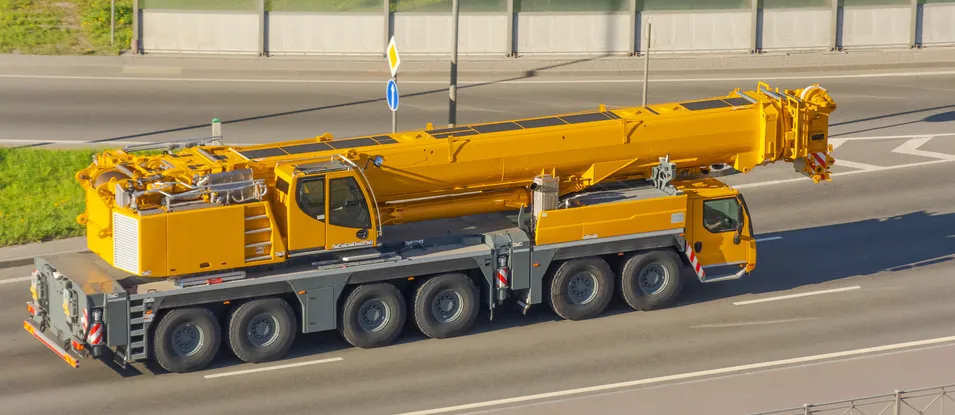
A mobile crane is what most people picture when they hear the word "crane." It's mounted on a truck chassis or a rough-terrain carrier, drives to the site under its own power, sets up hydraulic outriggers, and lifts.
They're the workhorses of general construction. Need to set steel beams on a warehouse? Mobile crane. Lifting HVAC units onto a rooftop from the parking lot? Mobile crane. Loading precast panels off a flatbed? You get the idea.
The advantage is raw power and reach. A 50-ton mobile crane can lift heavy loads at significant radius, and a 200-ton unit can handle things that would make a spider crane look like a toy. They also mobilize fast — drive in, set outriggers, lift, pack up, drive out.
The downside? They need space. A lot of it. The carrier itself is 3+ meters wide. Outriggers extend another 2–3 meters on each side. And the ground has to support the point loads. You're not rolling a 60-ton mobile crane across a finished marble lobby.
What Is a Tower Crane?
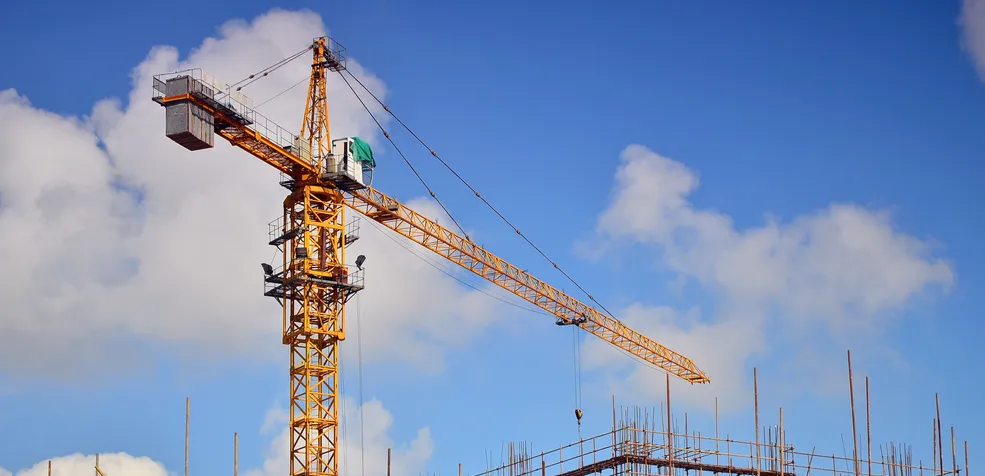
Tower cranes are the tall, fixed structures you see on every high-rise skyline. They're bolted to a concrete foundation (or sometimes tied to the building structure itself), and they stay put for the duration of the project — sometimes months, sometimes years.
Their strength is sustained, repetitive lifting at height. A tower crane can pick a load from the ground, swing it 80 meters horizontally, and set it down on the 40th floor. Day after day. Load after load. No mobilization, no demobilization. Just constant production.
But here's the catch: you need a dedicated foundation, a multi-day erection process involving a mobile crane to build the tower crane, and a project timeline long enough to justify the cost. For anything under 3–4 months of continuous use, the economics rarely work.
Head-to-Head: The Factors That Actually Matter
1. Space and Access
This is where the conversation usually ends for a lot of projects.
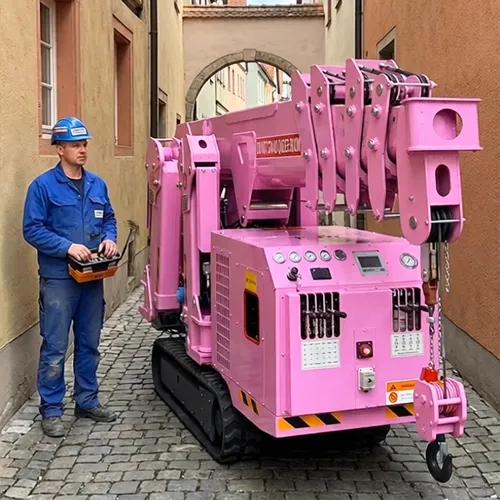
Spider crane: A 1.2-ton model is 2.48m long, 0.65m wide, and 1.5m tall. It literally fits through a standard doorway. The 3-ton version is only 0.8m wide. Even the 8-ton model at 1.6m wide can navigate most corridors and loading docks.
Mobile crane: Minimum site access is typically 3.5–4.5 meters wide, plus room for outrigger deployment. You need a firm, level surface that can handle ground bearing pressures of 5–10 tons per square meter at the outrigger pads.
Tower crane: Requires a foundation pit, concrete pour, and a clear erection zone. The base alone is 4+ meters square. You also need a mobile crane on-site just to assemble it.
Winner for tight spaces: Spider crane. Not even close.
2. Lifting Capacity
Let's be honest here. If you need to lift 80 tons, a spider crane isn't your machine.
Spider crane: 1.2T to 16T. The 16-ton model handles a maximum radius of 23m and a height of 25m — impressive for its size, but it's still a light-to-medium lifting tool.
Mobile crane: 25T to 500T+. A 250-ton all-terrain crane is a completely different animal.
Tower crane: 5T to 80T at the hook, but the real advantage is doing it 50 times a day at 150 meters height.
Winner for heavy lifts: Mobile crane (for one-off heavy picks) or tower crane (for repetitive high-rise work).
3. Setup Time and Mobilization
Time is money. Every hour a crane sits idle is an hour you're paying for without production.
Spider crane: One operator can set up a 3-ton spider crane in about 10–15 minutes. Extend the tracks, deploy the outriggers (manual screw-out plus hydraulic support on most models), and you're lifting. No transport permit needed for most models. A 1.2-ton unit weighs 1.3 tons — you can tow it behind a pickup.
Mobile crane: 30–60 minutes for outrigger setup, plus travel time. For larger units, you may need a transport permit and a pilot vehicle.
Tower crane: 2–5 days for erection. You need a mobile crane to build it. Then 1–2 days to dismantle at project end.
Winner for speed: Spider crane.
4. Ground Conditions and Floor Protection
This one surprises people who haven't worked with spider cranes before.
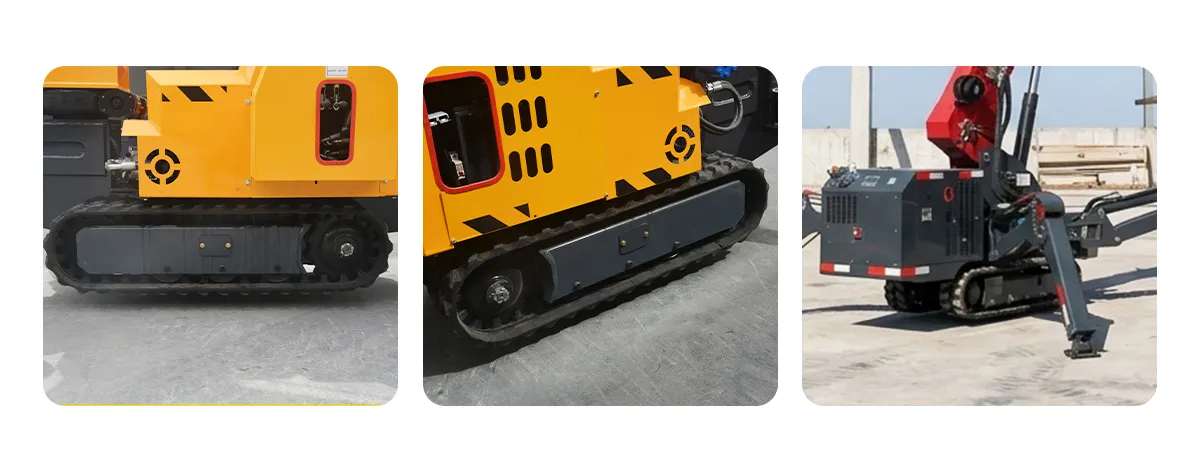
Spider cranes run on rubber tracks (models up to 8 tons) or steel tracks (10 tons and above). The ground pressure is distributed across the full track area, which means you can work on finished floors, rooftops with waterproofing membranes, and sensitive surfaces without damage.
A mobile crane concentrates its entire weight — plus the load — onto four outrigger pads. That's enormous point loading. You'll need steel plates or timber mats, and even then, you risk cracking a finished slab.
Tower cranes require a reinforced concrete foundation designed by a structural engineer.
Winner for sensitive surfaces: Spider crane.
5. Indoor vs. Outdoor Operation
Here's a scenario that comes up more than you'd think: you need to lift a 2-ton chiller unit into a mechanical room on the 3rd floor of an existing building. The elevator won't hold it. The stairwell is too tight. The windows are the only access point.
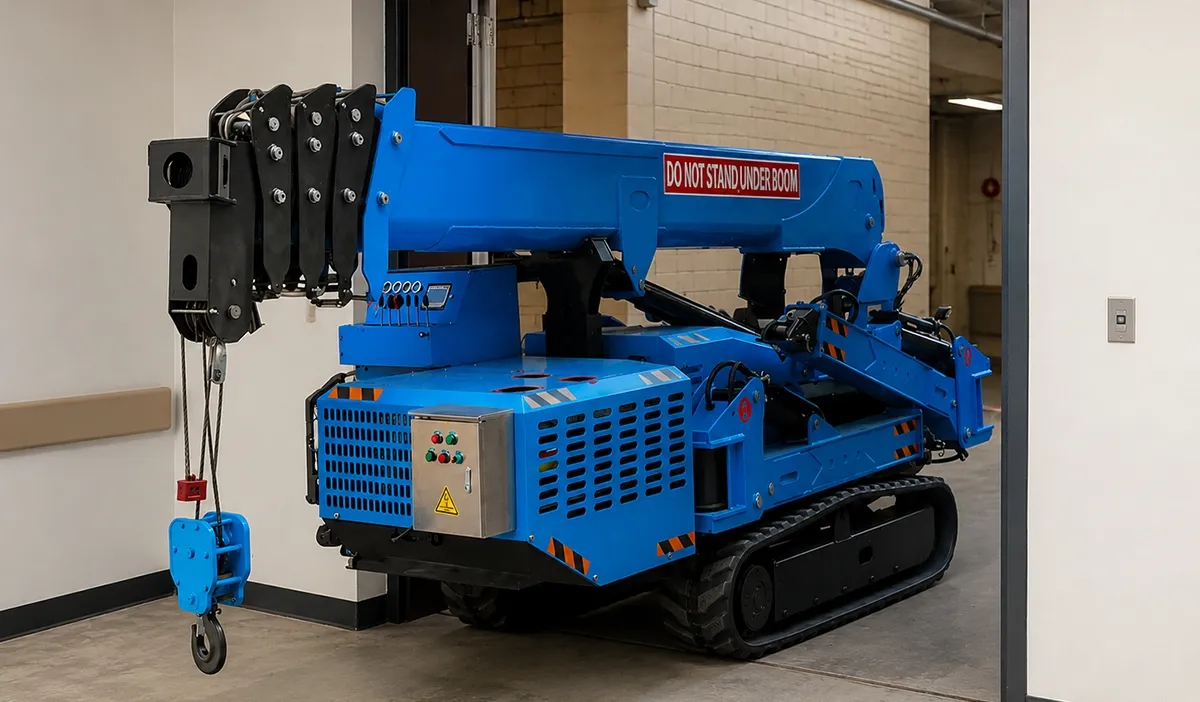
A spider crane crawls through the loading dock, rides the freight elevator (a 3-ton model weighs 2.7 tons — within most freight elevator limits), positions itself on the floor, and lifts the unit through the window opening. Dual power means it runs on electric indoors — zero emissions, low noise (≤81.5 dBA at 1 meter).
No mobile crane can do this. No tower crane can do this.
Winner for indoor work: Spider crane. Only option, really.
When to Choose Which Crane: Decision Scenarios
Choose a Spider Crane When:
Your access point is under 2 meters wide
You're working indoors, on a rooftop, or in a basement
The lift is under 16 tons
Floor protection matters (finished surfaces, waterproofing)
You need electric/zero-emission operation
The project duration is short (days to a few weeks)
You're doing glass installation, curtain wall work, MEP equipment placement, or interior demolition
Ground conditions are soft or uneven (the tracked chassis handles slopes up to 25°/36%)
Choose a Mobile Crane When:
The lift exceeds 16 tons
You have open site access (3.5m+ wide, firm ground)
You need to lift from the road or a large laydown area
The job is a one-day or two-day pick (steel erection, precast panels, heavy equipment)
You need reach beyond 25 meters height
Choose a Tower Crane When:
The project runs 4+ months
You're building 10+ stories
You need repetitive lifts (concrete buckets, formwork, rebar bundles) at height
You have space and budget for a foundation and erection
Daily lift cycles exceed 20–30 picks
Real-World Example: Glass Curtain Wall Installation
This is probably the single most common application where spider cranes beat everything else, so let's walk through it.
The job: Install 400kg glass panels on a 12-story commercial building. Panels arrive on flatbed trucks at street level. Installation happens from inside the building, floor by floor.
Option A — Mobile crane: Parks on the street (lane closure permit required). Lifts panels to each floor from outside. Problem: the crane can only reach floors 1–8 before you need a larger (more expensive) unit. Also, you're lifting over public sidewalks. Safety plan, spotter, insurance costs go up.
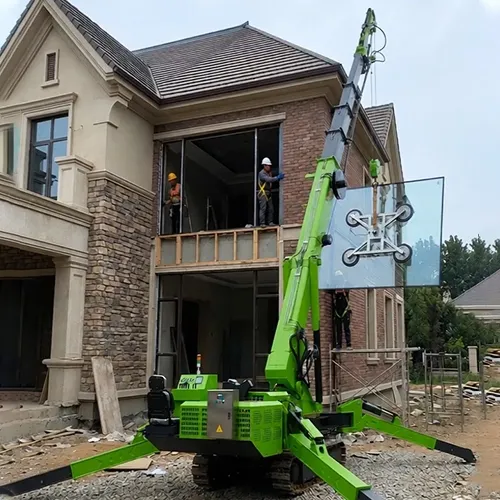
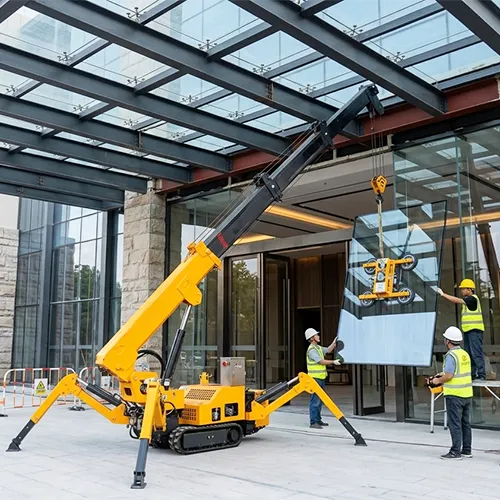
Option B — Spider crane (5-ton model): Sits inside the building on the active floor. Picks panels from the window edge (delivered by a smaller hoist or the building's construction elevator). Places them precisely into the mullion frames. Runs on electric power — no fumes in the enclosed space.
The spider crane finishes the job in 6 weeks. The mobile crane approach would have taken 8–9 weeks and cost roughly 3x more.
Spider Crane Specifications at a Glance
For buyers who want to match a model to their specific job, here's a summary of available configurations:
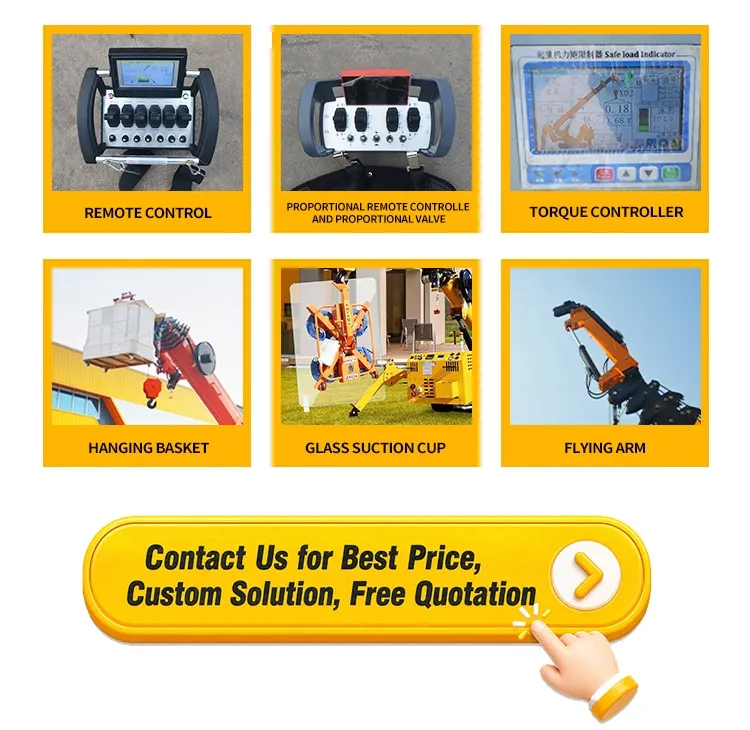
All models feature 360° continuous rotation, high-strength manganese steel booms, hydraulic outriggers, and optional remote control. CE, ISO 9001, ISO 14001, and ISO 45001 certified.
Can You Use More Than One? Absolutely.
Here's something experienced contractors know: these cranes aren't mutually exclusive. A common setup on a mid-rise project looks like this:
Tower crane for the duration — handles concrete, formwork, rebar, and bulk materials
Mobile crane for 2–3 days during steel erection — sets the heavy columns and beams
Spider crane for the finishing phase — glass, curtain wall, MEP units, interior fit-out
Each machine does what it does best. The total equipment cost is often lower than trying to force one crane type to do everything.
Common Questions Buyers Ask
"Can a spider crane replace a mobile crane entirely?"
No. If you're lifting 30-ton steel trusses at 40 meters radius, you need a mobile crane. Spider cranes top out at 16 tons and 23 meters radius. They solve a different problem.
"What's the largest spider crane available?"
Currently, 16 tons is the upper end for most manufacturers. The 16-ton model has a 25m max lifting height, 23m working radius, and a self-weight of 16.5 tons. It runs on steel tracks and requires about 2.13m of access width.
"Do spider cranes need special certifications to operate?"
In most markets, spider cranes under a certain capacity threshold (varies by country) don't require the same licensing as large mobile cranes. However, operators should still be trained. Look for CE-marked machines with load moment indicators as standard safety equipment.
"What about maintenance?"
Spider cranes are mechanically simpler than mobile cranes. The main maintenance items are hydraulic oil changes (every 100 hours for the reducer), engine oil (every 100 hours), and greasing the turntable and boom pivot points (weekly). Track inspection and tension adjustment every few months. Total annual maintenance cost is a fraction of what you'd spend on a mobile crane.
"Can I use a spider crane on a slope?"
Yes. Most models handle gradients up to 25° (36%). The tracked chassis provides stability on uneven ground that would stop a wheeled mobile crane cold.
The Bottom Line
There's no universal "best crane." There's only the right crane for your specific job.
If your project involves tight access, indoor work, finished floors, or lifts under 16 tons in confined spaces — a spider crane will save you time, money, and headaches. It's not a compromise. It's the purpose-built solution for a category of jobs that mobile cranes and tower cranes were never designed to handle.
If you're lifting heavy, lifting high, and lifting for months on end — you need a mobile crane or tower crane. No argument there.
The smart move? Know which tool fits which task, and don't pay for capability you won't use.
Looking for a spider crane that fits your project? We manufacture the full range from 1.2T to 16T, all CE-certified, with dual power options and remote control available. [Get a quote →]

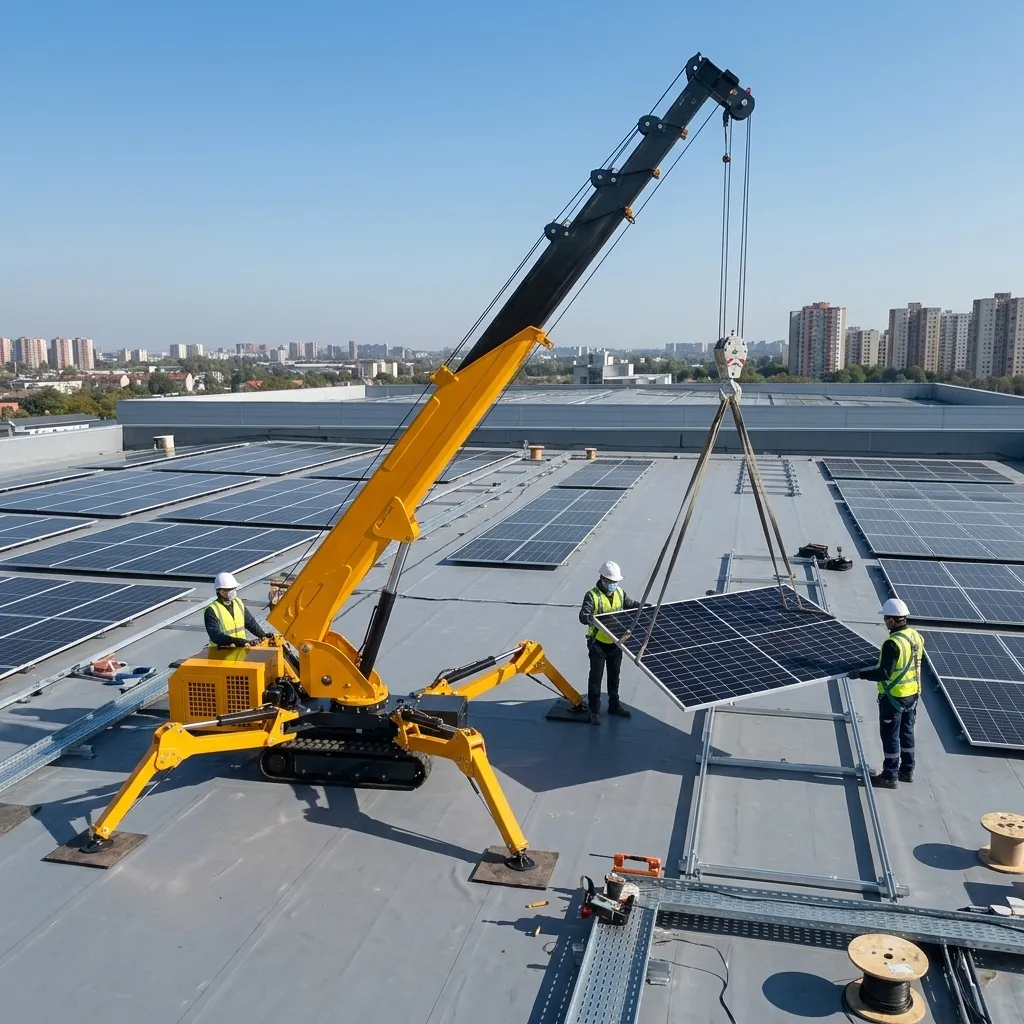 Spider Crane for Solar Panel Installation: Rooftop Lifting
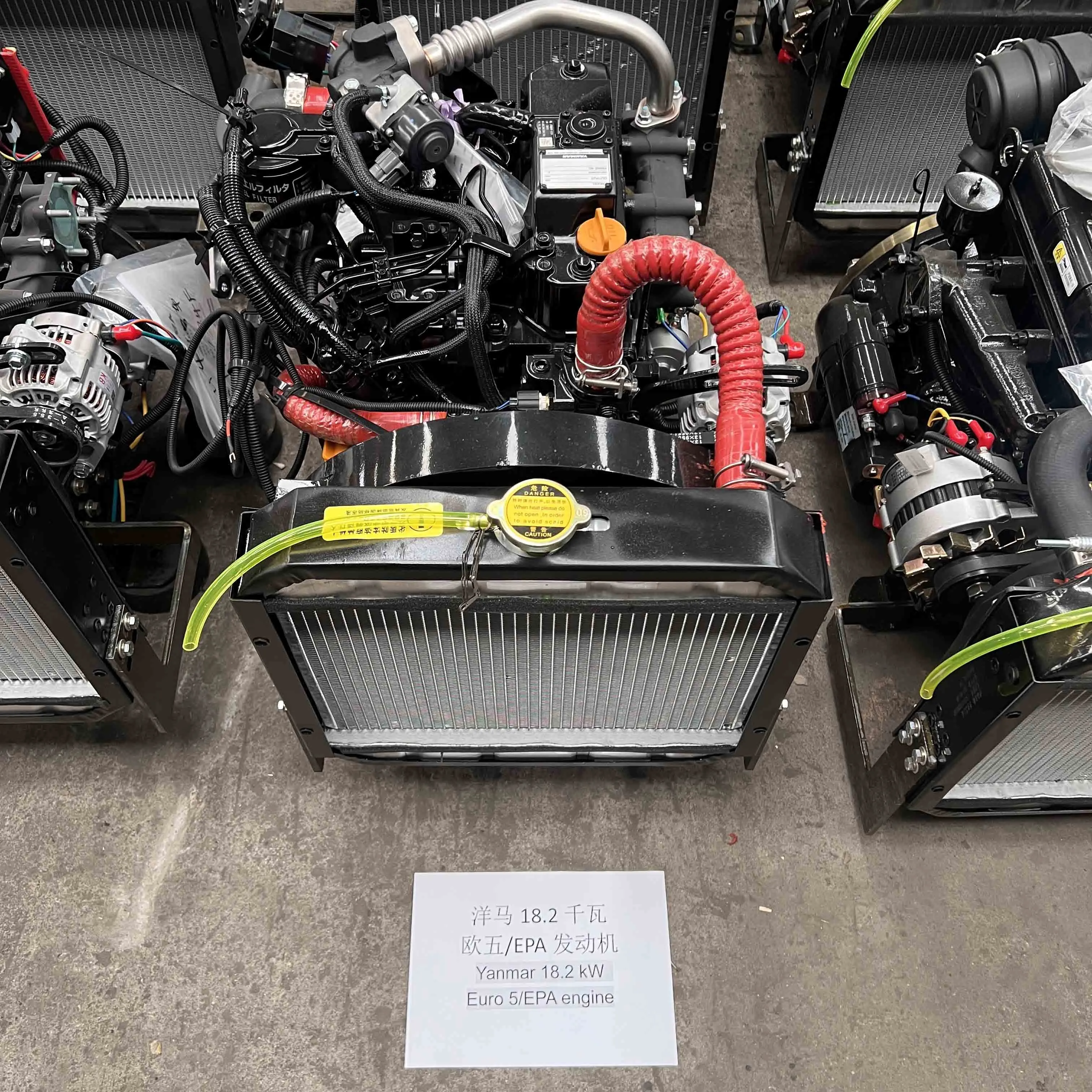 Spider Crane Common Faults & Troubleshooting Guide for M
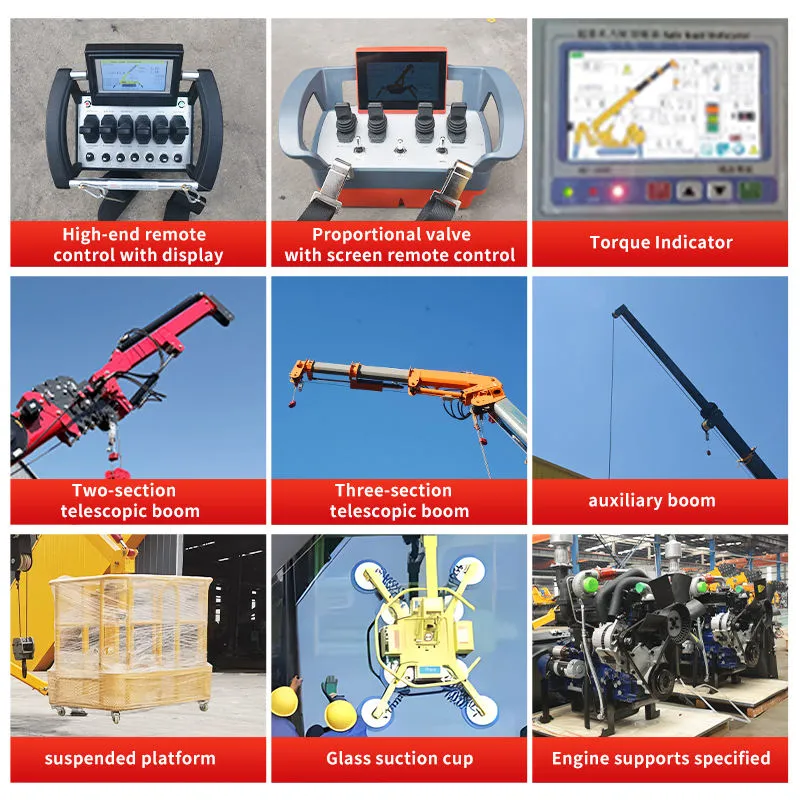 How to Choose Spider Crane Optional Attachments (Full Guide)
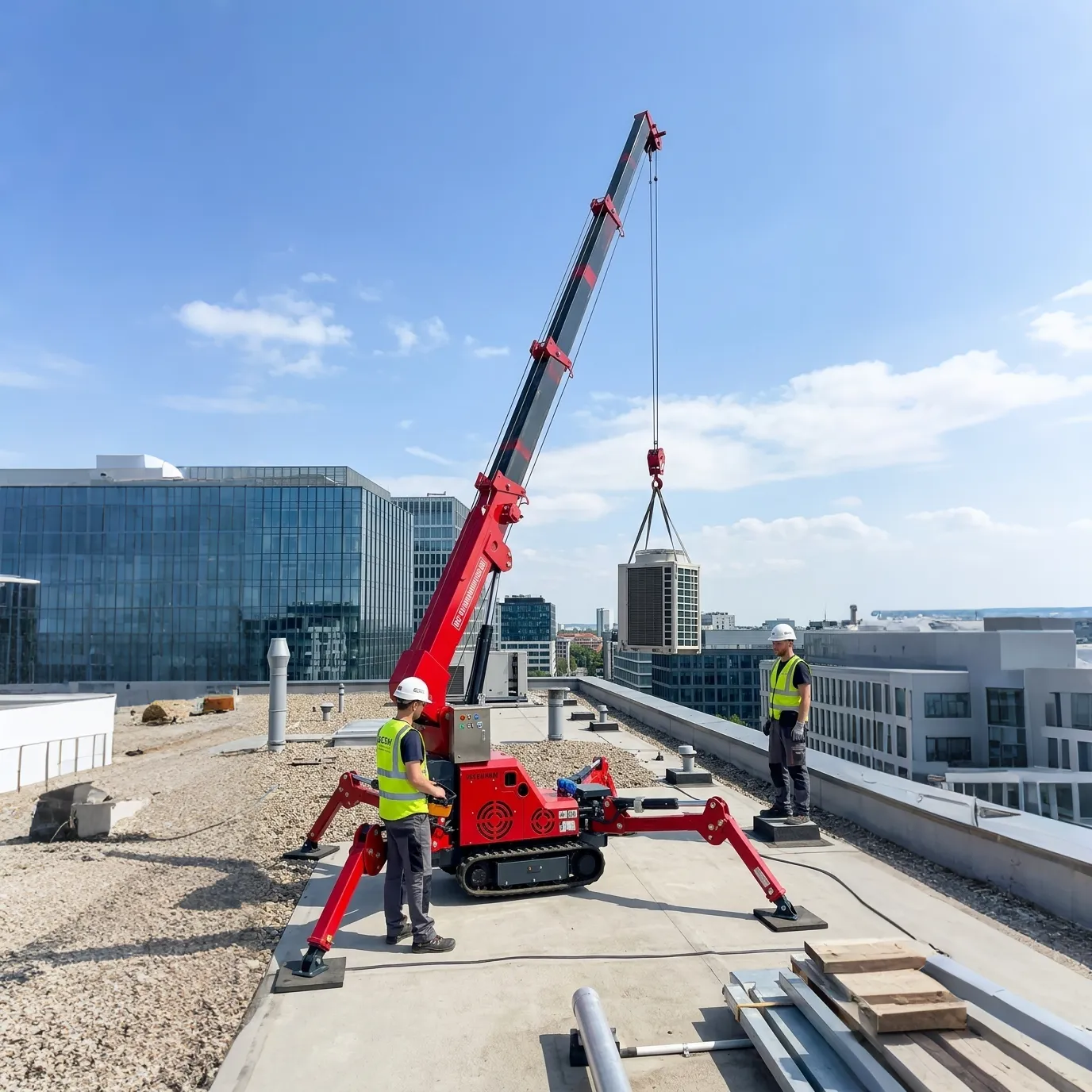 How to Lift an HVAC Unit to a Roof with a Spider Crane