
Spider Crane Load Chart: How to Read Working Radius vs Capacity
How to Read a Spider Crane Load Chart: Working Radius vs Capacity
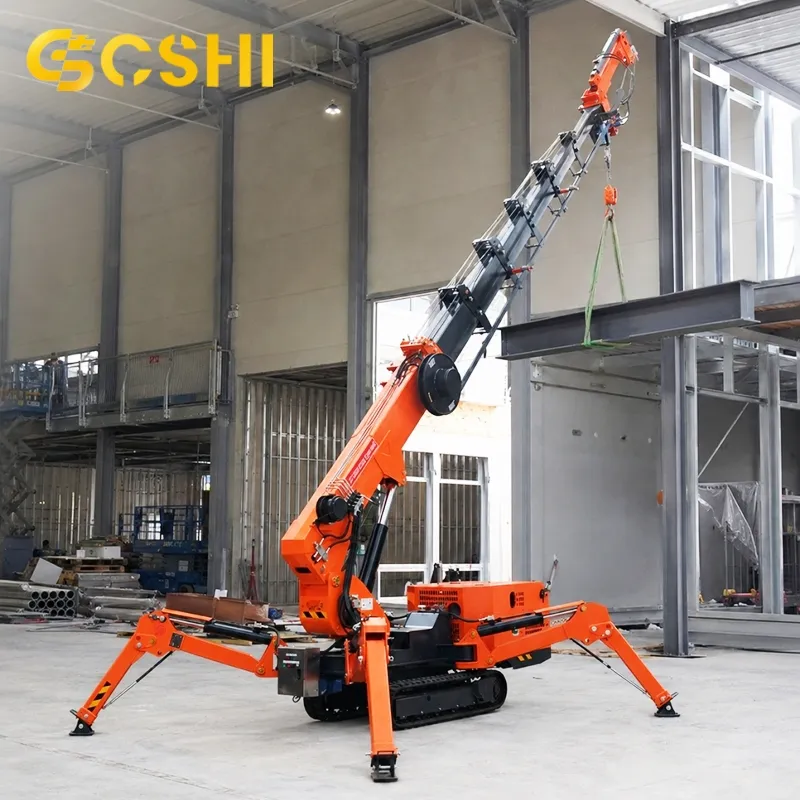
If you choose a spider crane by the tonnage on the nameplate alone, you are missing the part that decides whether a lift actually works. A 3 ton spider crane lifts 3 tons only at its shortest working radius. The real capacity drops as the boom reaches out. The load chart is the sheet that tells you the true number for every position — and it is the first thing experienced rental companies and installation contractors ask for before quoting a job.
Why the load chart matters more than the rated tonnage
Rated capacity is a marketing number. Working capacity is an engineering number. The same 5 ton mini spider crane that handles a 5,000 kg steel beam at 3 m may only be rated around 1,200 kg at 9 m radius. If your HVAC unit, glass panel or transformer sits near the edge of the reach, the nameplate tells you nothing. Reading the chart first is also a safety requirement: every proper lift plan starts from the chart, not from the brochure.
Three numbers you must read
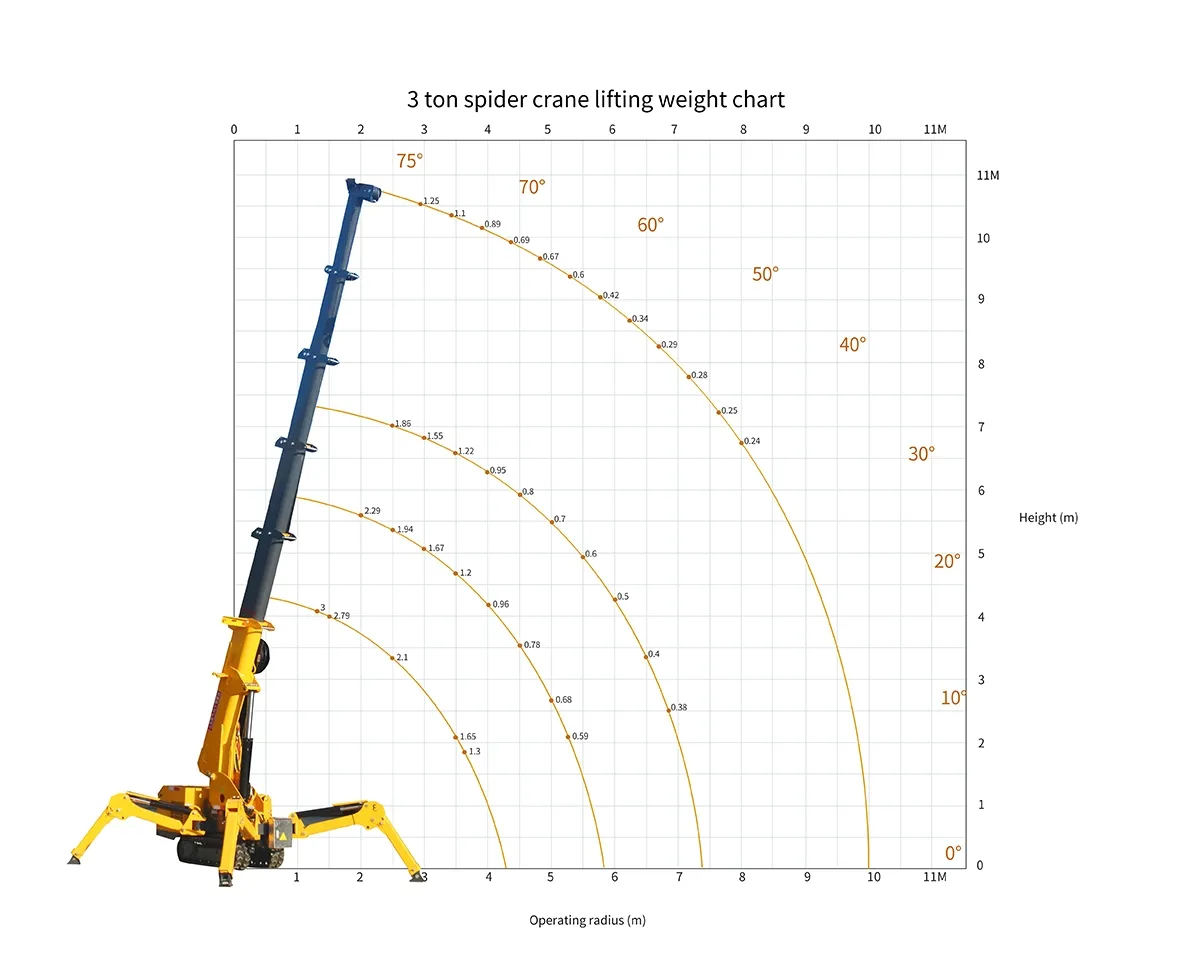
Working radius (m) — horizontal distance from the centre of rotation to the hook point.
Capacity at that radius (kg) — maximum load including hook block, slings and the attachment itself.
Boom length and angle — capacity shrinks as the boom extends or lowers.
Example for a 3 ton spider crane (indicative figures — always use the official chart of your machine):
How to read it in three steps
Step 1: Identify your heaviest single lift, including hook block, slings and the vacuum suction cup or fly jib you will mount.
Step 2: Measure the real radius — distance from the machine centre to the load position, not to the building edge.
Step 3: Compare the two on the chart. If your number falls on or above the curve, choose a bigger model or move the crane closer.
Three mistakes that ruin a lift
Comparing rated tonnage only. Two machines with the same nameplate can have very different curves.
Forgetting the weight of attachments. A vacuum glass suction cup or a fly jib adds hundreds of kilograms that count against the chart.
Ignoring outrigger spread and floor bearing capacity. A spider crane is only as strong as the ground under it — check the floor load guide before you work.
Which model for which job
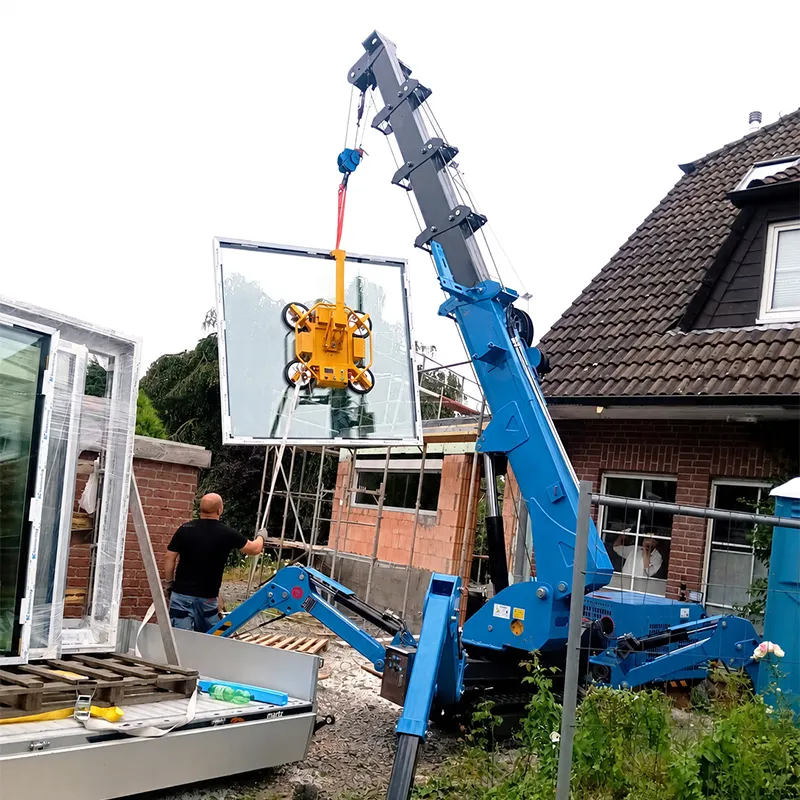
Curtain wall, facade and indoor glass: 1.2–3 ton models with a vacuum suction cup — see our 3 ton spider crane.
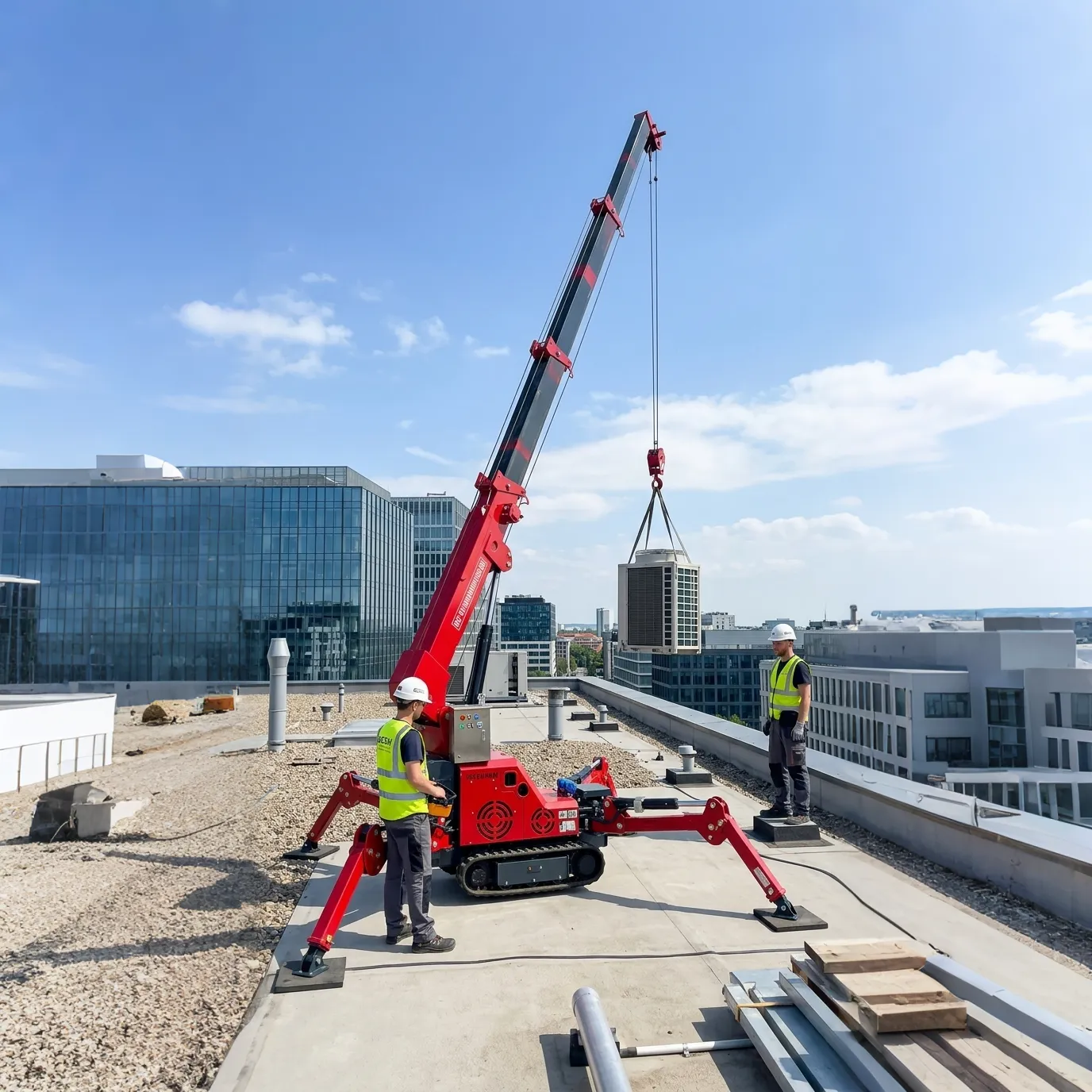
Rooftop HVAC and plant replacement: 3–5 ton for long reach over parapets — see our 5 ton spider crane.
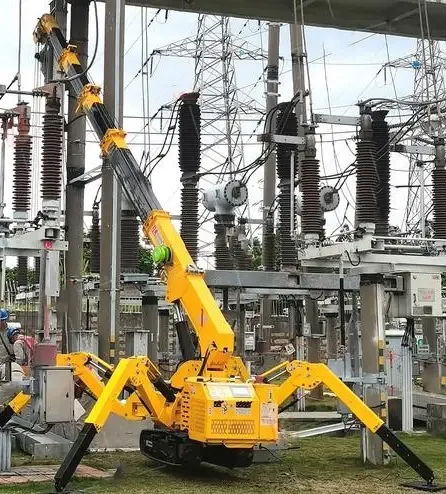
Substations and structural steel: 5–8 ton when loads are heavy and radius is large — see our 8 ton spider crane.
FAQ
Q: Can a 3 ton spider crane lift 3 tons at full extension?
A: No. The rated tonnage applies only at the shortest radius. Always check the chart for your actual working radius.
Q: What safety margin should I keep?
A: Most operators keep 15–25% below the chart value to allow for wind, dynamic load and ground settlement.
Q: Does dual power change the load chart?
A: No. Electric and diesel modes share the same structural chart, because capacity depends on the boom and outriggers, not the engine.
A load chart is a 10-second read once you know the three numbers. Check it before you buy, and again before every unusual lift.
Ready to pick a model?
Ask for the official load chart of the 3 ton, 5 ton or 8 ton spider crane before you decide — we send it with every quotation.
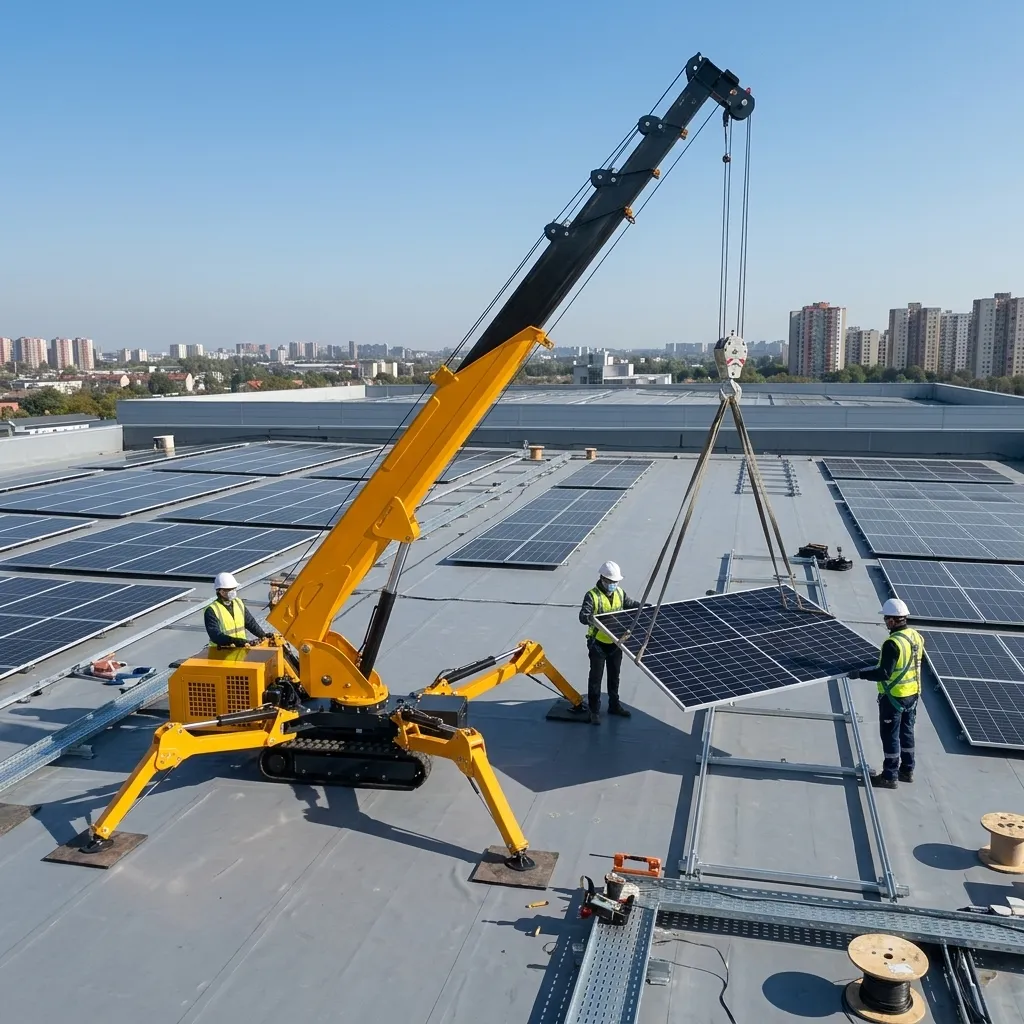 Spider Crane for Solar Panel Installation: Rooftop Lifting
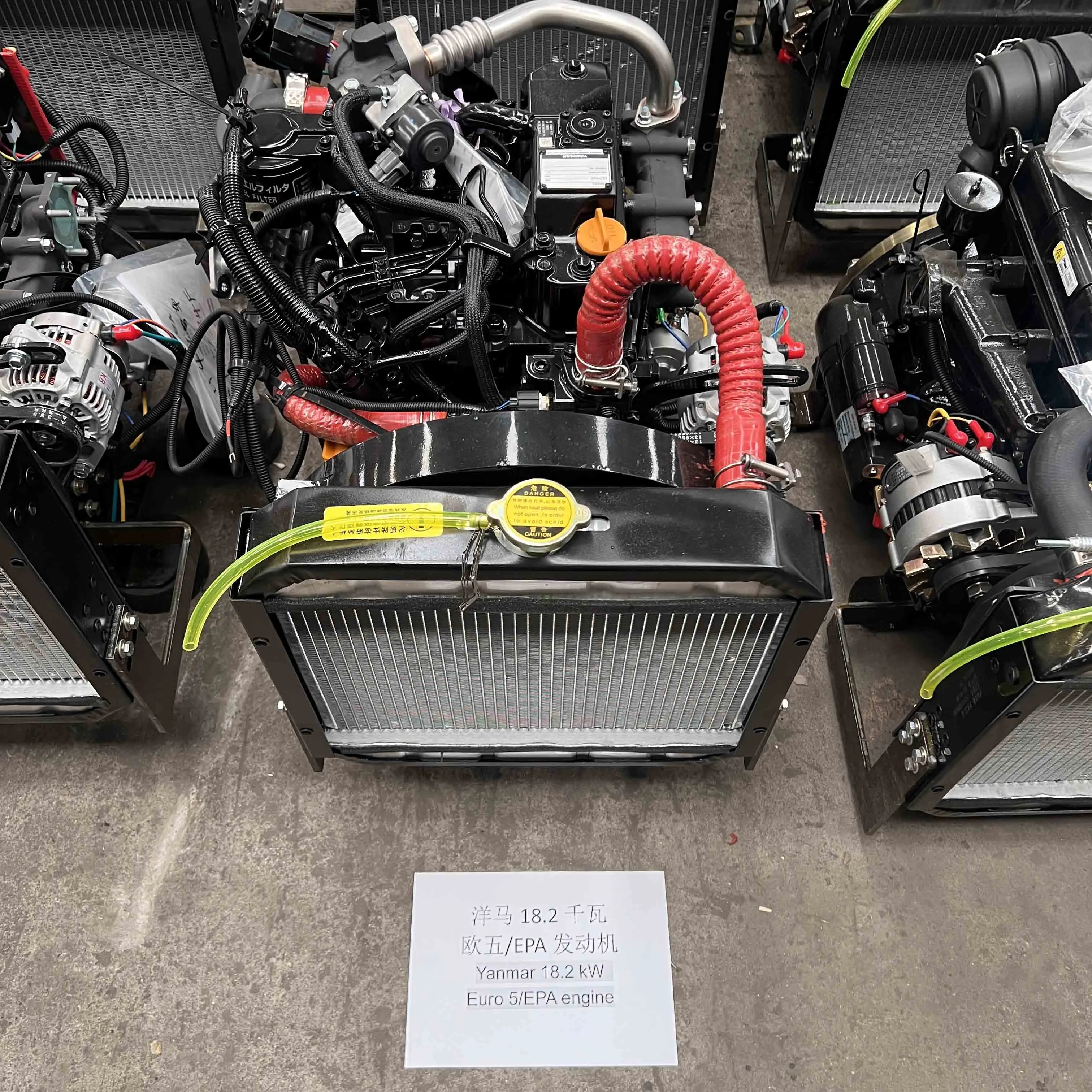 Spider Crane Common Faults & Troubleshooting Guide for M
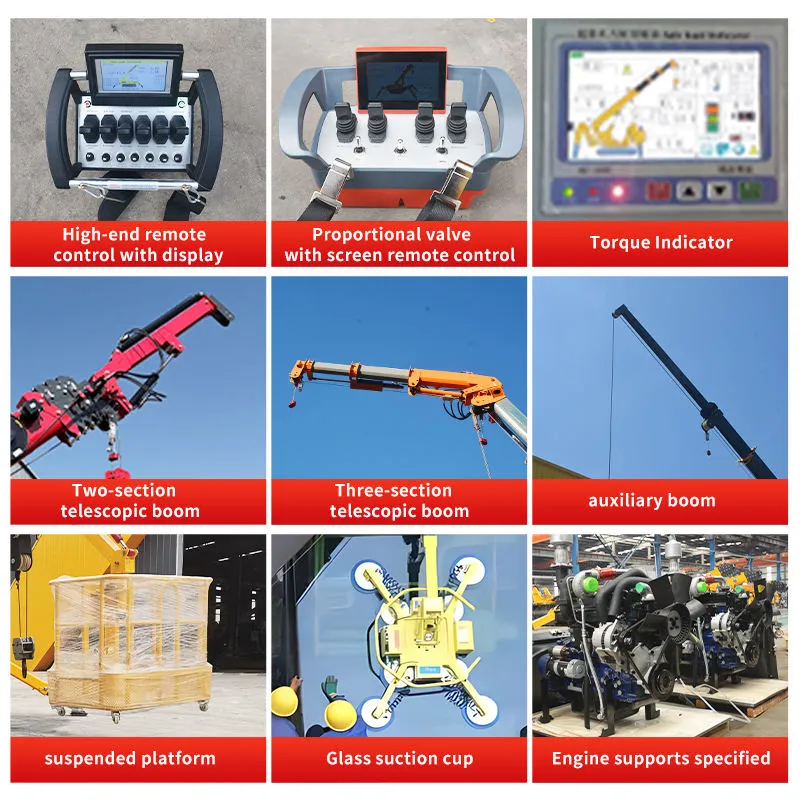 How to Choose Spider Crane Optional Attachments (Full Guide)
How to Lift an HVAC Unit to a Roof with a Spider Crane