
Spider Crane Maintenance: Daily Checks, Lubrication & Service
Keeping a Spider Crane Running: Daily Checks, Lubrication and a Maintenance Routine
People buying a spider crane usually ask how long it lasts. Honest answer? That depends less on build date than on what happens after it arrives. These machines live in dust, on indoor slabs, folded through doorways and repositioned a dozen times a day, and a small thing ignored on Monday can park the job by Friday. A steady routine separates a crane that works for years from one always waiting on a part.
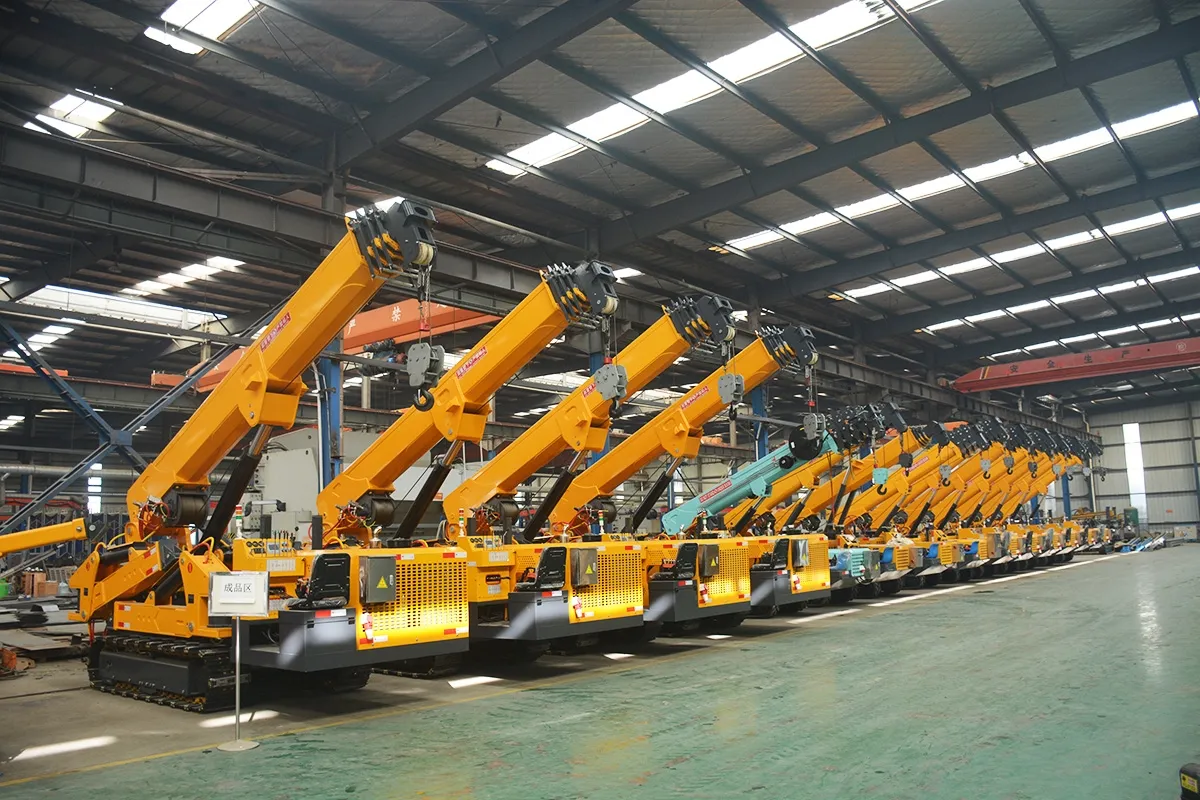
Why It Matters More on a Compact Crane
Everything is packed tight — hoses, pins, boom sections and hydraulics sit close together, and the same legs and telescoping sections fold and extend all day, leaving nowhere for a leak or a dry pin to hide. A few minutes with a grease gun beats a day shut down, and catching a worn rope or weeping seal early usually means a scheduled service instead of a machine stranded mid-floor.
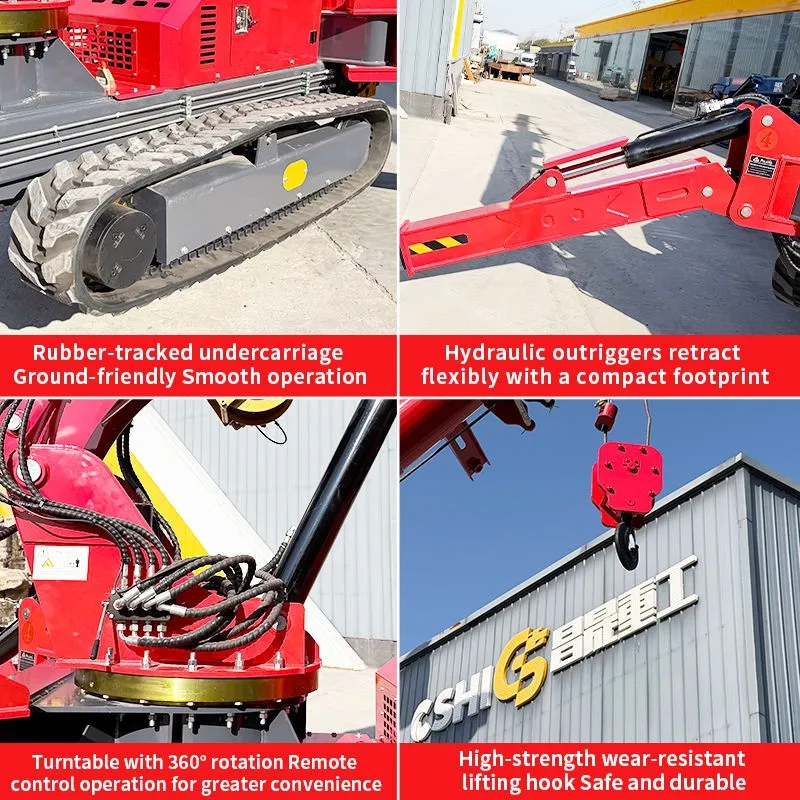
The Daily Walk-Around
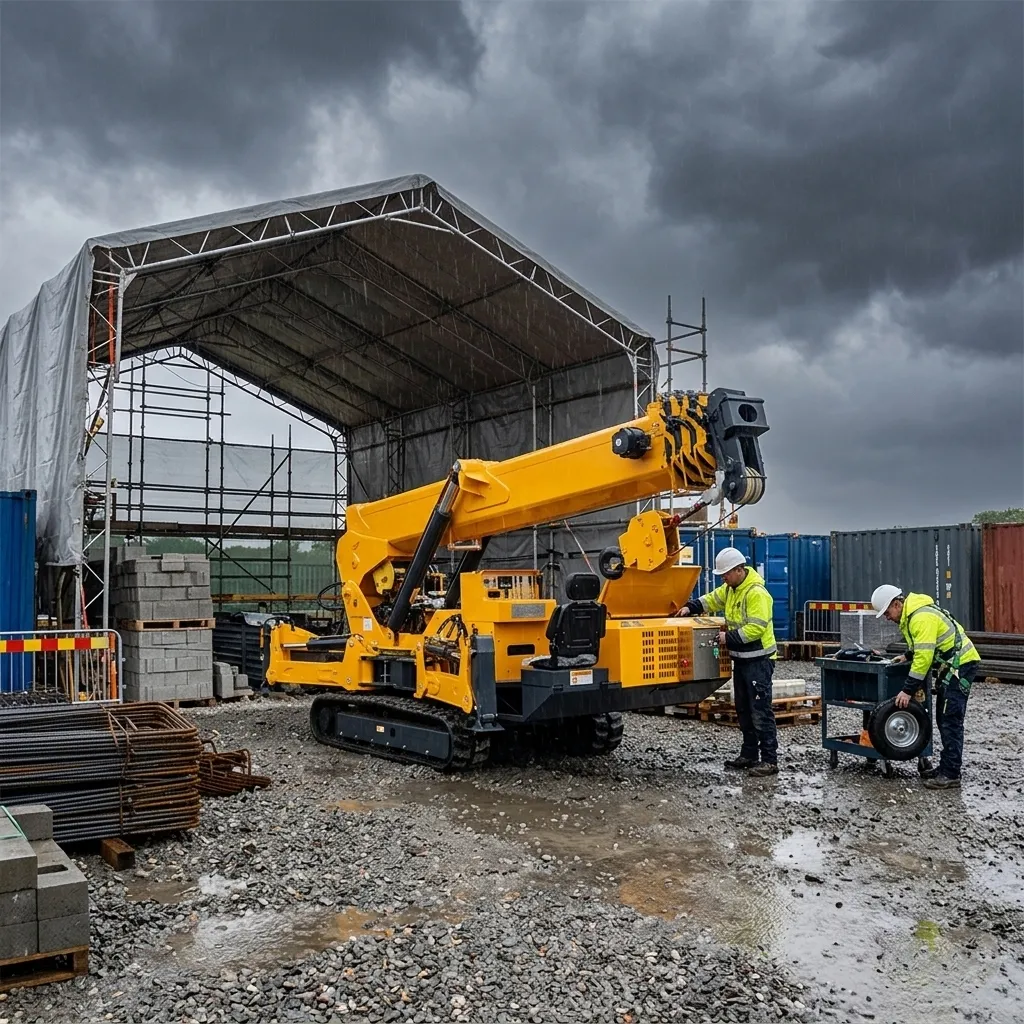
Before anyone touches the controls, do one slow lap. Look for fresh oil on the tracks or floor, check the hydraulic oil level, and eye every hose for chafing or dampness. Run your eye along the wire rope for kinks, broken wires or flat sections, and confirm the hook latch still springs shut. Check the outrigger feet and pads aren't cracked, the remote is charged and responds, and the warning lamps, moment limiter and tilt alarm answer a no-load test. Level the machine, listen for anything new, then run the first lift gently before work starts. Five minutes, every shift.
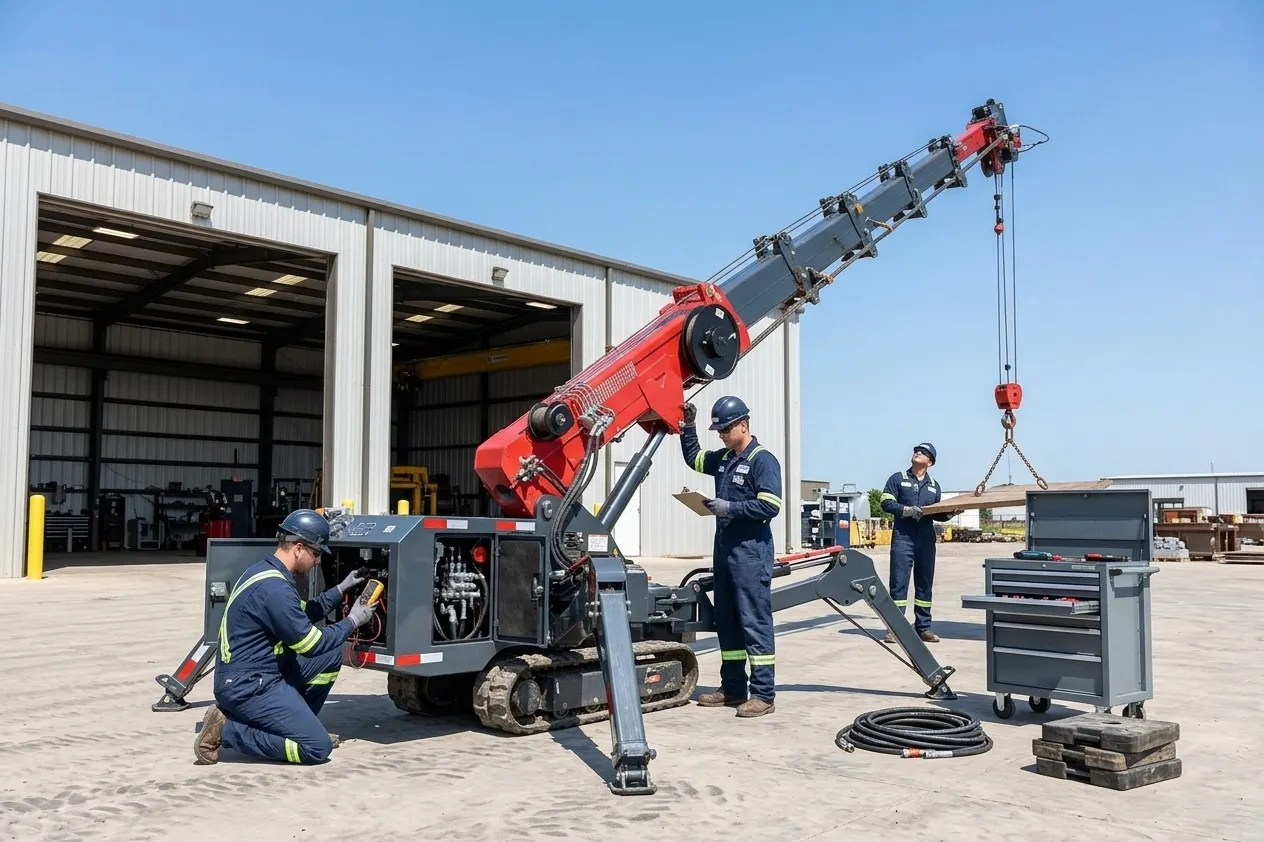
Greasing the Right Points
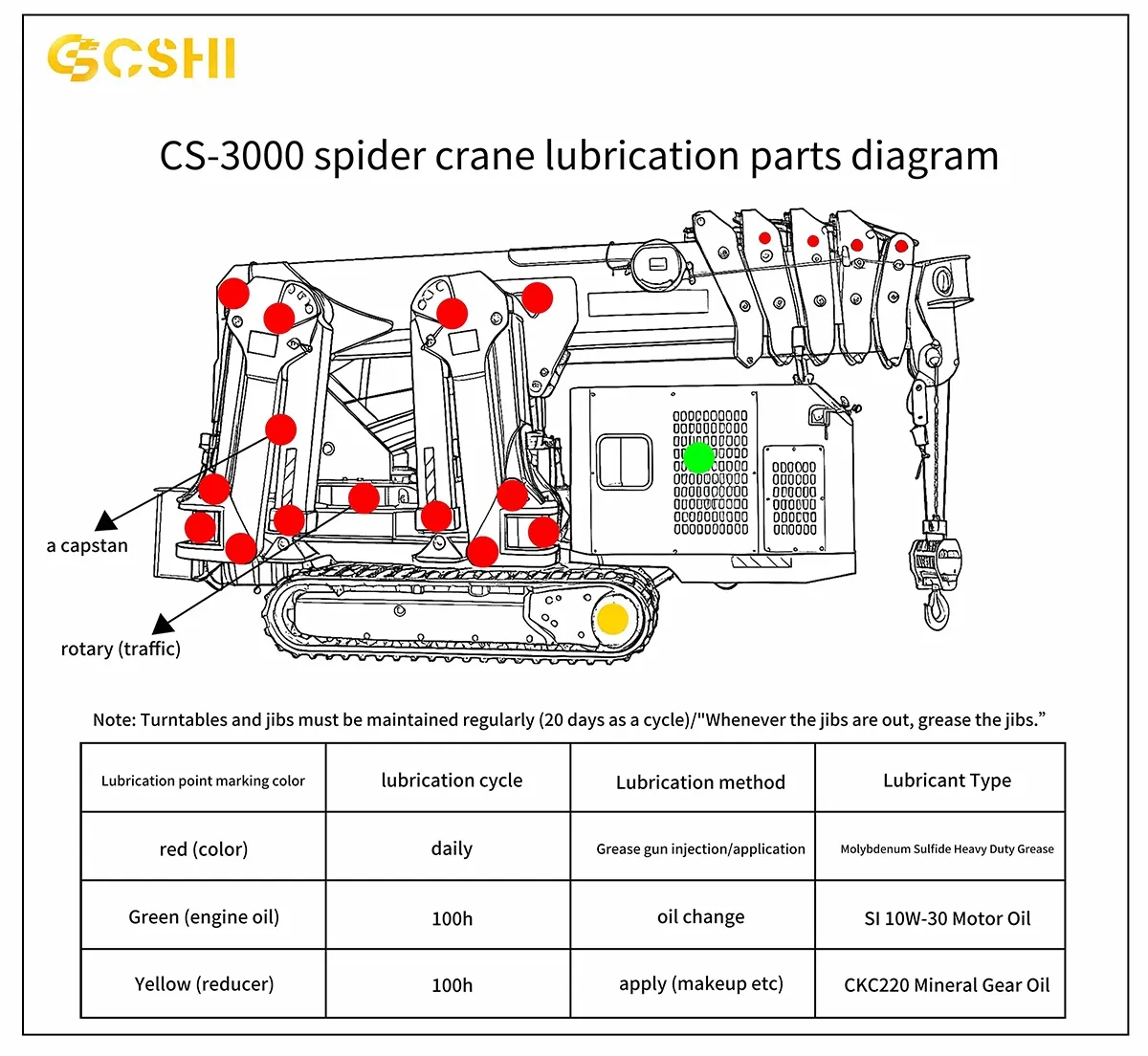
The manual marks exactly where metal pivots and slides — our lubrication chart uses colour-coded points so there's no guessing. Red-marked pins and pivots take a molybdenum-disulphide extreme-pressure grease every working day. The slewing ring and telescoping boom sections run on roughly a twenty-day cycle in normal use, sooner in wet or gritty conditions. Pump until clean grease shows, wipe the excess so it doesn't collect sand, and never let a pin run dry and start scoring.
Engine, Gear and Hydraulic Oil
On the engine points, follow the hours, not the calendar — our schedule changes engine oil around the first hundred hours and at set intervals after that, filter included, and tops the gearbox with the specified gear oil on a similar interval. Be fussiest with hydraulic oil: keep it at the mark, keep filler and breather clean, and change it on schedule, because contaminated oil sits behind most sluggish or leaking hydraulics. Use the grades printed in your manual, not whatever's on the shelf.
Rope, Hook and Outriggers
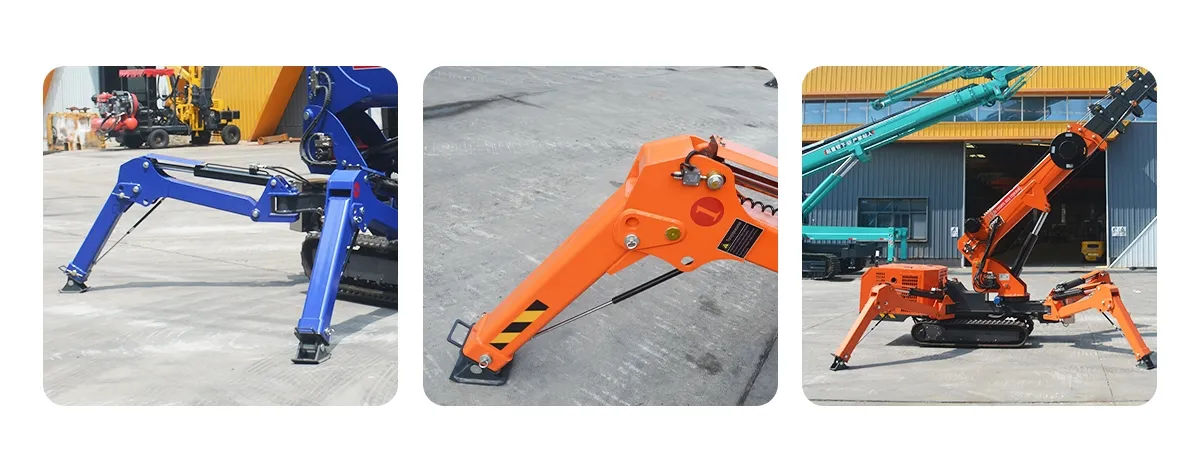
These three take the actual load. Keep the rope clean, lightly lubricated and free of birdcaging, corrosion or too many broken wires in one lay — at the discard standard, replace it, don't argue. The hook should turn freely and its latch close on its own. On the legs, watch the cylinder rods for scratches, keep sliding surfaces and foot pads clear of hardened mud, and confirm each leg still sets and levels as it should.
Two Power Sources, Two Sets of Care
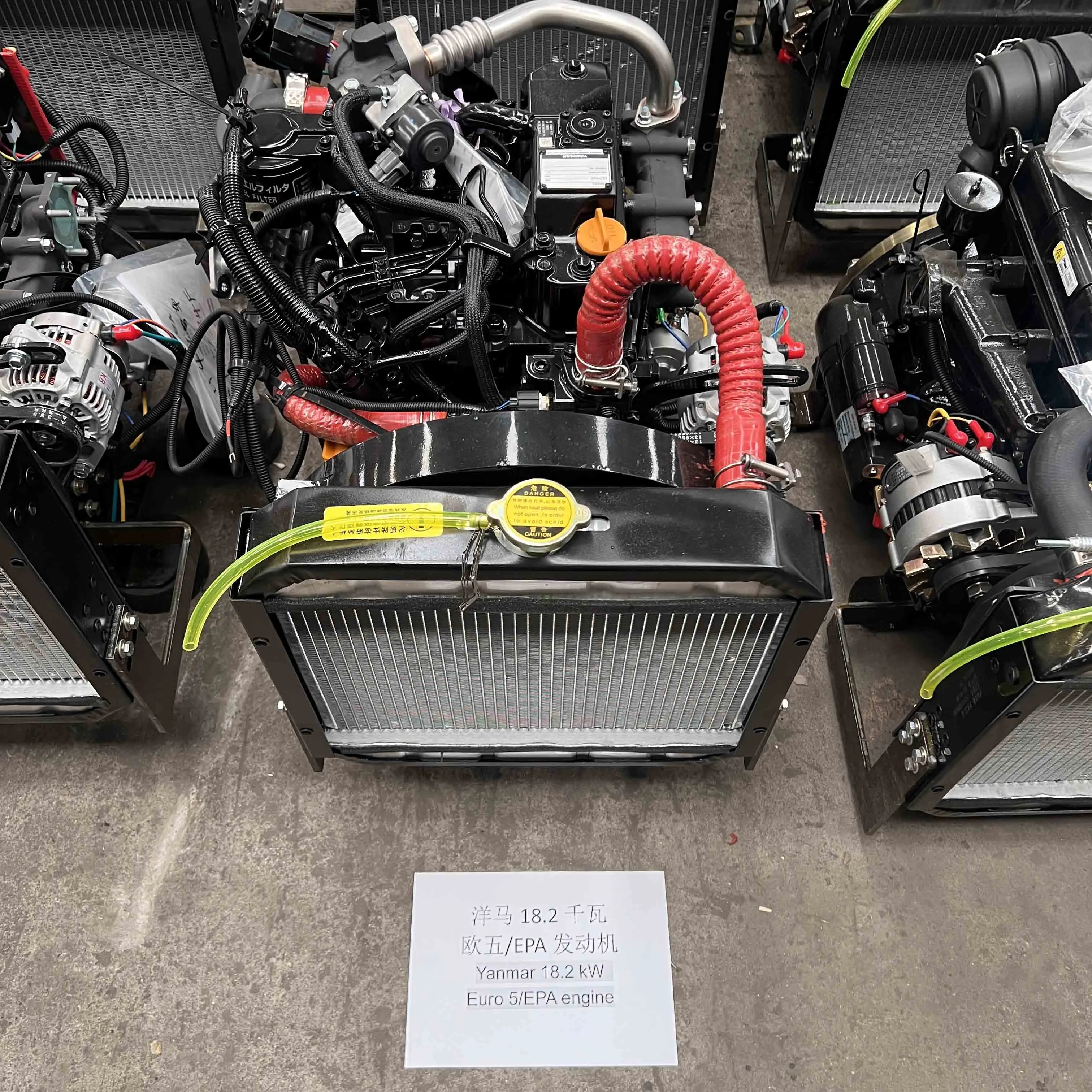
A dual-power machine needs both halves looked after. The diesel or petrol side follows the engine maker's routine — oil and filter changes, clean fuel, the air filter, and proper treatment before a long idle. The electric side is simpler but not ignored: inspect the cable and plug for cuts or heat marks, keep the connection dry on a wet floor, and check the diesel-to-mains switchover is clean and reliable. Indoor electric work means no exhaust, not no maintenance.

When It Sits Idle
Cranes parked for weeks still need attention. Retract and lower the boom, pull the legs in, store level and dry, and disconnect power. On the engine, follow the storage steps so a cylinder or the fuel system doesn't seize or go stale, and give exposed rods a protective coat. Before it works again, run the full daily check plus the greasing points — standing time is exactly when dried seals and damaged rope turn up.
Records, Parts and Your Limits
Wrapping Up
Spider crane maintenance isn't complicated, it just has to be regular — a daily lap, grease on the marked points, oils changed on the hour meter, worn load parts replaced without delay, both power sources minded. Do that and a compact crane quietly outlasts the jobs you bought it for. CSHI supplies the colour-coded lubrication chart, specified oils, genuine wearing parts and after-sales support, and we'll walk your crew through the routine when the machine lands.


 Spider Crane for Solar Panel Installation: Rooftop Lifting
Spider Crane Common Faults & Troubleshooting Guide for M
 How to Choose Spider Crane Optional Attachments (Full Guide)
 How to Lift an HVAC Unit to a Roof with a Spider Crane