Here's something that trips up almost every first-time buyer we talk to: they search "mini crawler crane" and "spider crane" thinking they're shopping for two completely different machines. Then they get three quotes back, and two of them are basically the same thing with a different sticker on the side.
So let's clear this up once and for all.
A spider crane is a type of mini crawler crane. But not every mini crawler crane qualifies as a spider crane. The distinction matters more than most salespeople will admit, because it affects everything from how the machine deploys its outriggers to whether it'll fit through your building's service elevator.
We've pulled together real specifications from a full production lineup — 1.2 tons all the way up to 16 tons — so you can see exactly where the lines get drawn. No marketing gloss. Just numbers and job-site logic.
What Actually Makes a "Spider Crane" a Spider Crane?
The name comes from the outrigger layout. When a spider crane sets up, its legs splay outward in multiple directions — typically three or four legs that extend independently, sometimes at different lengths depending on the terrain. From above, it looks like a spider. Hence the name.
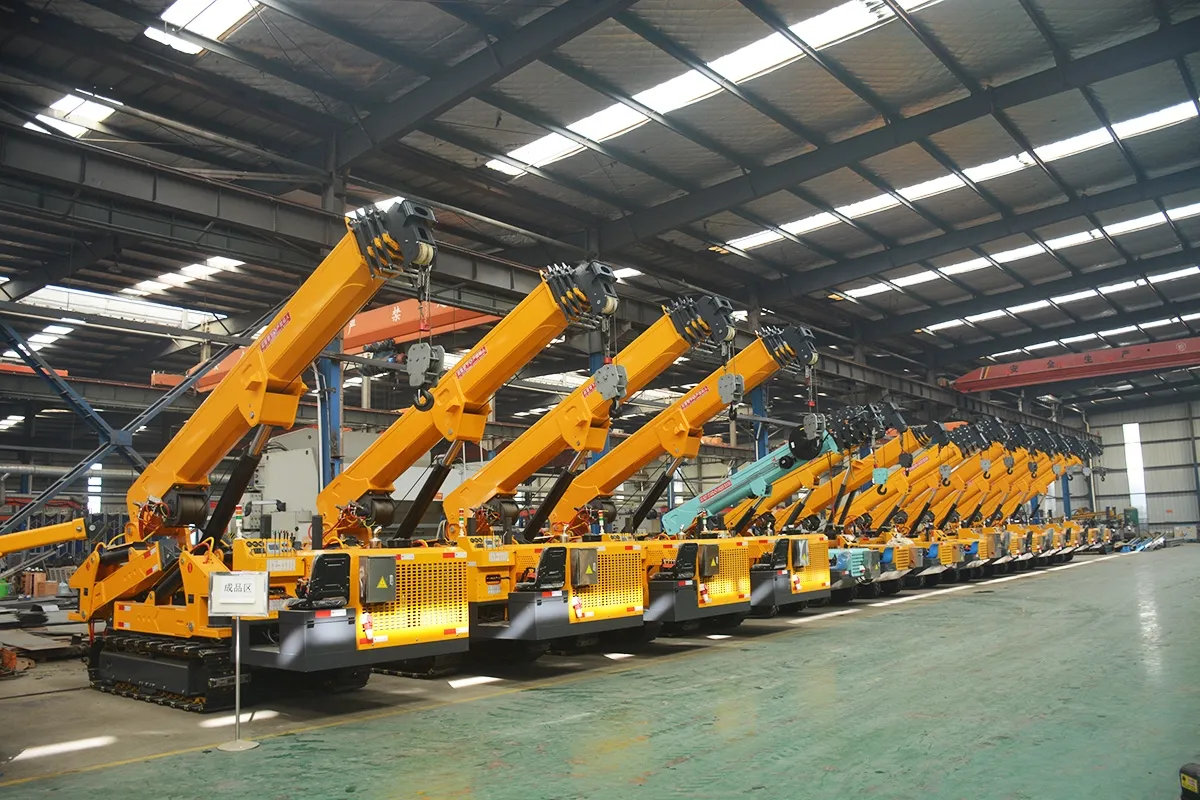
A generic mini crawler crane might use a simpler H-frame outrigger setup, or even rely purely on track width for stability. That's the core design split.
But here's where it gets practical. Spider cranes in the 1.2T to 4T range tend to share a very specific DNA:
Rubber track chassis (not steel) — this is non-negotiable if you're working on finished floors, marble lobbies, or rooftop membranes
Compact transport dimensions — we're talking machines that fit through a standard 800mm doorway
Multi-section telescopic booms with luffing capability (0–78° angle range is standard)
360° continuous slew — no dead zones
Once you get into the 5T+ territory, things start to shift. The chassis gets wider, steel tracks appear on the heavier models, and the outrigger systems become more sophisticated with hydraulic telescoping legs rather than manual screw-out types.
The Spec Sheet Nobody Shows You
Most comparison articles online give you two or three cherry-picked numbers and call it a day. That's useless when you're trying to figure out if a machine will actually work on your site. So here's a full breakdown across the tonnage range, pulled from actual production data:
Compact Class (1.2T – 2T): The "Fits in an Elevator" Machines
| Parameter | 1.2T | 1.5T | 2T |
|---|
| Self-weight | 1.3T | 1.7T | 1.8T |
| Max working radius | 5.35m | 6m | 6m |
| Max lift height | 6.3m | 6.5m | 6.5m |
| Boom sections | 4 | 4 | 4 |
| Boom length range | 2.5m – 6.3m | up to 6.5m | up to 6.5m |
| Engine | Honda 390CC gasoline | Honda 390CC gasoline | Honda 390CC gasoline |
| Fuel capacity | 6L | 8L | 8L |
| Overall dimensions (L×W×H) | 2.48m × 0.65m × 1.5m | 2.5m × 0.65m × 1.5m | 2.78m × 0.71m × 1.62m |
| Track width | 180mm (rubber) | 180mm (rubber) | 180mm (rubber) |
| Outrigger spread (max) | 3580 × 3380 × 3380mm | 3600 × 3400 × 3400mm | 3620 × 3440 × 3470mm |
| Gradeability | 25° (36%) | 25° (36%) | 25° (36%) |
| Travel speed | 0–2.5 km/h | 0–2.5 km/h | 0–2.5 km/h |
Notice something? The 1.2T and 1.5T are nearly identical in footprint — both just 650mm wide. That's narrower than most interior doorways. If you're doing glass panel installation inside a high-rise, or swapping out HVAC units on a rooftop with limited access, this is your category.
The Honda 390CC gasoline engine is a deliberate choice here. It's lighter than diesel, starts reliably down to -50°C (yes, that's the rated cold-start performance), and produces less vibration — important when you're working near finished surfaces.
Mid-Range (3T – 4T): Where Diesel Takes Over
| Parameter | 3T | 4T |
|---|
| Self-weight | 2.7T | 3T |
| Max working radius | 10m | 13m |
| Max lift height | 10.8m | 15m |
| Boom sections | 6 | 7 |
| Boom length range | 3.1m – 10.8m | 3.1m – 15m |
| Engine | Changchai 380G, 3-cyl, 14.7kW diesel | Changchai 380G, 3-cyl, 14.7kW diesel |
| Power config | Dual (diesel + electric motor) | Dual (diesel + electric motor) |
| Overall dimensions | 3.5m × 0.8m × 1.85m | 4.25m × 1.0m × 1.83m |
| Track width | 220mm (rubber) | 230mm (rubber) |
| Outrigger spread | 4300 × 3700 × 4300mm | 4230 × 3830 × 4310mm |
This is the jump that catches people off guard. Going from 2T to 3T isn't just "a bit more capacity." You're switching from gasoline to diesel, from 4 boom sections to 6, and the working radius nearly doubles. The 3T model also introduces dual power — a diesel engine for outdoor work and an AC380V electric motor for indoor or noise-sensitive environments.
That dual-power setup is a genuine game-changer on sites with strict noise ordinances. You can run the electric motor inside a hospital wing or a data center, then switch to diesel the moment you roll outside. No separate machine needed.
The 4T pushes further with a 7-section boom reaching 15m. At that height, you're handling curtain wall panels on mid-rise buildings, setting rooftop mechanical units, or doing transformer maintenance at substations.
Heavy Class (5T – 8T): Serious Lifting, Still Compact
| Parameter | 5T | 8T |
|---|
| Self-weight | 6.7T | 8.7T |
| Max working radius | 15m | 18m |
| Max lift height | 17m | 21m |
| Boom sections | 5 | 5 |
| Boom length range | 4.5m – 17m | 5.5m – 21m |
| Engine | Yuchai 58kW diesel | Yuchai 58kW diesel |
| Hoist speed | 12m/min (4-rope, 2-speed) | 12m/min (4-rope, 2-speed) |
| Wire rope | Ø11mm × 60m | Ø12mm × 80m |
| Overall dimensions | 4.7m × 1.5m × 2.25m | 6.15m × 1.6m × 2.25m |
| Track width | 300mm (rubber) | 350mm (rubber) |
| Slew speed | 360° / 38sec | 360° / 38sec |
| Outrigger spread | 5800 × 4900 × 5600mm | 7000 × 5070 × 6700mm |
A few things stand out in this bracket. First, the slew speed drops to 38 seconds per full rotation (compared to 60 seconds on the smaller models). That sounds like a small detail until you're doing repetitive pick-and-place cycles on a steel erection job — it shaves real time off every lift.
Second, the 5T introduces a two-speed winch. You get fine control at low speed for precision setting, then kick into high speed for rapid hook travel when you're just repositioning. Operators who've used single-speed machines and then switch to two-speed tend to not want to go back.
The 8T is where you start seeing the machine behave more like a traditional mobile crane, just in a package that still fits on a standard flatbed trailer. 21m of lift height with an 18m working radius covers the vast majority of commercial construction lifting tasks.
Heavy-Duty Class (10T – 16T): Steel Tracks Enter the Chat
| Parameter | 10T | 12T | 16T |
|---|
| Self-weight | 10.5T | 12.5T | 16.5T |
| Max working radius | 18m | 19m | 23m |
| Max lift height | 21m | 21m | 25m |
| Boom sections | 5 | 5 | 5 |
| Boom length range | 5.5m – 21m | 5.5m – 21m | 6.5m – 25m |
| Engine | Yunnei 76kW diesel | Yunnei 76kW diesel | Yuchai 85kW diesel |
| Wire rope | Ø12mm × 100m | Ø12mm × 120m | Ø12mm × 160m |
| Overall dimensions | 5.9m × 1.8m × 2.3m | 6.15m × 1.86m × 2.48m | 7.35m × 2.13m × 2.68m |
| Track type | Steel | Steel | Steel |
| Track width | 300mm | 400mm | 400mm |
| Outrigger system | Manual + hydraulic telescopic + hydraulic support | Manual + hydraulic telescopic + hydraulic support | Manual + hydraulic telescopic + hydraulic support |
Here's the big shift: steel tracks. From 10T upward, rubber tracks are gone. Why? Because at these weights, the ground pressure demands a more durable contact surface, and the machines are no longer intended for finished-floor work. You're on raw earth, gravel pads, or concrete slabs at this point.
The outrigger system also upgrades significantly. On the compact models, you manually screw out the legs and then hydraulic cylinders provide the final support. On the 10T+, the legs themselves telescope hydraulically — you're deploying a 7-meter outrigger spread without leaving the operator's seat.
The 16T is genuinely impressive for its class. A 25m max lift height and 23m working radius, packed into a machine that's still only 7.35m long and 2.13m wide. Compare that to a conventional 16T mobile crane, which might need 12m+ of setup space just for the outriggers. On a congested urban site, that difference is the entire ballgame.
So When Do You Actually Need One vs. the Other?
Let's get blunt about this.
You want a spider crane (compact, rubber-track, 1.2T–4T) when:
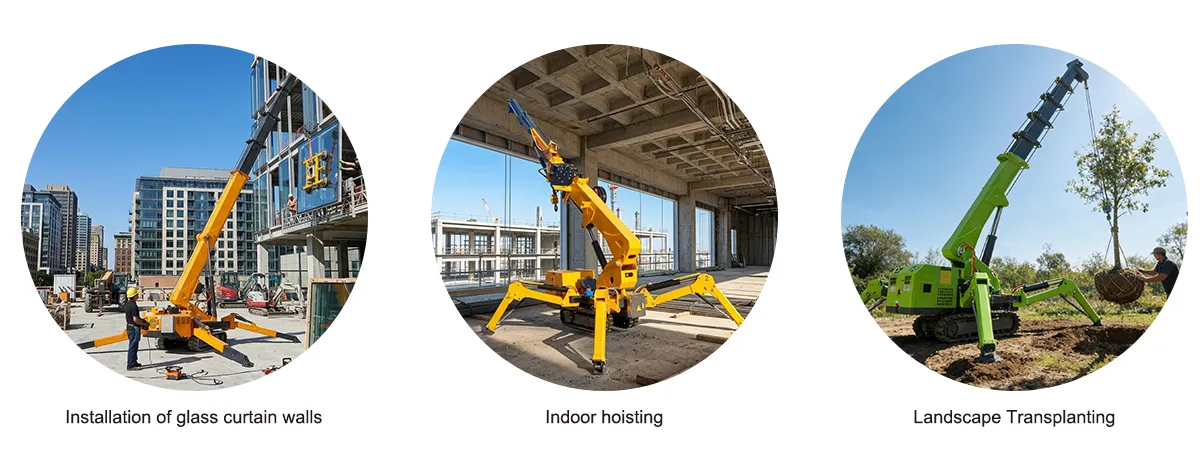
You're working inside a building — glass installation, interior steelwork, equipment placement
Floor protection matters (marble, epoxy, raised access floors)
Access is through standard doorways, elevators, or narrow corridors
You need to set up and tear down multiple times per day
The job involves precision placement more than raw lifting power
You want a heavier crawler spider crane (5T–16T) when:
You're outdoors on unprepared ground
Lift weights exceed 3–4 tons regularly
You need working radii beyond 13m
The machine stays in one location for hours or days
You're doing structural steel, precast panels, or mechanical unit setting
You probably don't need a spider crane at all when:
Your lifts are consistently over 20 tons (get a proper mobile crane)
You need to travel long distances between lifts on public roads (spider cranes top out at 2.5 km/h — they're not road vehicles)
Ground conditions are stable, open, and unrestricted (a rough-terrain crane might be faster to deploy)
The Stuff That Actually Breaks (And How to Prevent It)
Nobody writes about this in the brochures, so we will.
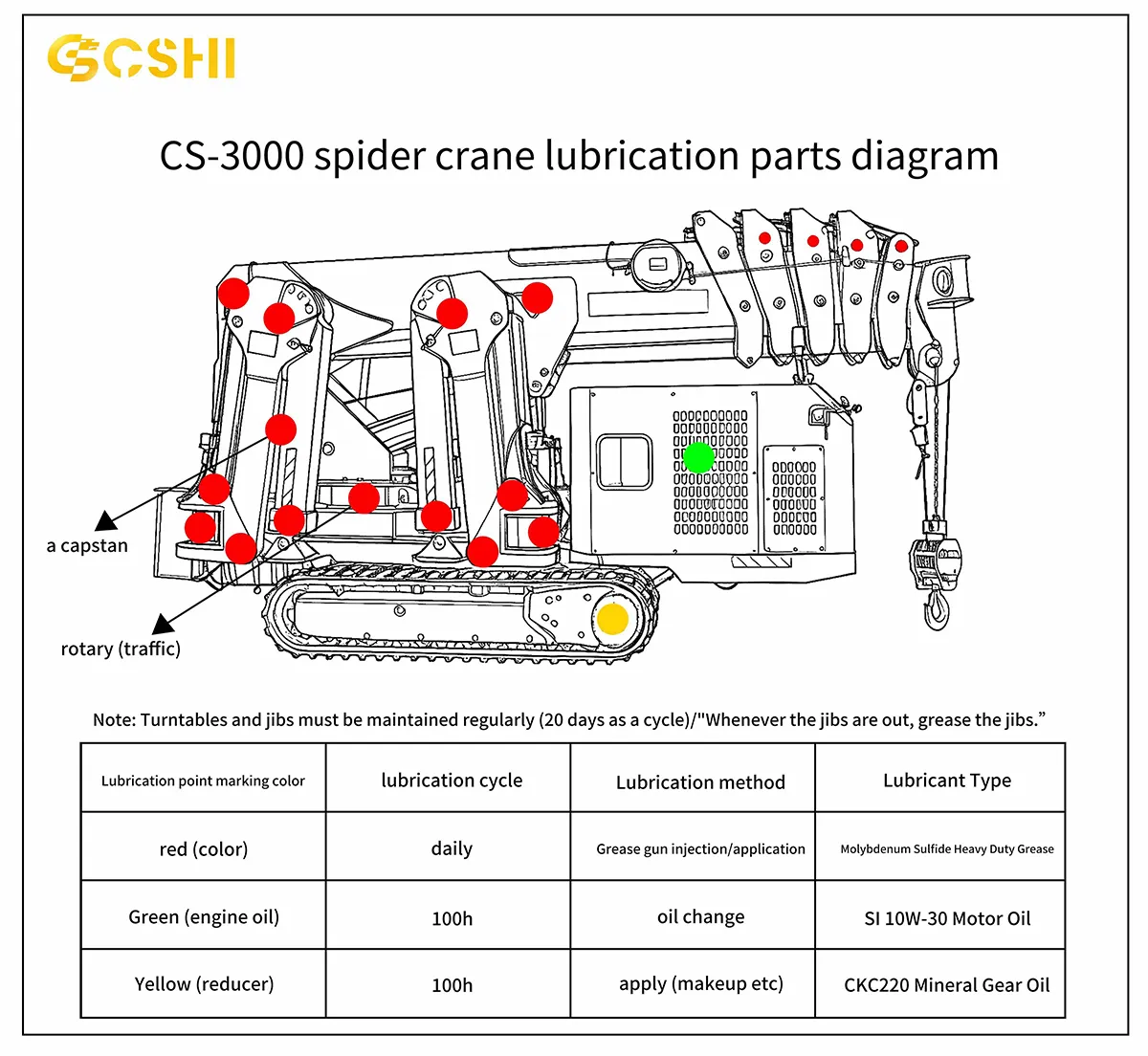
The number one maintenance failure on spider cranes is neglected slew ring lubrication. The turntable bearing takes enormous lateral loads, especially when you're lifting near maximum radius. The manufacturer spec calls for greasing every 20 days with molybdenum sulfide heavy-duty grease — not lithium grease, not "whatever's in the bucket." Molybdenum sulfide. It handles the extreme pressure that a slew ring generates.
Second most common issue: wire rope inspection. On the compact models, you're running Ø8mm rope. On the 5T+, it's Ø11–12mm. Either way, if you see more than 6 broken wires in one rope lay, or any sign of kinking, replace it. Don't "get one more week out of it." A wire rope failure under load isn't an inconvenience — it's a fatality risk.
Third: hydraulic oil temperature. These machines use hydraulic systems for everything — boom telescoping, luffing, slewing, outrigger deployment, travel. In hot climates (Middle East, Southeast Asia, Australian summers), the hydraulic cooling system needs to be checked weekly. A clogged cooler leads to sluggish operation, and operators compensate by pushing the controls harder, which accelerates pump wear. It's a vicious cycle.
The engine oil (SI 10W-30) and gearbox oil (CKC220 mineral gear oil) both need changing every 100 operating hours. That's roughly every 2–3 weeks on an active site. Miss those intervals and you'll be rebuilding a gearbox at 800 hours instead of 3,000.
Certifications: What to Ask For Before You Wire a Deposit
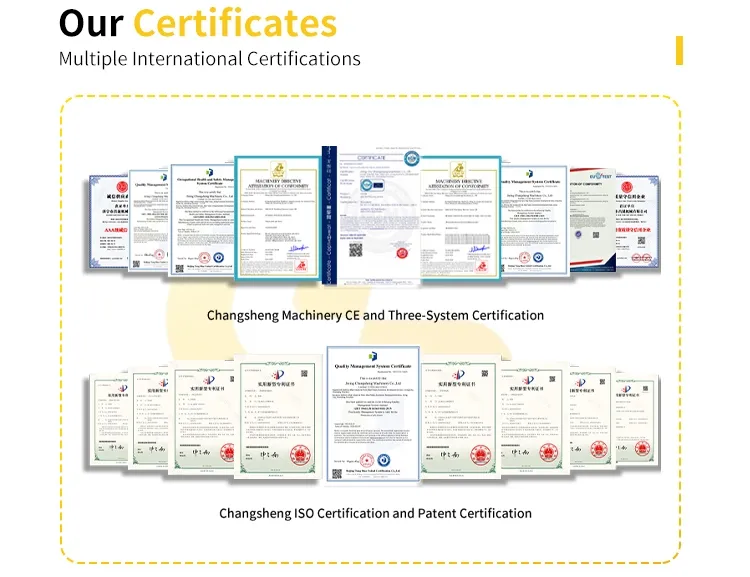
If you're importing a spider crane from China — and let's be honest, that's where the vast majority of these machines are manufactured — you need to verify three things before money changes hands:
CE Machinery Directive compliance (2006/42/EC). This is non-negotiable for EU market entry. Ask for the EC Type Examination Certificate, not just a "CE sticker." The certificate should reference EN ISO 12100:2010 (risk assessment) and the relevant EN standards for cranes.
ISO 9001:2015 quality management certification. This tells you the factory has documented processes. It doesn't guarantee quality, but its absence is a red flag.
Electromagnetic Compatibility (EMC) certification if the machine has electronic controls, load moment indicators, or remote control systems. The EN IEC 61000 series applies here.
A legitimate manufacturer will have all three and will send you the certificate numbers without hesitation. If they stall, walk away.
Picking the Right Tonnage: A Quick Decision Framework
Still not sure which size you need? Work backward from these three questions:
Question 1: What's your heaviest single lift?
Take that weight, multiply by 1.25 (that's your safety margin for dynamic loading), and that's your minimum rated capacity.
Question 2: What's your maximum working radius at that weight?
Every spider crane's capacity drops dramatically as radius increases. A "5-ton" crane might only lift 1 ton at 12m radius. Check the load chart — not the nameplate.
Question 3: What's your access constraint?
If the machine needs to pass through a 1m-wide gate, your options are limited to the 4T and below (the 4T is exactly 1.0m wide). If you've got a 1.5m opening, the 5T fits. Beyond 1.8m, everything up to the 16T is on the table.
Final Thought
The "spider crane vs. mini crawler crane" debate is mostly a terminology problem. What actually matters is whether the machine in front of you has the right combination of lift capacity, working radius, physical dimensions, and track type for your specific site.
A 1.2T spider crane that fits through your building's service door is infinitely more useful than a 16T machine sitting uselessly in the parking lot because it can't get inside.
Match the machine to the constraint. Not the other way around.

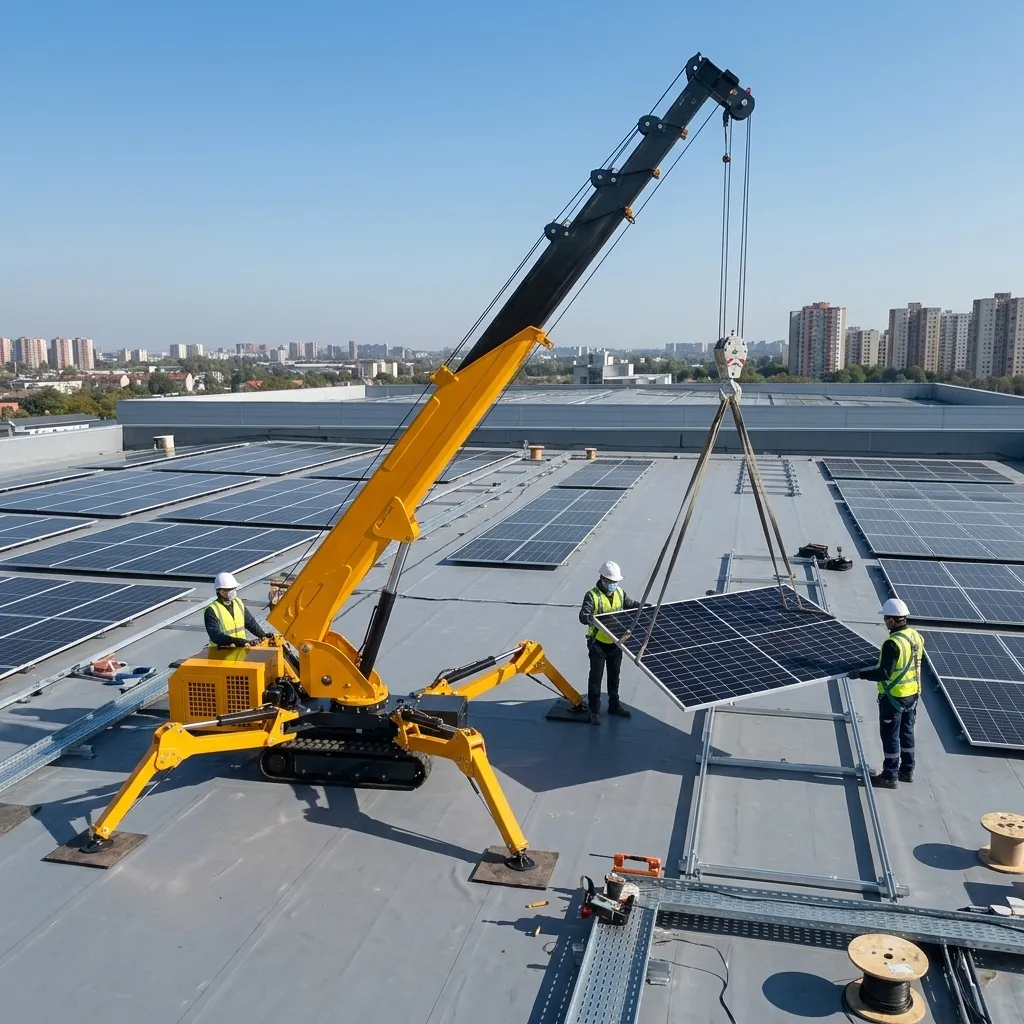 Spider Crane for Solar Panel Installation: Rooftop Lifting
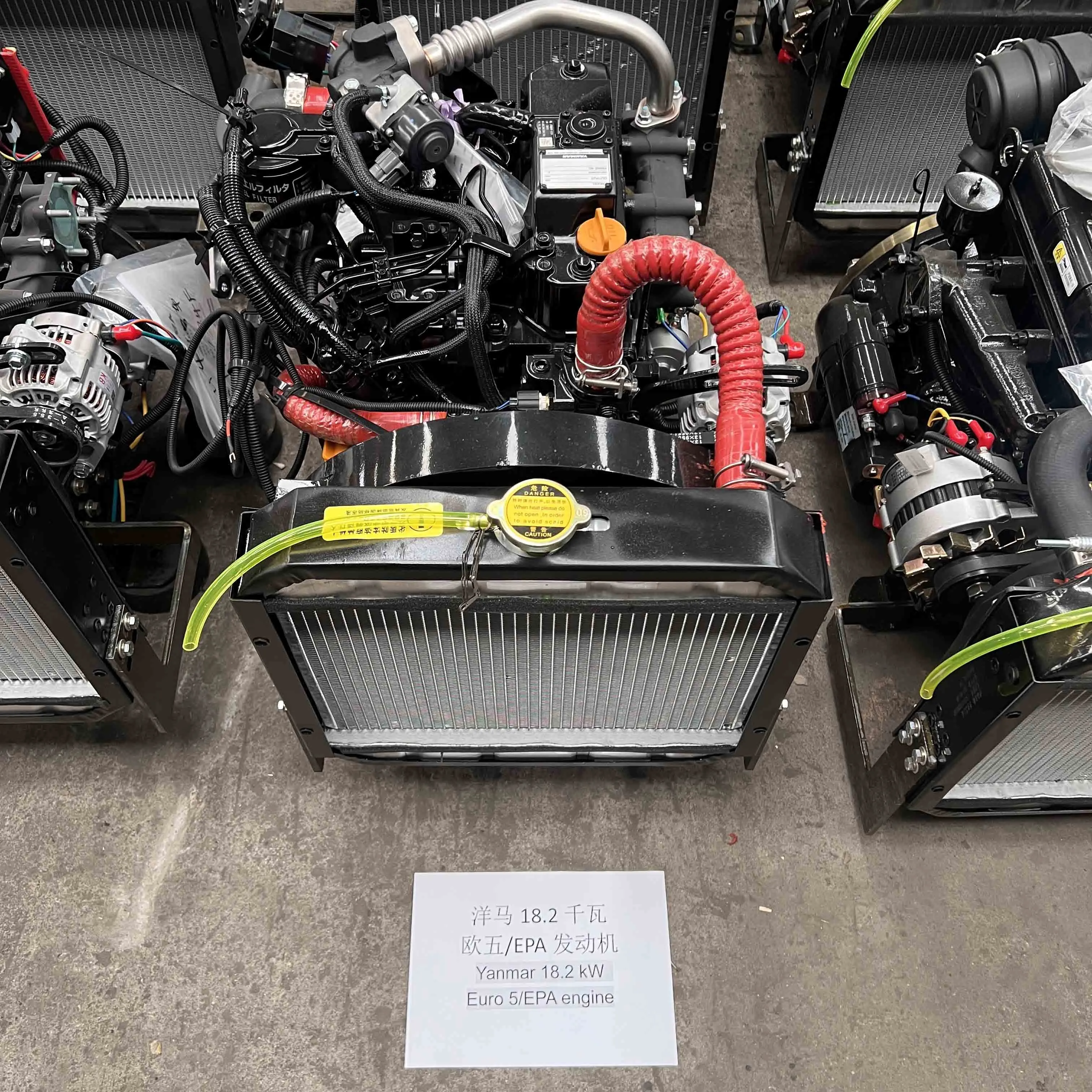 Spider Crane Common Faults & Troubleshooting Guide for M
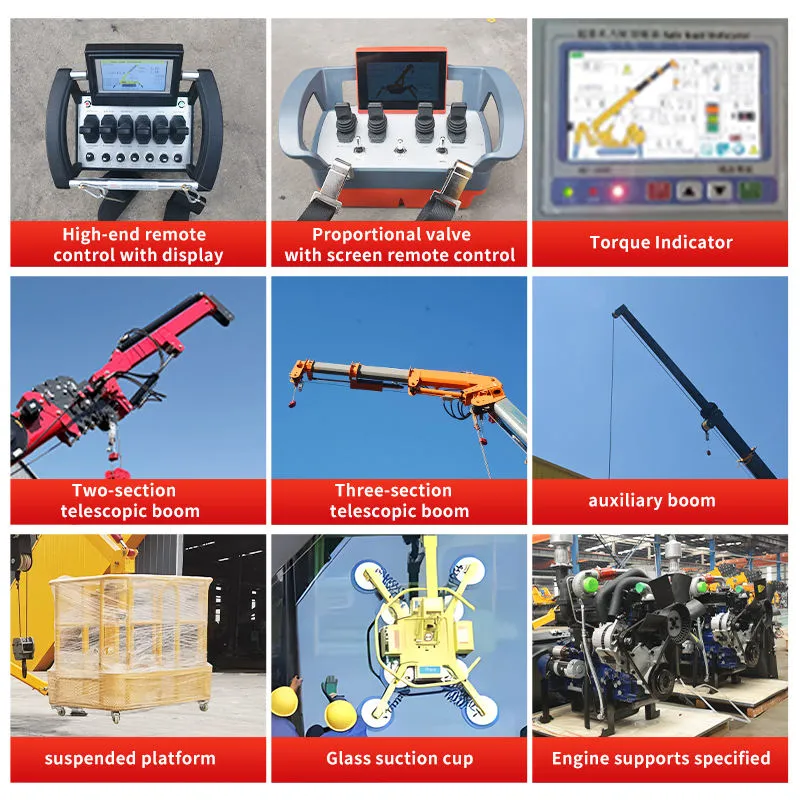 How to Choose Spider Crane Optional Attachments (Full Guide)
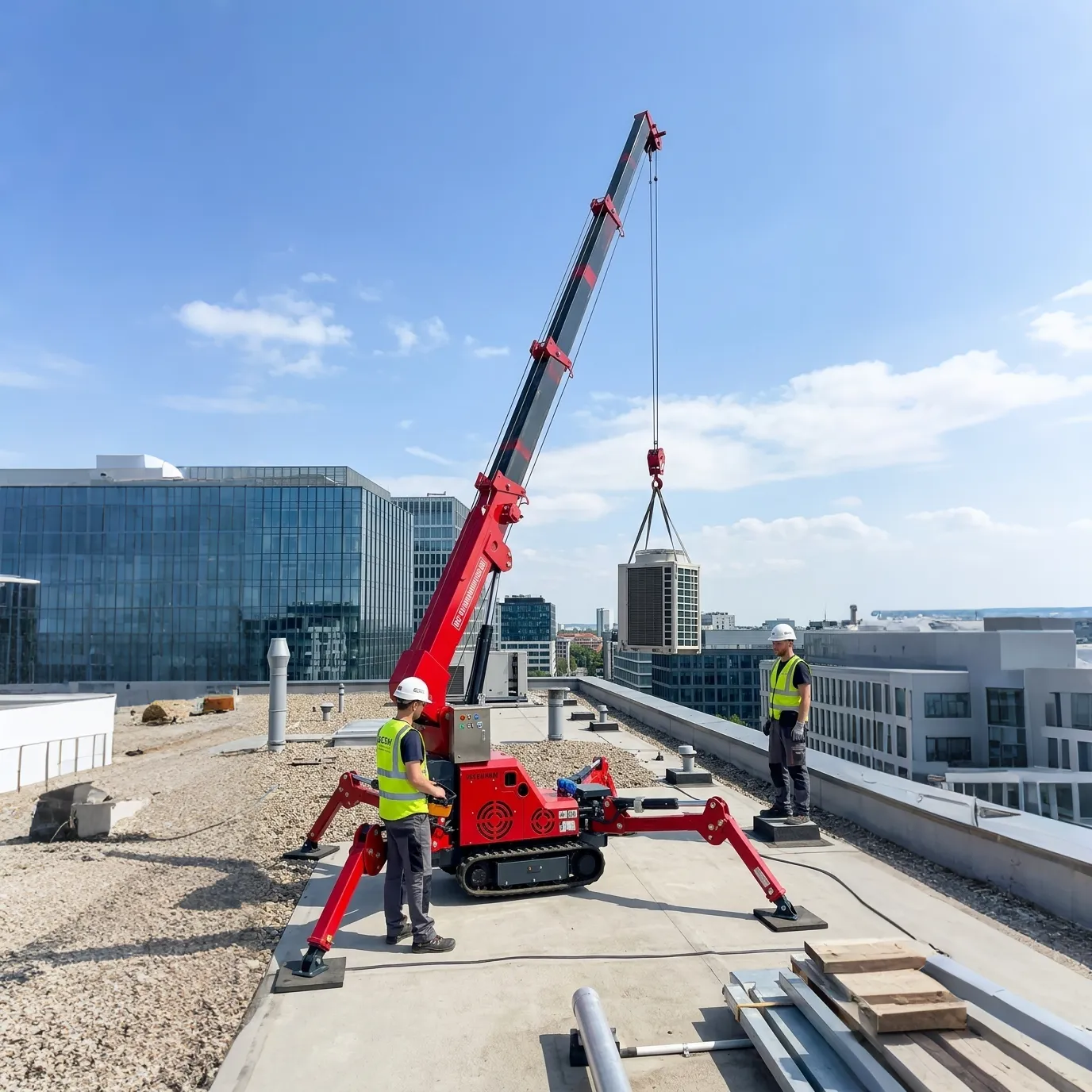 How to Lift an HVAC Unit to a Roof with a Spider Crane